Warehouse cleaning
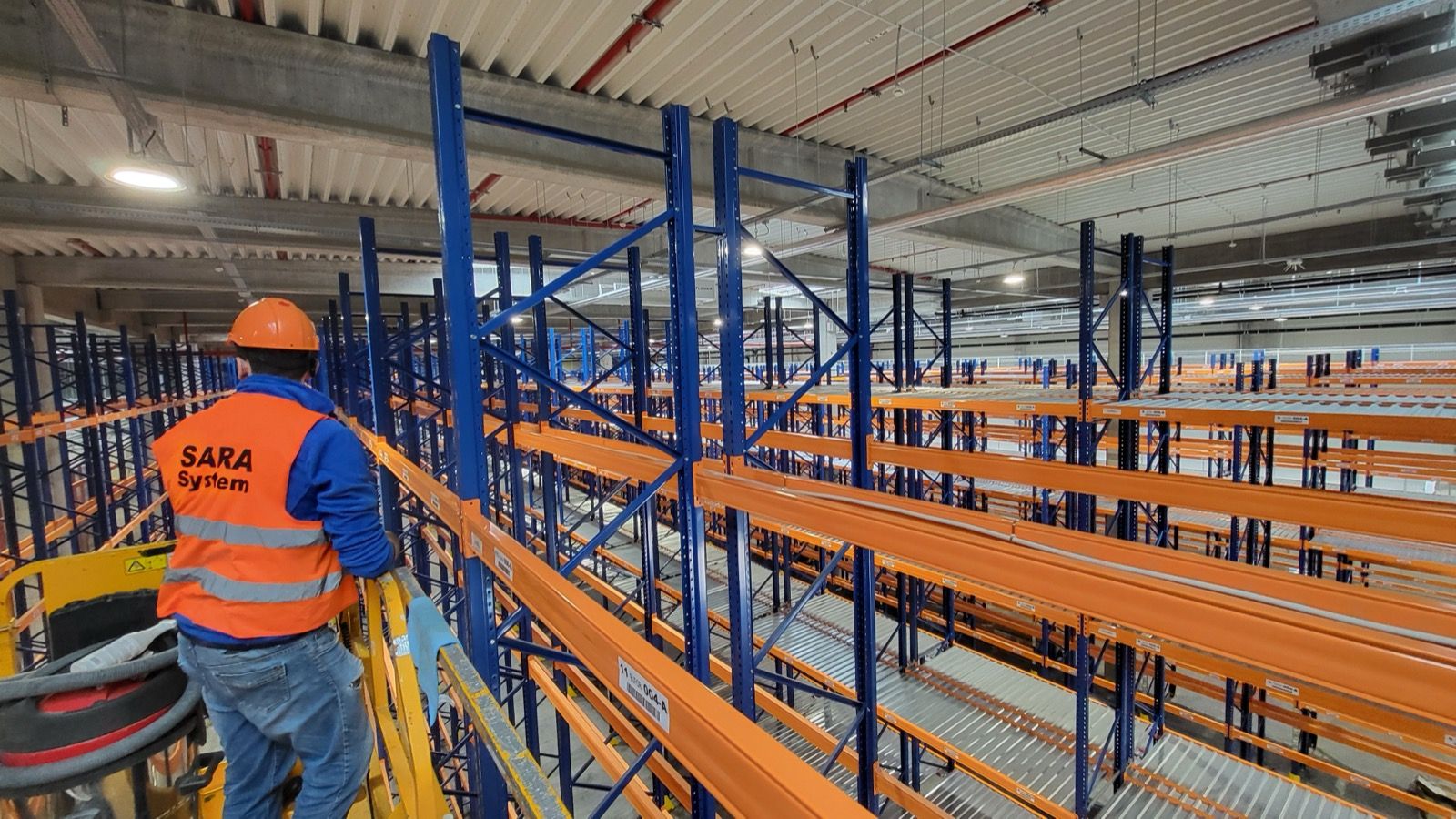
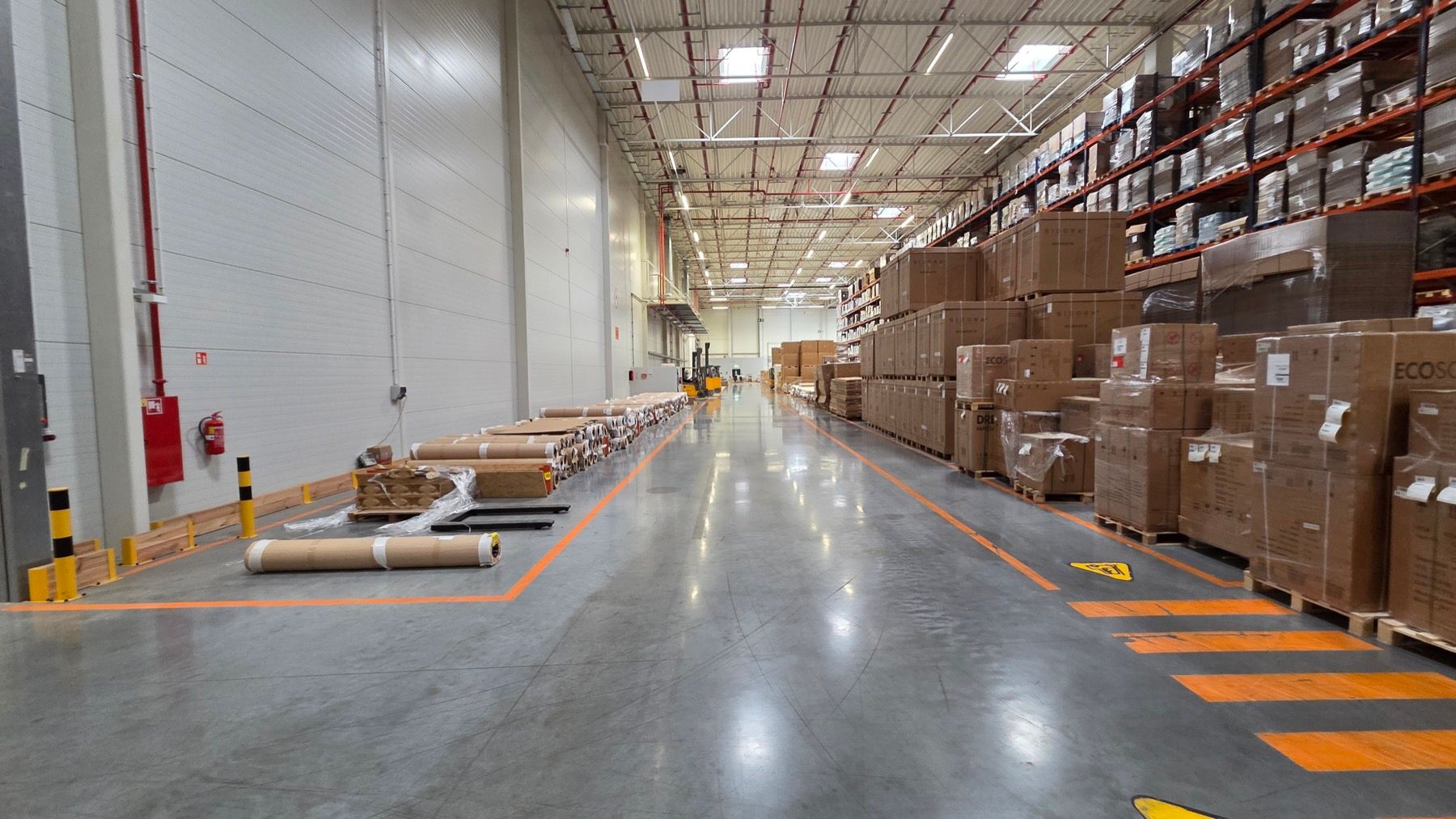
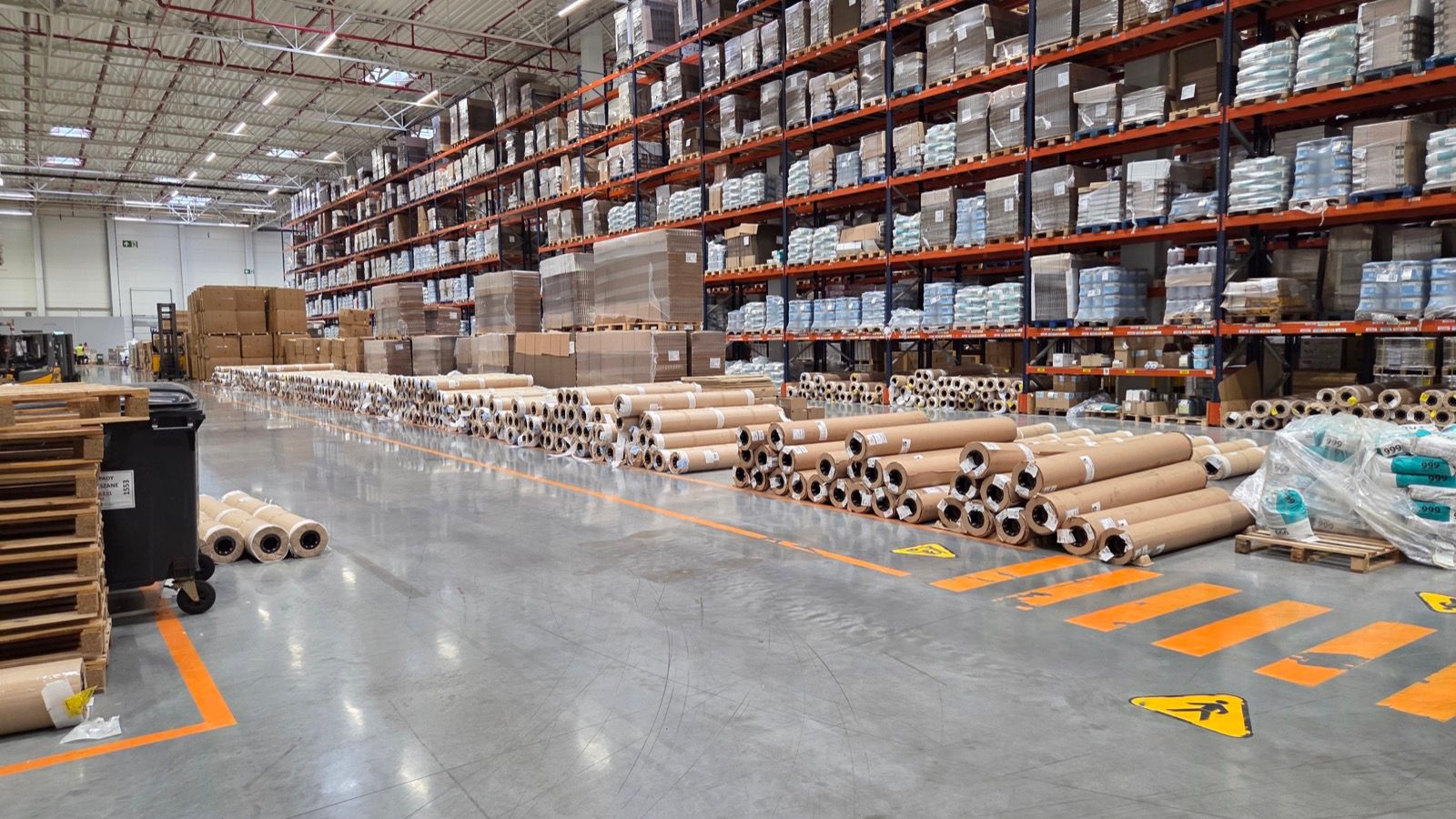
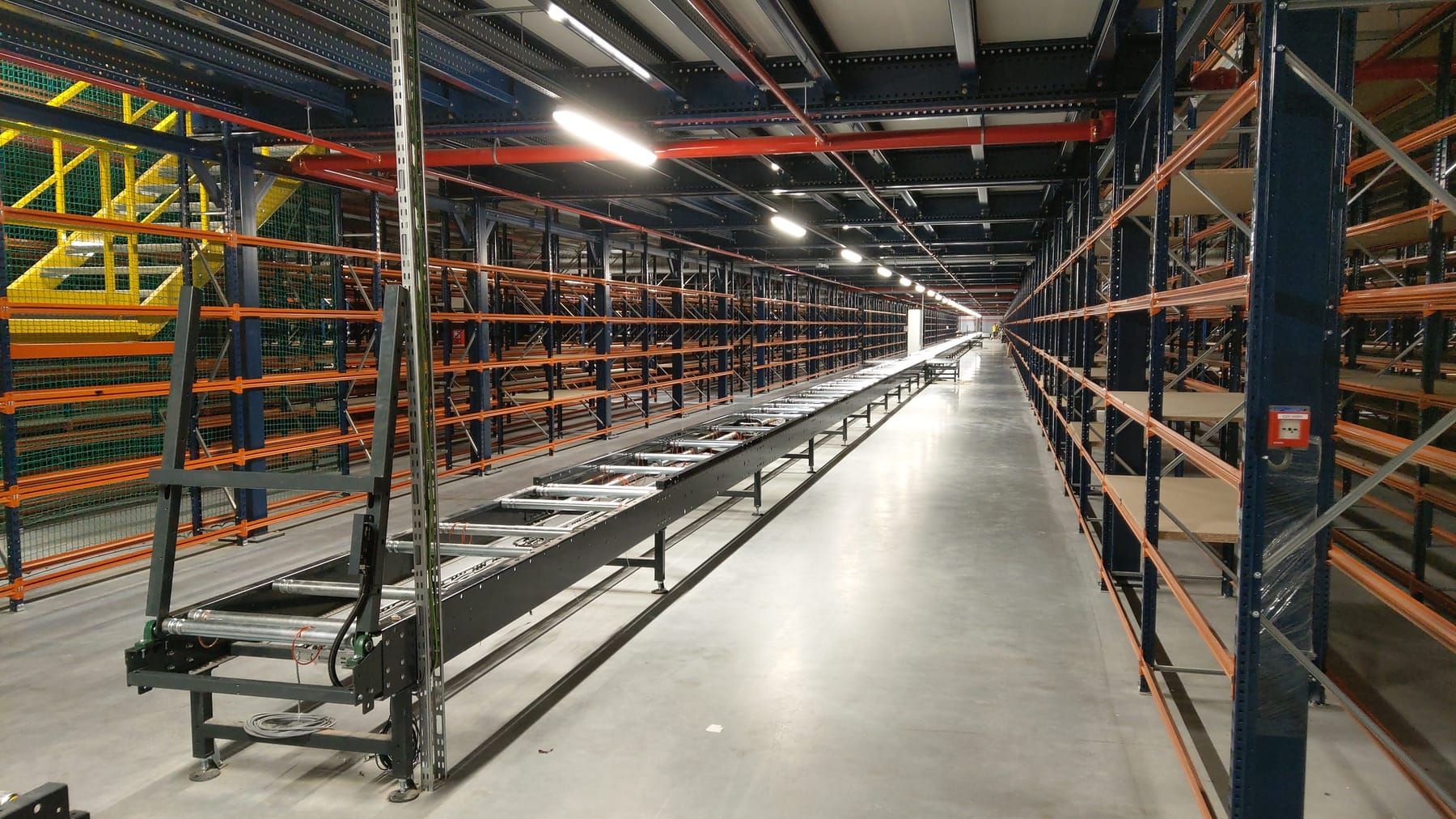
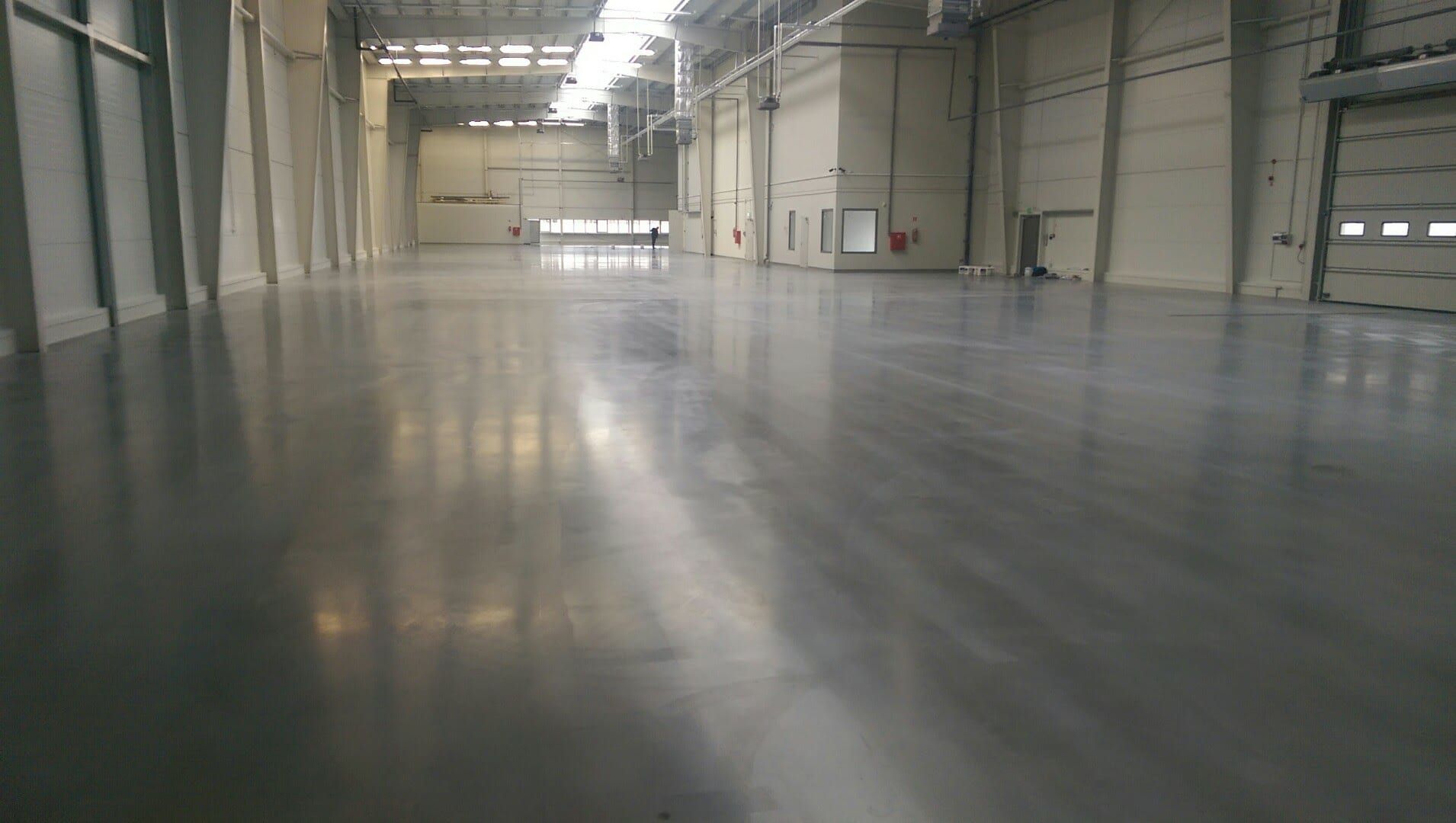
Warehouse cleaning means working around forklift traffic: floors with tyre marks, dust settling on high-bay racking, docks and loading bays, picking areas and battery charging areas — without stopping goods-in or dispatch. We look after 470,500 m² of production and warehouse space under ongoing contracts. Deep cleaning a floor of 50,000 m² is not a problem for us. We work 365 days a year, around the clock.
At a glance
- We look after 470,500 m² of production and warehouse space under ongoing contracts.
- We serve 33 production plants and 5 logistics centres under ongoing contracts.
- Of our clients, 54% are automotive plants, 28% are in logistics, 10% in the food industry and 8% in other industries.
- Deep cleaning a floor of 50,000 m² is not a problem for us.
- We work 365 days a year, around the clock.
- We clean warehouses zone by zone, during off-peak periods and in agreement with the shift manager — the site does not have to stop goods-in or dispatch.
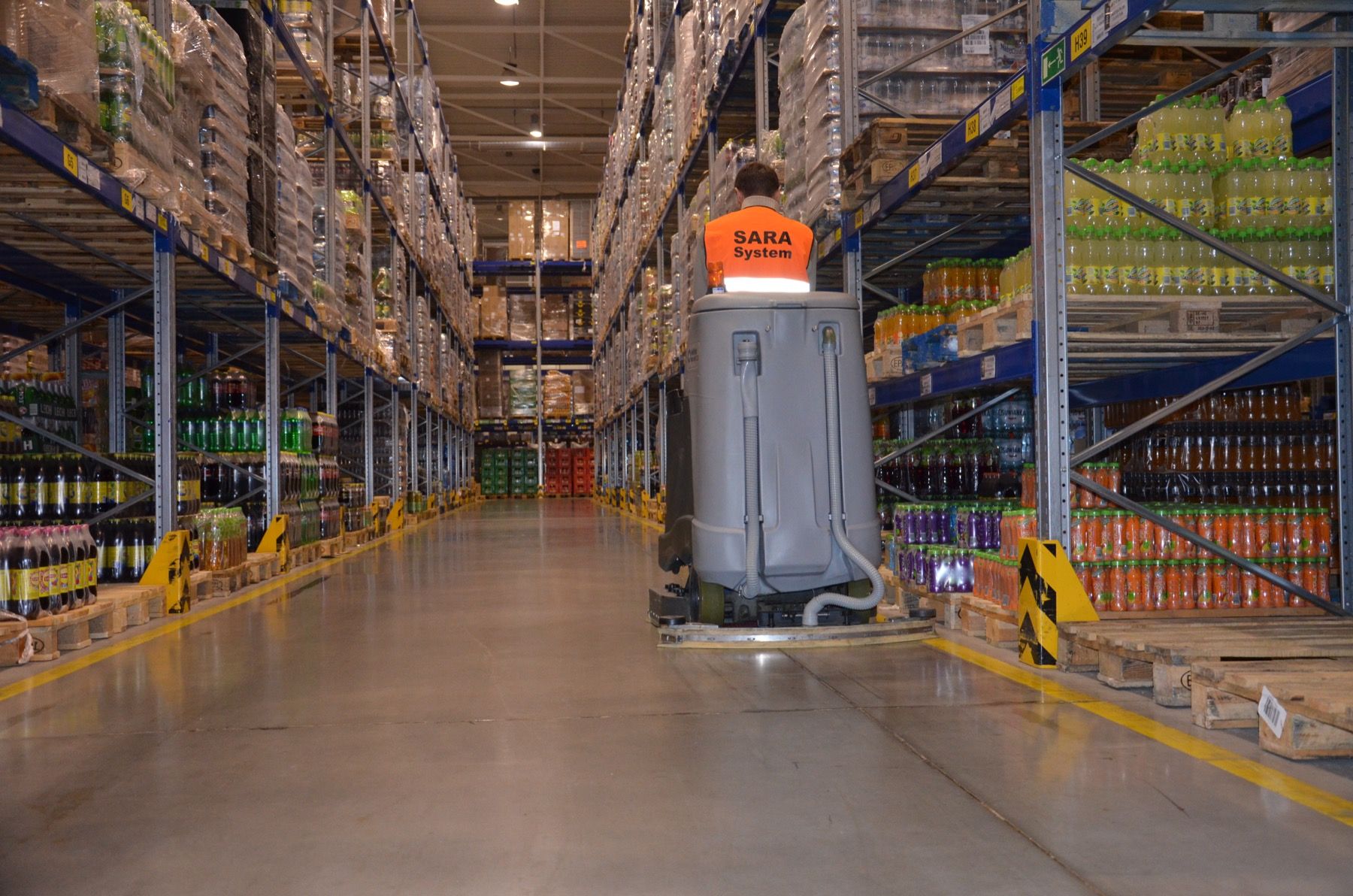
- The largest building we look after under an ongoing contract covers 112,000 m² — we work there on three shifts, with 14 people per shift. We organise our service for large warehouses and logistics centres in the same way.
Who it is for
- Logistics and distribution centres operating around the clock.
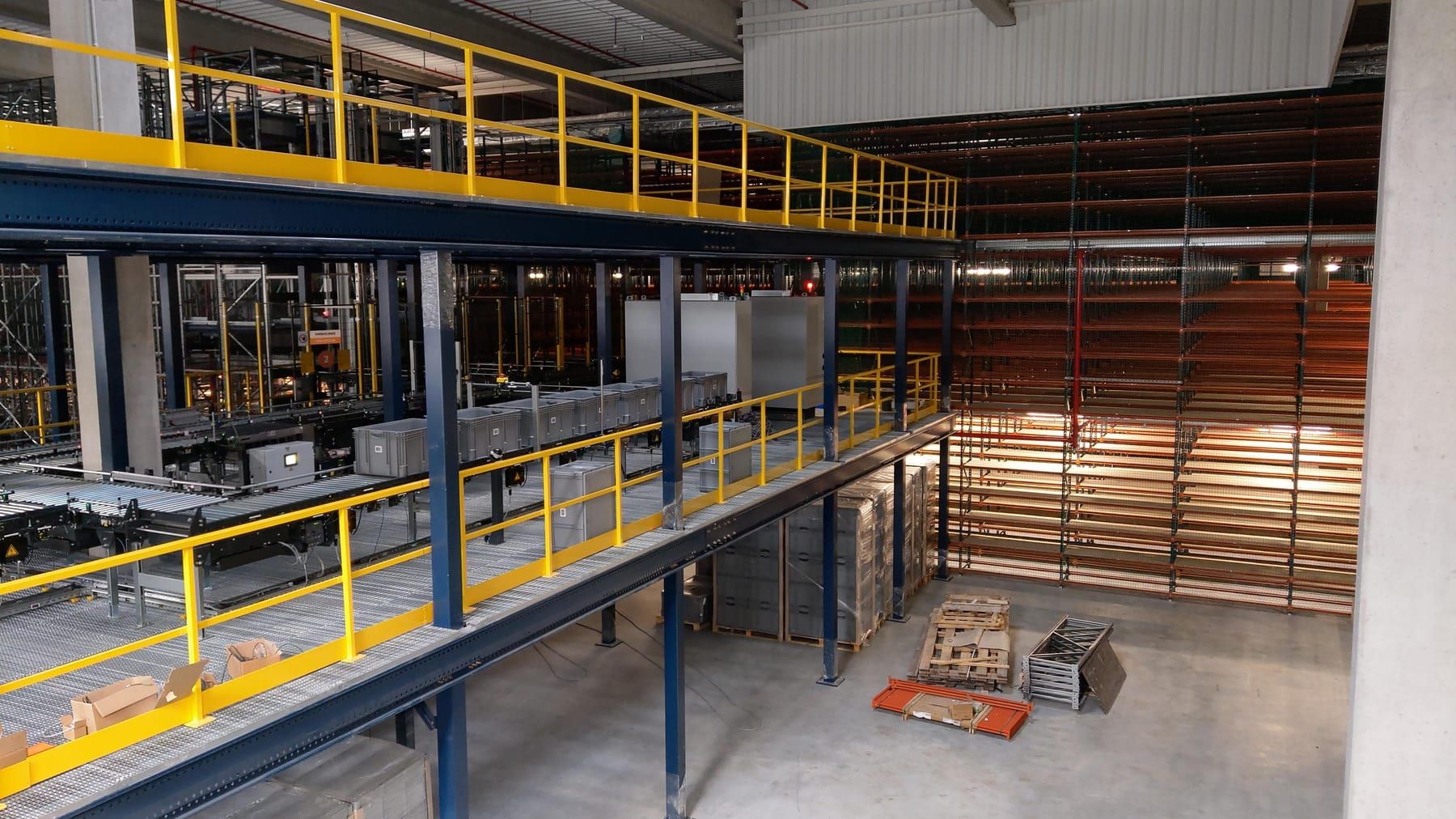
- High-bay warehouses with very narrow aisles and VNA trucks.
- E-commerce warehouses with picking, co-packing and large amounts of cardboard and film.
- Warehouses attached to manufacturing plants — raw materials, finished goods and parts.
- Logistics operators preparing for a customer audit or for handing a building over to a new tenant.
The warehouse floor — tyre marks, dust and grip
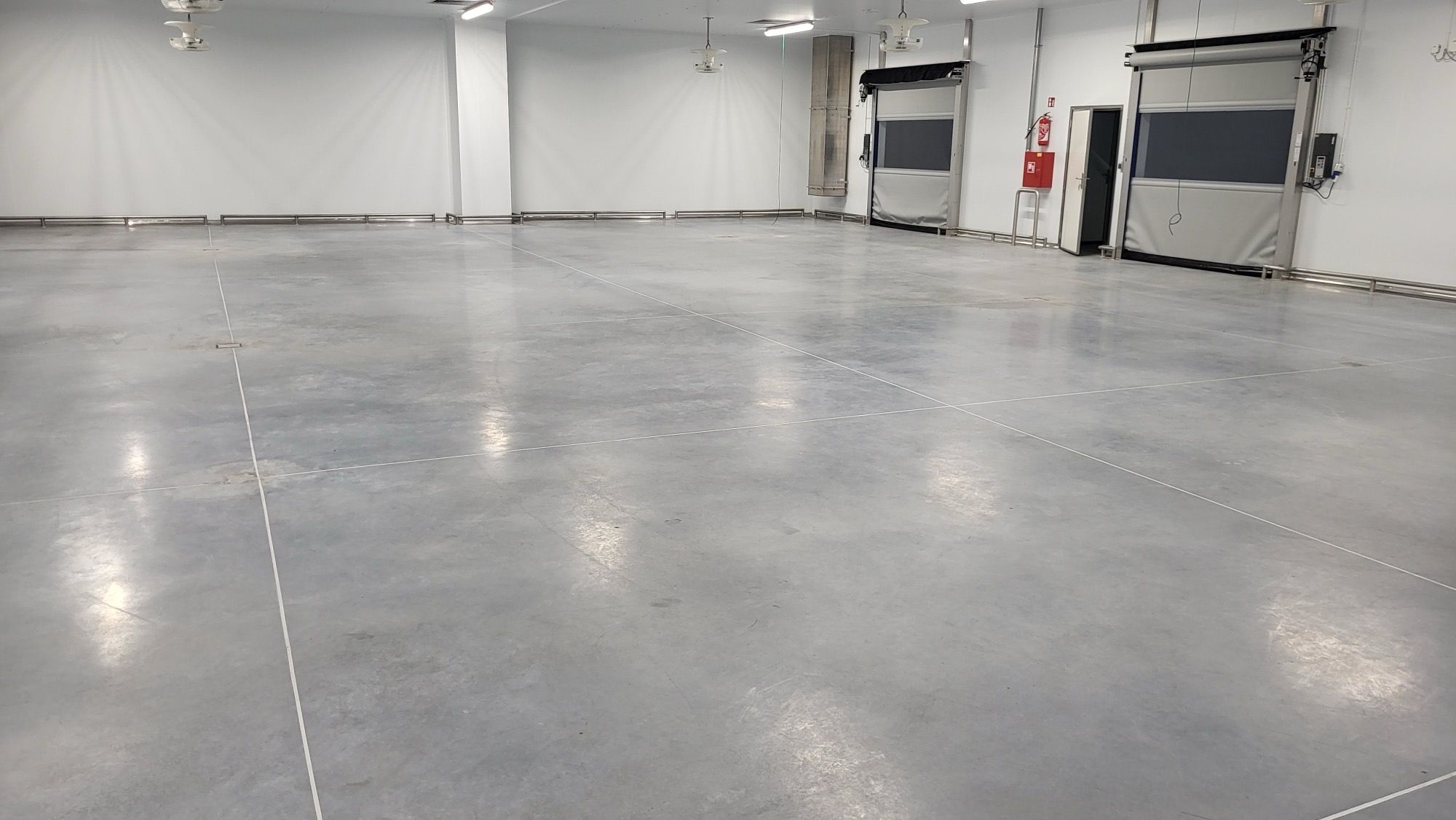
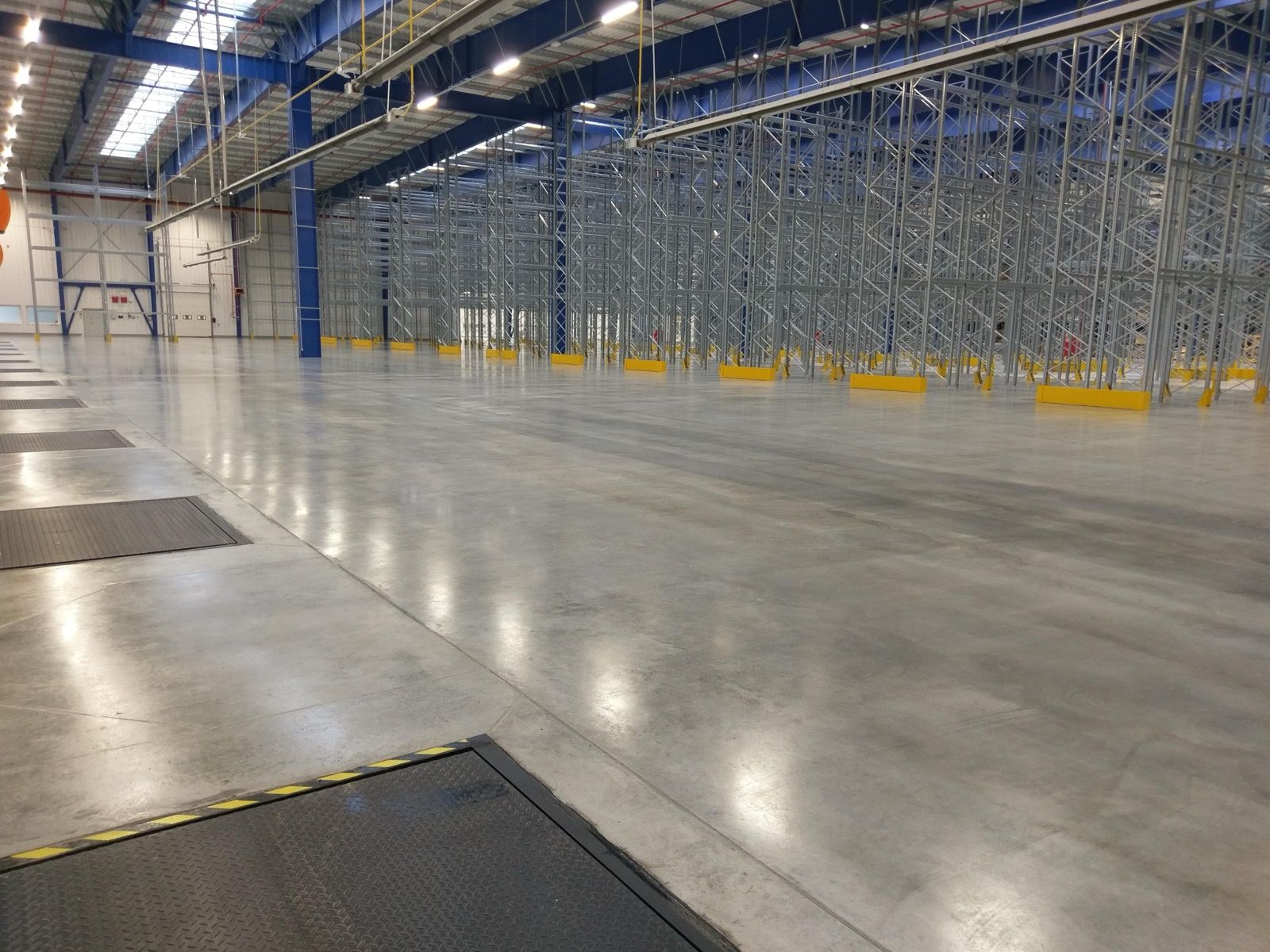
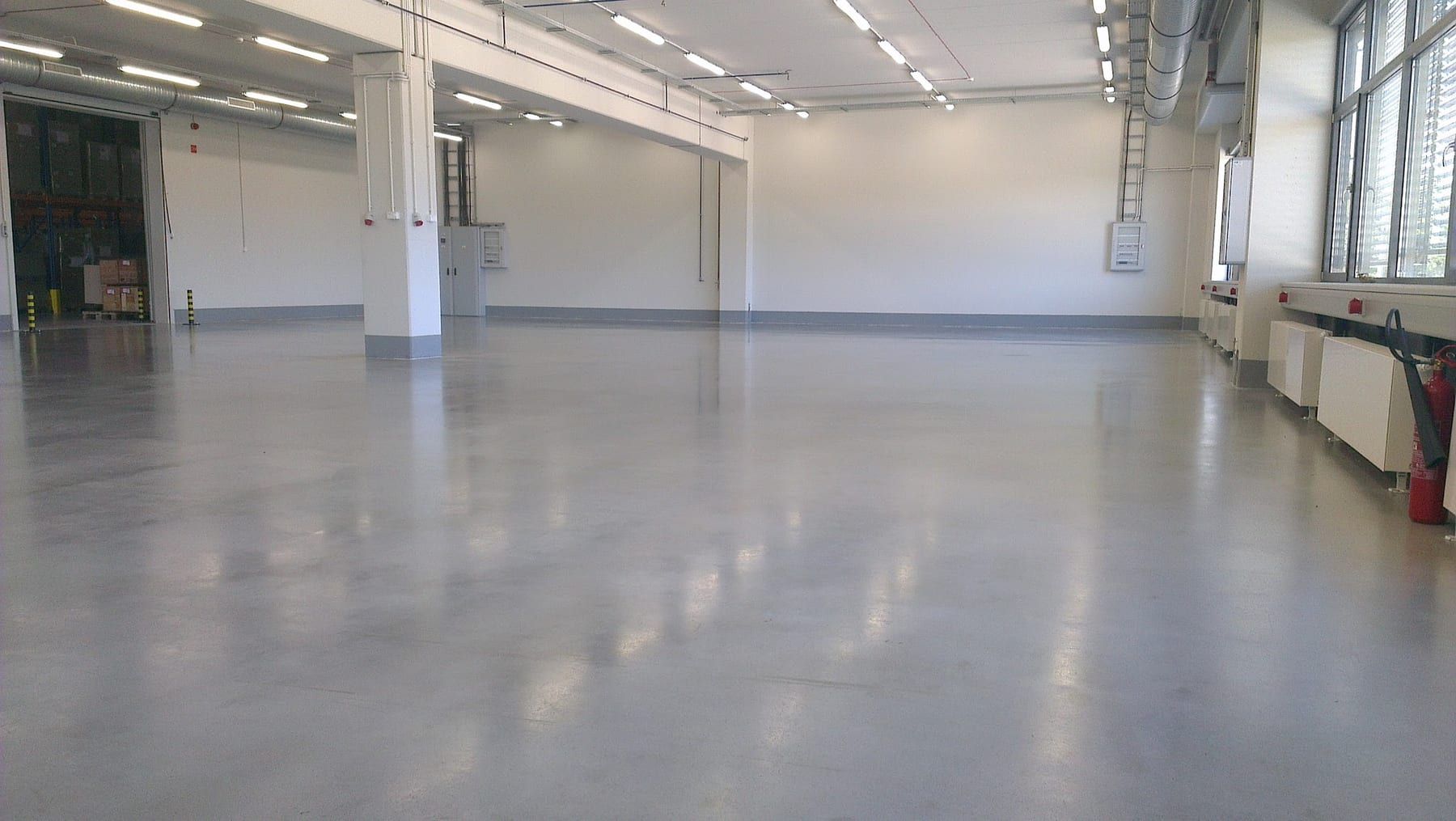
In a warehouse, the floor works harder than in any other building. Forklift trucks brake and turn in the same places — at aisle junctions, by the docks, in front of racking — and leave black bands of rubber there. Non-marking tyres reduce the problem, but in warehouses with a mixed fleet the marks appear all the same.
The second enemy is dust. Unsealed concrete wears under the wheels and gives off fine cement dust, which settles on stock, packaging and racking. Film, tape and bits of cardboard from breaking down pallets collect under racking and in corners the scrubber dryer cannot reach.
In high-bay warehouses, a clean floor is a safety matter. A very narrow aisle (VNA) truck carrying a load a dozen or more metres up needs an even, clean running surface — sand or an oil stain changes how it behaves when braking.
| Soiling | Where it comes from | How to deal with it |
|---|---|---|
| Tyre marks | Forklift trucks braking and turning at aisle junctions and by the docks | Routine machine cleaning; old marks need deep cleaning |
| Cement dust | Unsealed concrete wearing away | Sweeping with dust control, and ultimately sealing the floor |
| Film, tape, bits of cardboard | Breaking down pallets, picking, co-packing | A sweeper, and segregation points where the waste arises |
| Sand, water, salt | Docks and doors, especially in winter | More frequent cleaning of the areas by the doors, mats, and sweeping the yard in front of the loading bays |
| Oil and electrolyte stains | Forklift trucks, battery charging stations | Absorbent straight after a leak, neutralisation, cleaning the charging area |
- We use RCM sweepers to sweep indoor floors and yards.
High-bay racking, docks and special areas
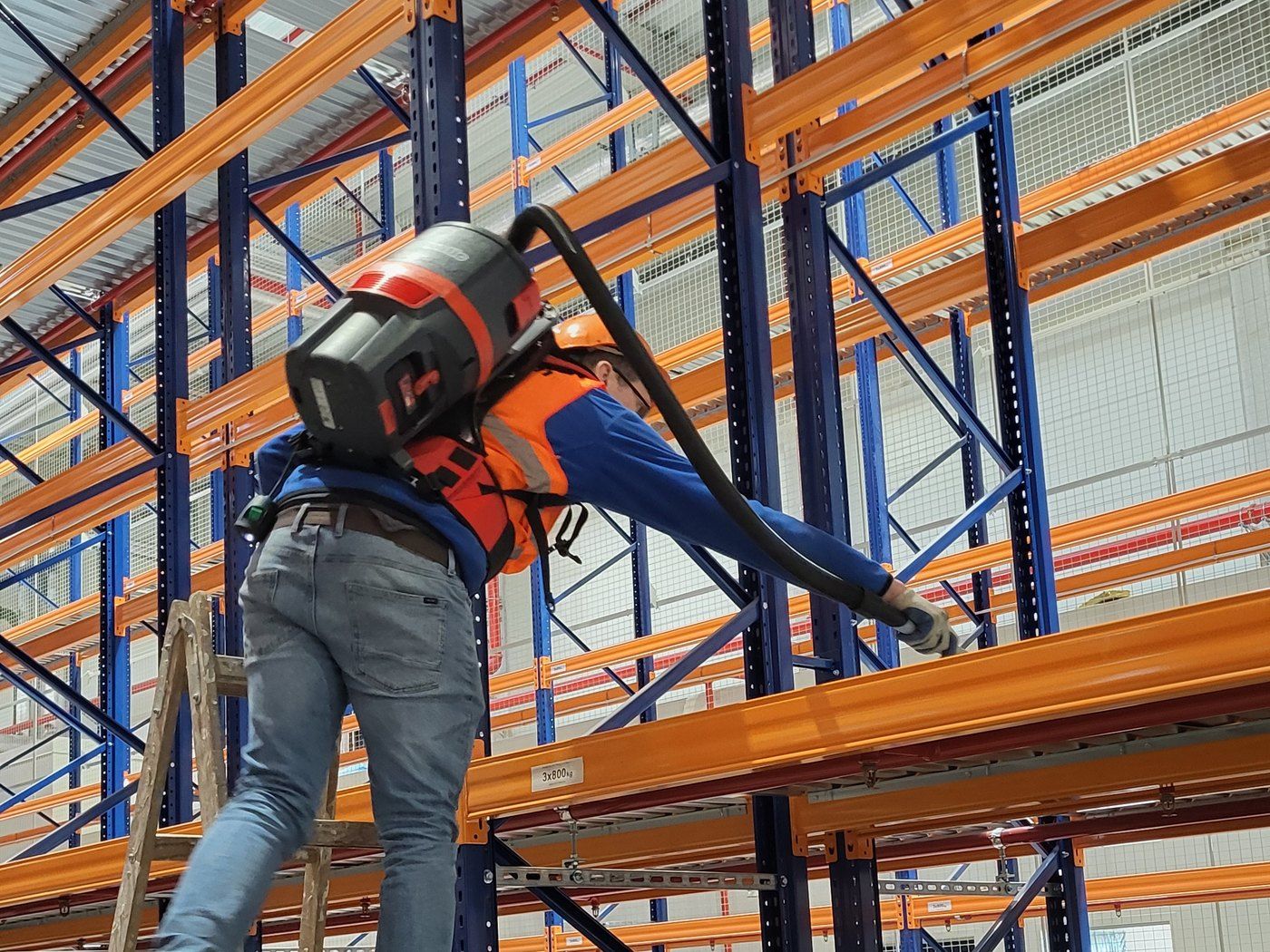
Dust settles on racking beams, the roof structure, lighting and building services, and then falls onto stock and packaging. Removing dust at height needs a lift, a certified operator and agreement with the warehouse manager on which aisles can be closed to traffic for the duration — ideally during a stocktake or at the weekend.
Docks and loading bays collect whatever comes in from outside: sand, water, snow and packaging debris from trailers. The battery charging area needs its own rules — ventilation, care with electrolyte and cleaning without spark-producing tools. In cold stores and freezer stores, ordinary chemicals and methods do not work: water freezes on the floor, and products have to be designed for low temperatures.
- Our operators hold UDT (Poland’s Office of Technical Inspection) certification to operate forklift trucks, mobile elevating work platforms (MEWPs) and overhead cranes.
- Our operators hold UDT category IP licences (UDT: Poland’s Office of Technical Inspection) for boom lifts and scissor lifts.
- We remove dust from racking beams and roof structures working from lifts, in aisles closed to traffic for the duration.
- We clean docks, loading bays and the areas by the doors more often than the rest of the building, because that is where sand, water and salt come in on the wheels of lorries and forklift trucks.
- We also clean cold stores and freezer stores.
Cleaning in step with the warehouse
A warehouse that never stops still has its quieter periods: the night between picking waves, the break between shifts, Sunday. The main cleaning is planned for exactly those times, and at peaks — before holidays, during sales and e-commerce campaigns — it is limited to the areas that cannot wait.
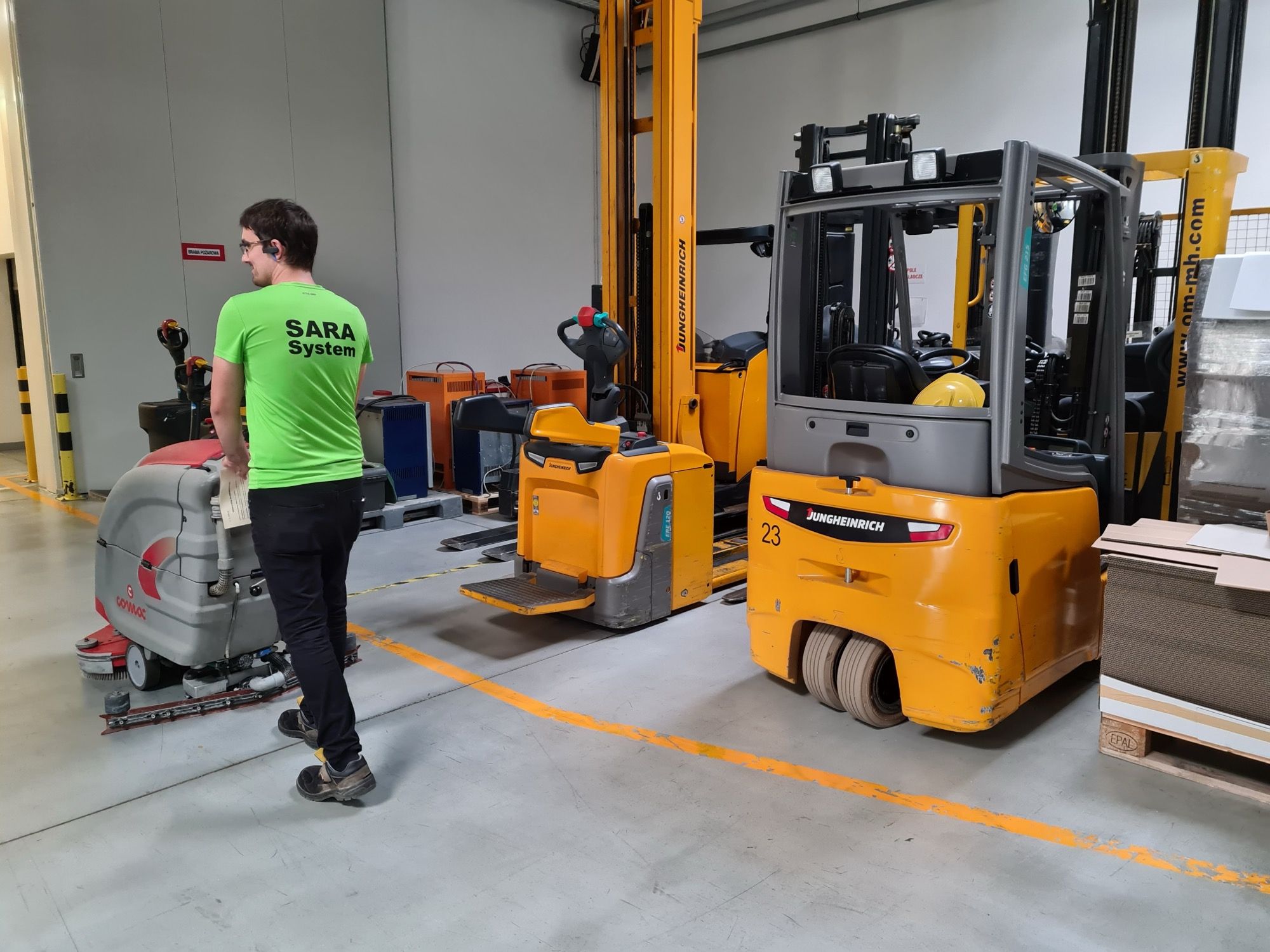
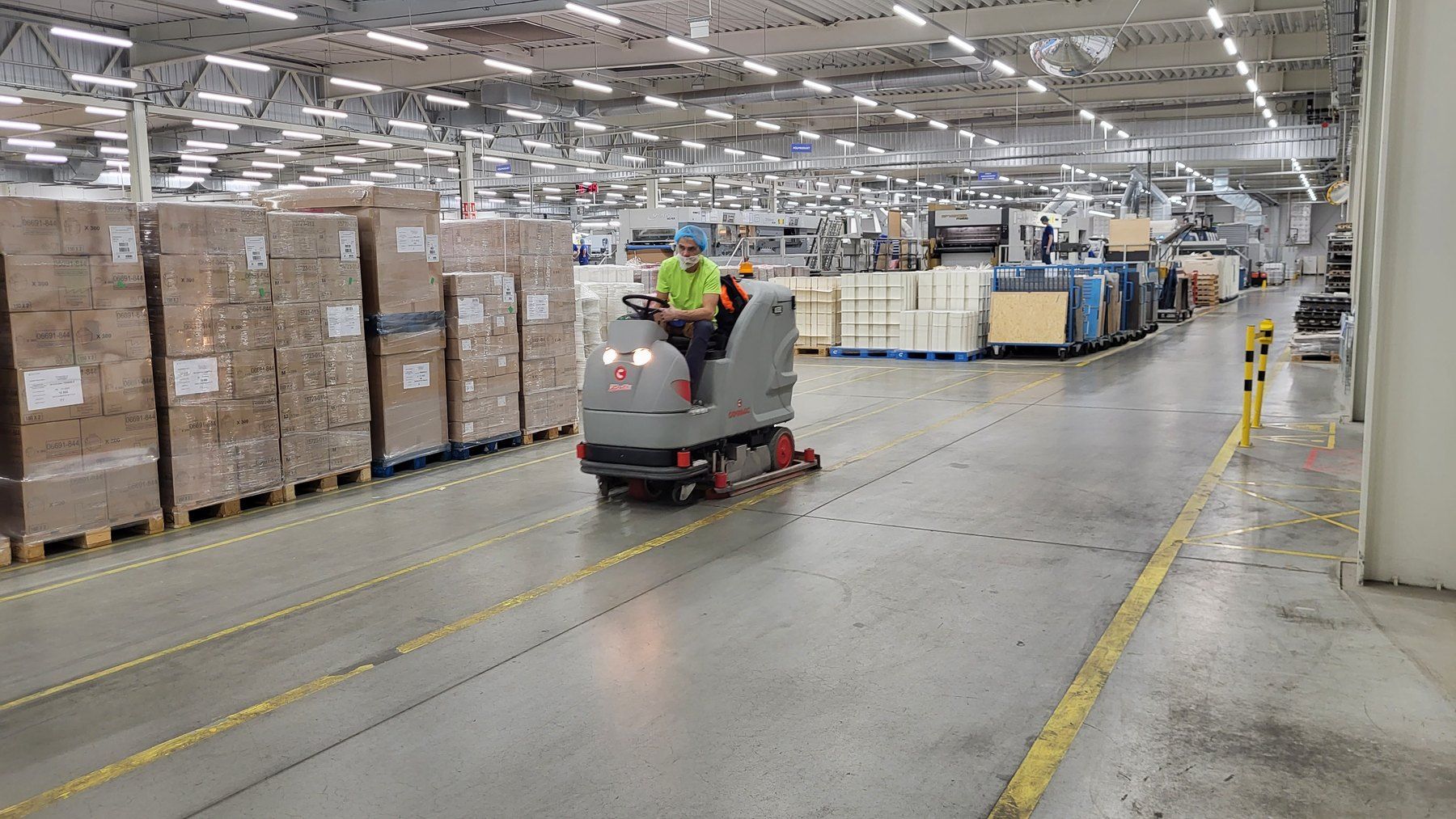
Every area closed off for cleaning must be marked and agreed with the shift manager, and wet floor must be clearly separated from forklift routes. Our sites are staffed by cleaning operatives and scrubber dryer operators, and contract managers oversee every site.
- Nights and quiet periods between picking waves — machine cleaning of the main aisles and docks.
- Weekends — deep cleaning of areas where traffic never stops during the week.
- Stocktakes — dust removal from racking and work at height while goods movements are stopped.
- Peak season — routine cleaning of critical areas: docks, charging areas, pedestrian walkways.
- Our sites are staffed by cleaning operatives and scrubber dryer operators, and contract managers oversee every site.
- In an emergency, we increase staffing on site within 24 hours.
How much might it cost?
Our cleaning cost calculator works out an indicative price range for your floor area, with worked examples and the method behind them. The final quote always follows a site survey.
Open the calculatorChecklist: what to ask a contractor
Questions worth asking any cleaning company before you sign a contract, whoever you choose.
- How will the contractor clean the warehouse without stopping goods-in and dispatch — zone by zone, at what times?
- Which machines will they use, and will these fit in your aisles?
- Do they remove dust from high-bay racking — with what equipment, and with which certifications?
- How often do they clean the docks, loading bays and the battery charging area?
- How quickly can they increase staffing if something happens in the warehouse?
From our work
Can you handle a large warehouse, e.g. 50,000 m²?
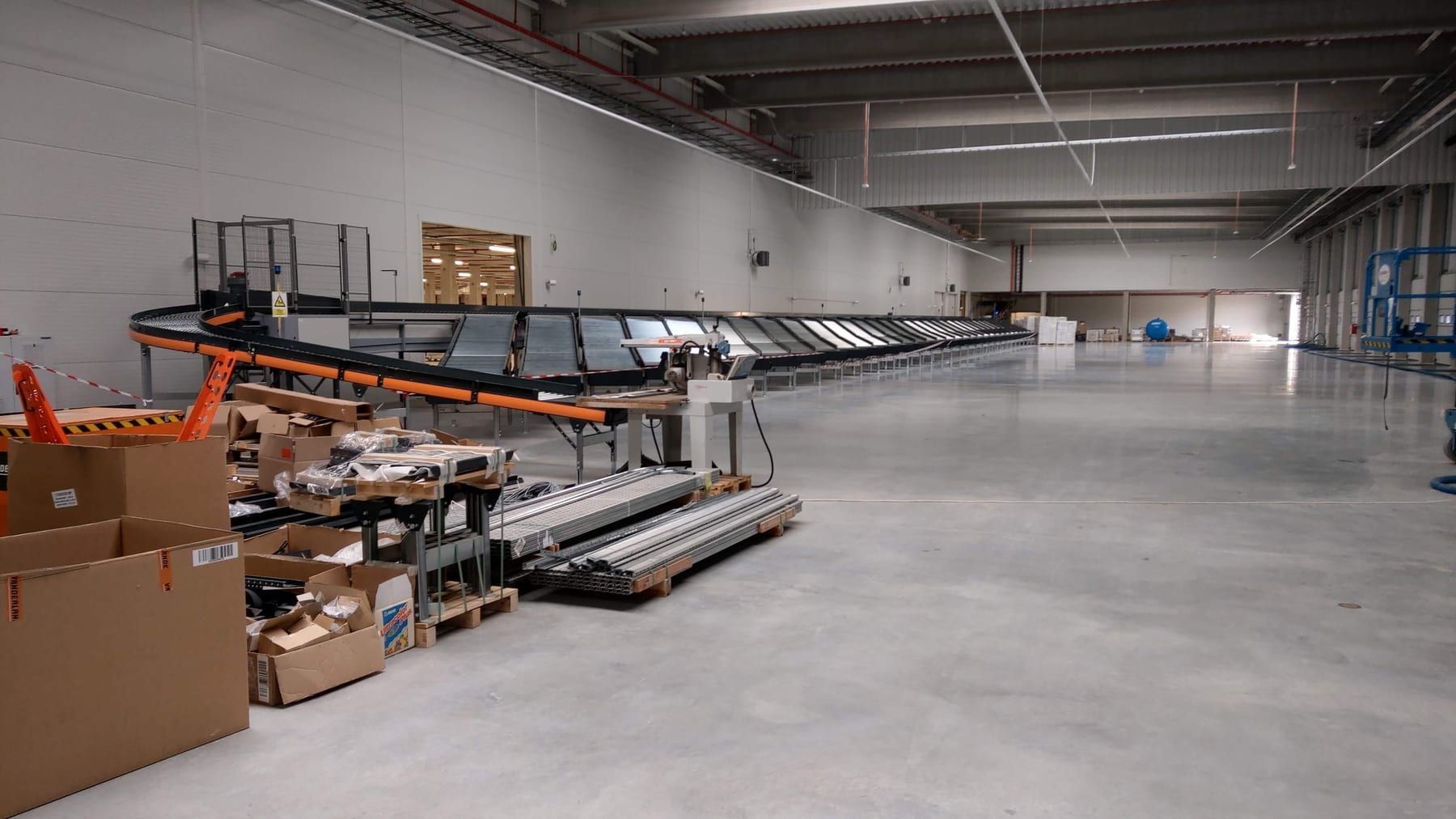
Yes. The largest building we look after under an ongoing contract covers 112,000 m², and in total we look after 470,500 m² of production and warehouse space under ongoing contracts. Deep cleaning a floor of 50,000 m² is not a problem for us.
Can you clean a warehouse without stopping its operations?
Yes. We clean warehouses zone by zone, during off-peak periods and in agreement with the shift manager. We work 365 days a year, around the clock.
Do you remove forklift tyre marks from the floor?
Yes. Fresh marks come off with regular machine cleaning; old marks ground into the concrete are removed by machine deep cleaning with the right pad and detergent.
Do you remove dust from high-bay racking?
Yes. We remove dust from racking beams and roof structures working from lifts, in aisles closed to traffic for the duration — usually during a stocktake or at the weekend.
What do you use to sweep the warehouse and the yard in front of the loading bays?
We use RCM sweepers to sweep indoor floors and yards.
Can you increase staffing in the warehouse at short notice?
Yes. In an emergency, we increase staffing on site within 24 hours.
Often ordered together
Floor deep cleaning
Deep cleaning of factory and warehouse floors: tyre marks, oil, ground-in dust. Greater Poland, Lubusz and Lower Silesia. In 2025 we deep-cleaned 66,890 m² of floors.
Details Industrial floorsConcrete floor sealing
Sealing and polymer coating of concrete floors in factories and warehouses: less dusting, no stains soaking in. Floor Protection Contractor Certificate, BUZIL chemicals.
Details Contract cleaningIntegrated cleaning services
Contract cleaning of plants and logistics centres: buildings, offices, grounds, consumables. Two contract managers per client, 92% of revenue from long-term contracts.
Details Contract cleaningFactory cleaning
Factory cleaning around your shifts and shutdowns: floors, walkways, workstations, staff areas. Greater Poland, Lubusz, Lower Silesia. Questions to ask a contractor.
Details Specialist servicesOn-site waste management
A dedicated waste operative on your site: segregation of cardboard, plastic film, pallets and metal at source. Your plant remains the waste holder.
Details Grounds and car parksGritting and snow clearance
Seasonal snow clearance and gritting of access roads, yards, loading bays and car parks in industrial zones. A tractor on standby for a fixed monthly fee.
DetailsIndustries
Logistics and warehousing
Warehouse cleaning, removal of forklift tyre marks, cardboard and film segregation, and snow clearance of access roads at logistics centres and warehouses.
Food industry
Cleaning and ozone treatment at food plants and food packaging manufacturers: hygiene zones, HACCP, allergens. An in-house HACCP auditor.
Ask AI about your site
The AI assistant will read this page and the calculator, ask you about the scope you need (“Warehouse cleaning”) and then, one question at a time, about your site — floor area, floor type, shifts, waste and site requirements. Finally, it will prepare a ready-to-send request for quotation with a list of open points.
- ChatGPT opens with a ready-made prompt (new tab)
- Claude opens with a ready-made prompt (new tab)
- Perplexity opens with a ready-made prompt (new tab)
Show the prompt
Help me prepare a request for quotation for industrial cleaning — topic: Warehouse cleaning.

First open and read these pages of the contractor SARA SYSTEM. Open them directly; do not rely on search results alone:
- https://www.sarasystem.pl/en/services/warehouse-cleaning/
- https://www.sarasystem.pl/en/cost-calculator/
- https://www.sarasystem.pl/llms.txt

Then interview me briefly about my site. Ask one question at a time, in English, and wait for my answer. Start by asking what exactly I need in terms of “Warehouse cleaning”, then ask about the type of site and its floor area. Then ask in turn about:
1. the type of site and its floor area,
2. the floor type: bare, power-floated, sealed, painted or resin-coated concrete,
3. the soiling: tyre marks, oil, dust, old coatings,
4. the height of the building and the racking,
5. the number of shifts and whether the site keeps operating while the work is done,
6. how often the work is needed,
7. the scope: machine cleaning, high-level surfaces, washrooms, loading bays,
8. waste,
9. health and safety requirements, public liability insurance and site standards,
10. who provides the machines and chemicals,
11. the start date.
If I don't know something, record it as an open question.

About SARA SYSTEM, write only what is on these pages — do not add anything. Whatever the pages do not say, add to the questions for the contractor. If the calculator gives indicative costs, quote them as an estimate together with its assumptions.

Finally, write a ready-to-send email with the request to SARA SYSTEM (biuro@sarasystem.pl): the site parameters as bullet points and a list of open questions.
The conversation takes place in the tool you choose — we have no access to it. The assistant can make mistakes, so it is worth confirming the details with us directly.
A site survey as early as the same or the next day
We will come and look at your floors and zones, then prepare a work plan with a quote.