Ozone treatment and disinfection of premises
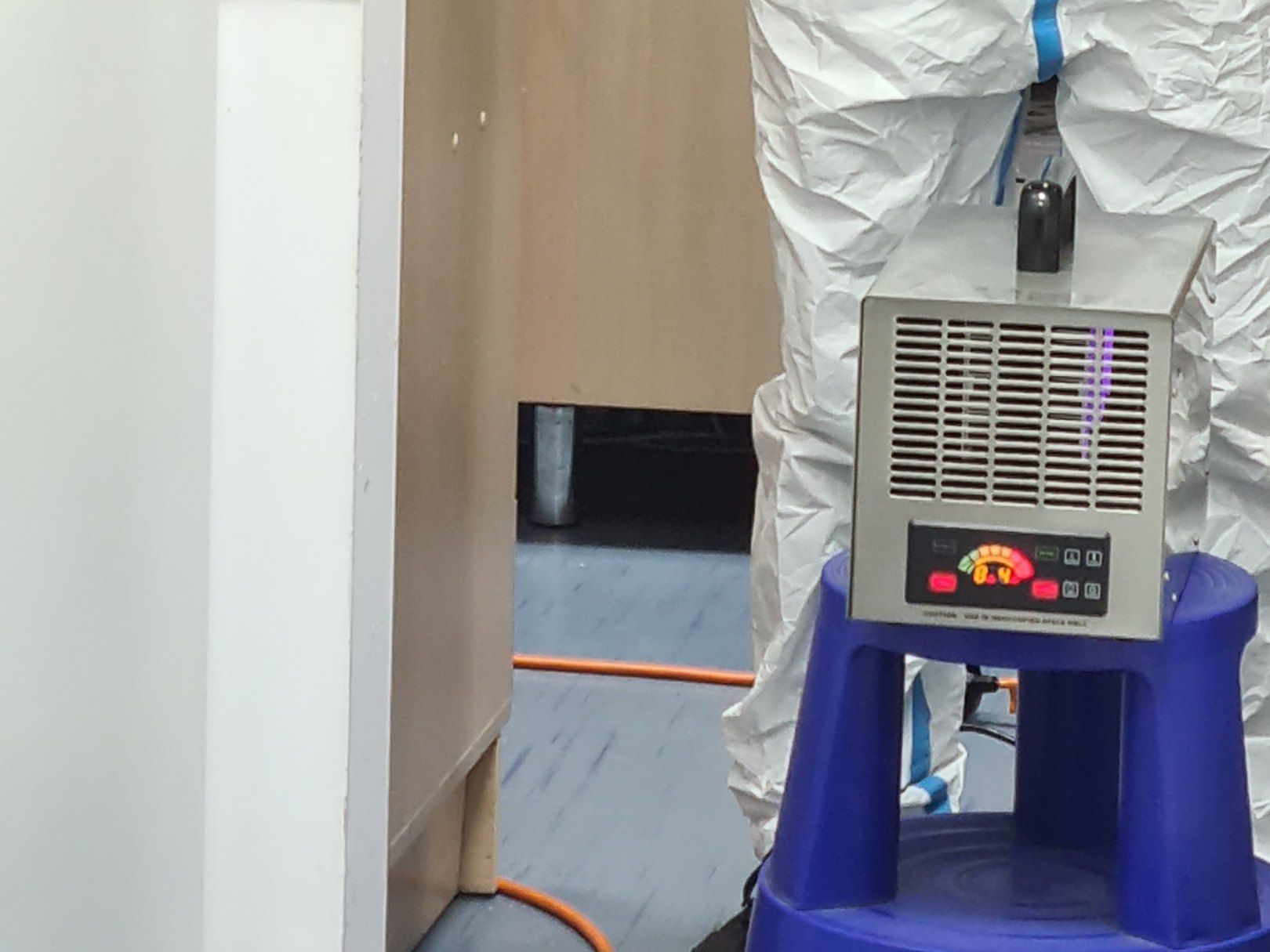
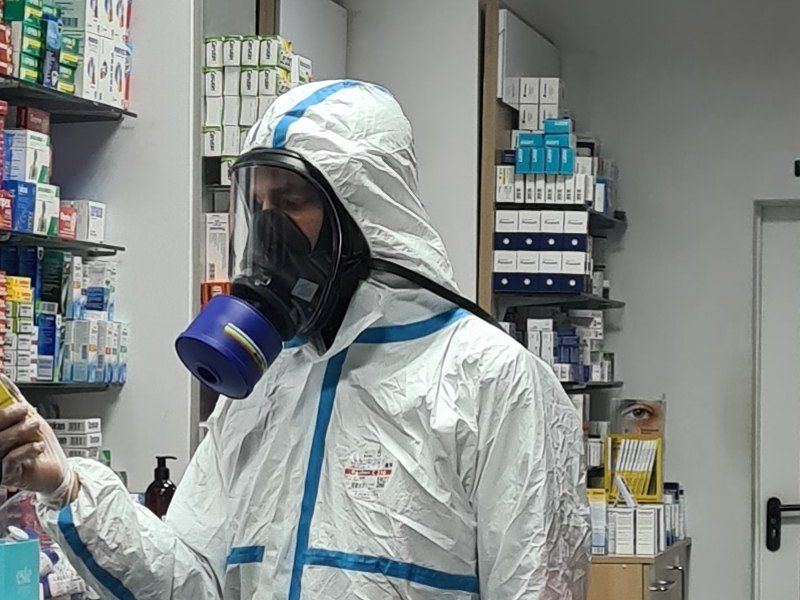
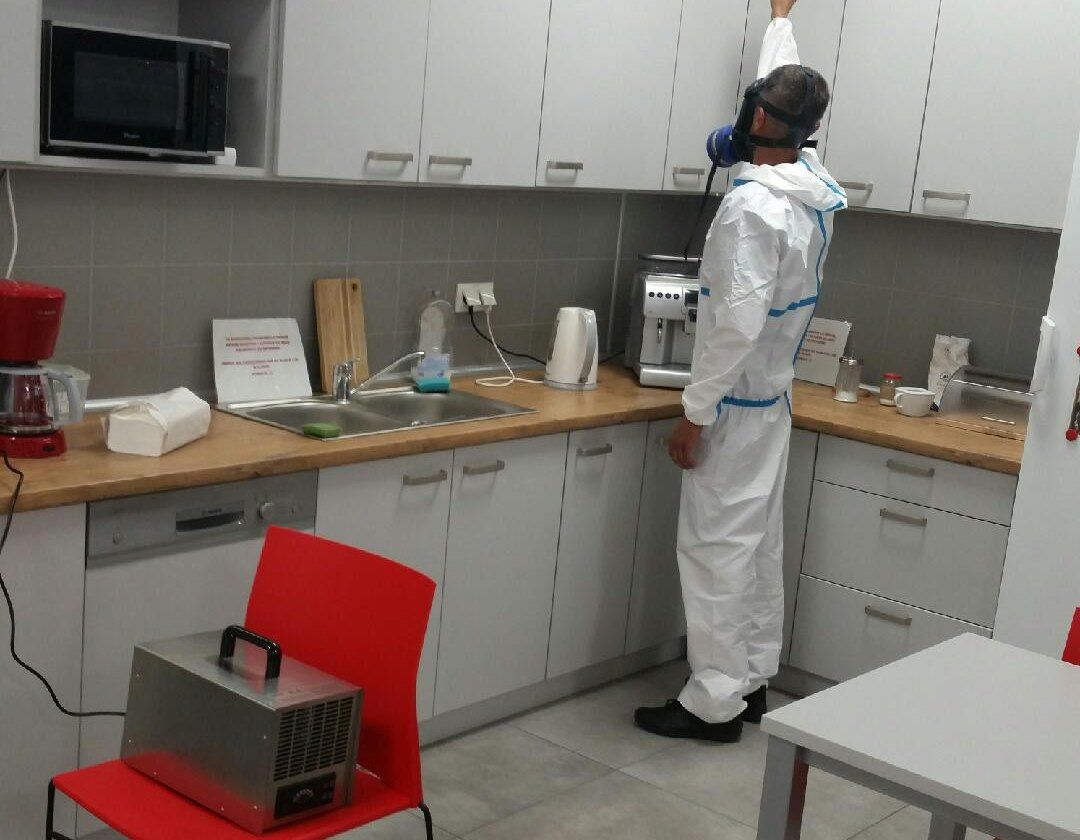
Ozone treatment disinfects air and surfaces with a gas produced on site from oxygen: the ozone fills the entire volume of the room and, once the treatment is over, breaks down back into oxygen. We have experience in the ozone treatment of rooms at food industry plants, and during the COVID-19 pandemic we treated pharmacies with ozone day after day — at night, after an infection had been detected. We have 14 ozone generators of various sizes. We carry out work that requires a line to stop during production shutdowns, on non-working days and on public holidays.
At a glance
- We have experience in the ozone treatment of rooms at food industry plants.
- We carry out work that requires a line to stop during production shutdowns, on non-working days and on public holidays.
- We work 365 days a year, around the clock.
- Our 24/7 support team responds to every call-out immediately and decides straight away whether to send a mobile team to the site.
- We have 14 ozone generators of various sizes.
- During the COVID-19 pandemic we treated pharmacies with ozone day after day — at night, after an infection had been detected.
- We have carried out ozone treatment in pharmacies, doctors’ surgeries, cold stores and raw material warehouses.
Who it is for
- Food processing plants and food packaging manufacturers — cold stores, raw material warehouses, production areas after cleaning.
- Warehouses and logistics centres dealing with mould, a persistent odour or contamination after a flood.
- Production plants with changing rooms, canteens and staff facilities for several hundred people.
- Quality teams preparing a plant for a customer audit or a sanitary inspection.
How ozone treatment works
Ozone (O₃) is a molecule made up of three oxygen atoms. A generator produces it from the air directly in the room being treated. Ozone is a strong oxidising agent: it destroys the cell membranes of bacteria and moulds, inactivates viruses and breaks down the compounds that cause unpleasant odours.
As a gas, it fills the entire volume of the room — it gets under racking, behind equipment and into ducts and gaps that no cloth or spray can reach. Once the treatment is over, it breaks down back into oxygen, so no layer of product is left on surfaces to be rinsed off. The breakdown does, however, take anywhere from several tens of minutes to a few hours, depending on concentration, temperature and ventilation.
Ozone treatment does not replace cleaning. Ozone is poor at penetrating layers of fat, protein and biofilm, and it does not remove allergens at all. In a food plant it is therefore a step after cleaning and disinfection — an addition that covers the whole room, not a shortcut.
Ozone treatment, fogging or contact disinfection
Each of these methods solves a different problem. Disinfecting a cold store before the season is not the same as removing odours from a changing room, and different again from sanitising work surfaces after cleaning. In practice the methods are combined: cleaning first, then contact disinfection, with ozone treatment or fogging as an addition for the whole room.
| Method | How it works | When it works well | Limitations |
|---|---|---|---|
| Ozone treatment | Gas from a generator fills the entire volume of the room | Cold stores, raw material warehouses, changing rooms, odours, mould in hard-to-reach places | The room must be empty; it does not remove dirt or allergens |
| Fogging (ULV) | A biocidal product sprayed as droplets from a few to several tens of micrometres in diameter | Large spaces, fast disinfection of air and surfaces | Needs a product authorised for sale and time for the mist to settle |
| Contact disinfection | Washing or wiping surfaces with a biocidal product | Food contact surfaces, tables, handles, equipment | Labour-intensive; effectiveness depends on concentration and contact time |
- Besides ozone treatment, we disinfect surfaces and air by fogging (ULV) with biocidal products authorised for sale in Poland.
How a treatment is carried out at a plant
Ozone treatment means taking the room out of use for the treatment and for ventilation afterwards. At a plant that works in shifts, it is therefore scheduled as part of a line shutdown, a weekend or a holiday break, rather than squeezed in around them.
- Agreeing the date and scope with the shift manager, the quality team or the maintenance department.
- Preparation: the room has been cleaned and is free of people, animals and plants; ventilation is switched off or sealed; entrances are marked and secured.
- Matching the dose and exposure time to the volume of the room and the purpose of the treatment.
- Exposure, followed by ozone breakdown and ventilation.
- People return only once the ozone concentration has fallen below the occupational exposure limit (the Polish NDS for ozone: 0.15 mg/m³).
- A treatment record for the plant’s documentation.
- We treat only empty rooms with ozone. We mark and secure the entrances, and people return only after the ozone has broken down, the room has been ventilated and the concentration has been measured.
- After every treatment the plant receives a report: date, room, volume, exposure time and ozone concentration — ready to file with the HACCP documentation.
Checklist: what to ask a contractor
Questions worth asking any cleaning company before you sign a contract, whoever you choose.
- Does the contractor treat only empty rooms with ozone, and how does it secure the entrances?
- What equipment does it use, and how does it match the dose and time to the volume of the room?
- Does it measure the ozone concentration before letting people back in?
- Does it issue a treatment report you can file with your HACCP documentation?
- How many hours does the treatment take, including ventilation — and will it fit into your shutdown?
From our work
Can anyone stay in the room during ozone treatment?
No. At the concentrations used for disinfection, ozone irritates the airways and eyes, so there must be no people, animals or plants in the room. People go back in after the ozone has broken down and the room has been ventilated, once the concentration is below the NDS limit (0.15 mg/m³).
Does ozone treatment replace cleaning and disinfection?
No. Ozone is poor at penetrating layers of fat, protein and biofilm, and it does not remove allergens. In a food plant, ozone treatment is carried out after cleaning and disinfection, as an addition that covers the whole volume of the room.
Does ozone treatment mean stopping production?
It means taking the treated room out of use for the treatment and ventilation. We carry out work that requires a line to stop during production shutdowns, on non-working days and on public holidays.
Does ozone damage equipment and materials?
With long exposure at high concentrations, ozone speeds up the ageing of rubber, seals and some plastics. That is why the dose and time are matched to the volume of the room and the purpose of the treatment, and sensitive items are removed or protected.
What equipment do you use for ozone treatment?
We have 14 ozone generators of various sizes. During the COVID-19 pandemic we treated pharmacies with ozone day after day — at night, after an infection had been detected.
Where do you carry out ozone treatment?
We serve plants and warehouses in the Greater Poland, Lubusz and Lower Silesian voivodeships.
Often ordered together
Integrated cleaning services
Contract cleaning of plants and logistics centres: buildings, offices, grounds, consumables. Two contract managers per client, 92% of revenue from long-term contracts.
Details Contract cleaningWashroom consumables and chemicals
Washroom consumables in three quality tiers and BUZIL chemicals from our own warehouse, delivered to site and invoiced by usage — for plants and warehouses.
Details Specialist servicesData centre cleaning
Dust removal in server rooms, data centres and technical rooms: HEPA vacuuming, raised access floors, ESD rules. Including Poznań Science and Technology Park.
Details Specialist servicesUpholstery cleaning
Spray extraction cleaning of chairs, armchairs and sofas in offices, conference rooms, hotels, cinemas and plants, matched to the fabric. Quote after a site survey.
Details Technical services and maintenanceMachinery and line cleaning
Cleaning of presses, paint lines, packaging machines and conveyors during changeovers and shutdowns, by teams prepared for your specific plant.
DetailsIndustries
Logistics and warehousing
Warehouse cleaning, removal of forklift tyre marks, cardboard and film segregation, and snow clearance of access roads at logistics centres and warehouses.
Aviation
Cleaning of aircraft, hangars and airport facilities. We work for Polish Medical Air Rescue (LPR), around the duty roster: 365 days a year, 24 hours a day.
Food industry
Cleaning and ozone treatment at food plants and food packaging manufacturers: hygiene zones, HACCP, allergens. An in-house HACCP auditor.
Ask AI about your site
The AI assistant will read this page and the calculator, ask you about the scope you need (“Ozone treatment and disinfection of premises”) and then, one question at a time, about your site — floor area, floor type, shifts, waste and site requirements. Finally, it will prepare a ready-to-send request for quotation with a list of open points.
- ChatGPT opens with a ready-made prompt (new tab)
- Claude opens with a ready-made prompt (new tab)
- Perplexity opens with a ready-made prompt (new tab)
Show the prompt
Help me prepare a request for quotation for industrial cleaning — topic: Ozone treatment and disinfection of premises.

First open and read these pages of the contractor SARA SYSTEM. Open them directly; do not rely on search results alone:
- https://www.sarasystem.pl/en/services/ozone-treatment-and-disinfection/
- https://www.sarasystem.pl/en/cost-calculator/
- https://www.sarasystem.pl/llms.txt

Then interview me briefly about my site. Ask one question at a time, in English, and wait for my answer. Start by asking what exactly I need in terms of “Ozone treatment and disinfection of premises”, then ask about the type of site and its floor area. Then ask in turn about:
1. the type of site and its floor area,
2. the floor type: bare, power-floated, sealed, painted or resin-coated concrete,
3. the soiling: tyre marks, oil, dust, old coatings,
4. the height of the building and the racking,
5. the number of shifts and whether the site keeps operating while the work is done,
6. how often the work is needed,
7. the scope: machine cleaning, high-level surfaces, washrooms, loading bays,
8. waste,
9. health and safety requirements, public liability insurance and site standards,
10. who provides the machines and chemicals,
11. the start date.
If I don't know something, record it as an open question.

About SARA SYSTEM, write only what is on these pages — do not add anything. Whatever the pages do not say, add to the questions for the contractor. If the calculator gives indicative costs, quote them as an estimate together with its assumptions.

Finally, write a ready-to-send email with the request to SARA SYSTEM (biuro@sarasystem.pl): the site parameters as bullet points and a list of open questions.
The conversation takes place in the tool you choose — we have no access to it. The assistant can make mistakes, so it is worth confirming the details with us directly.
A site survey as early as the same or the next day
We will come and look at your floors and zones, then prepare a work plan with a quote.