Factory cleaning
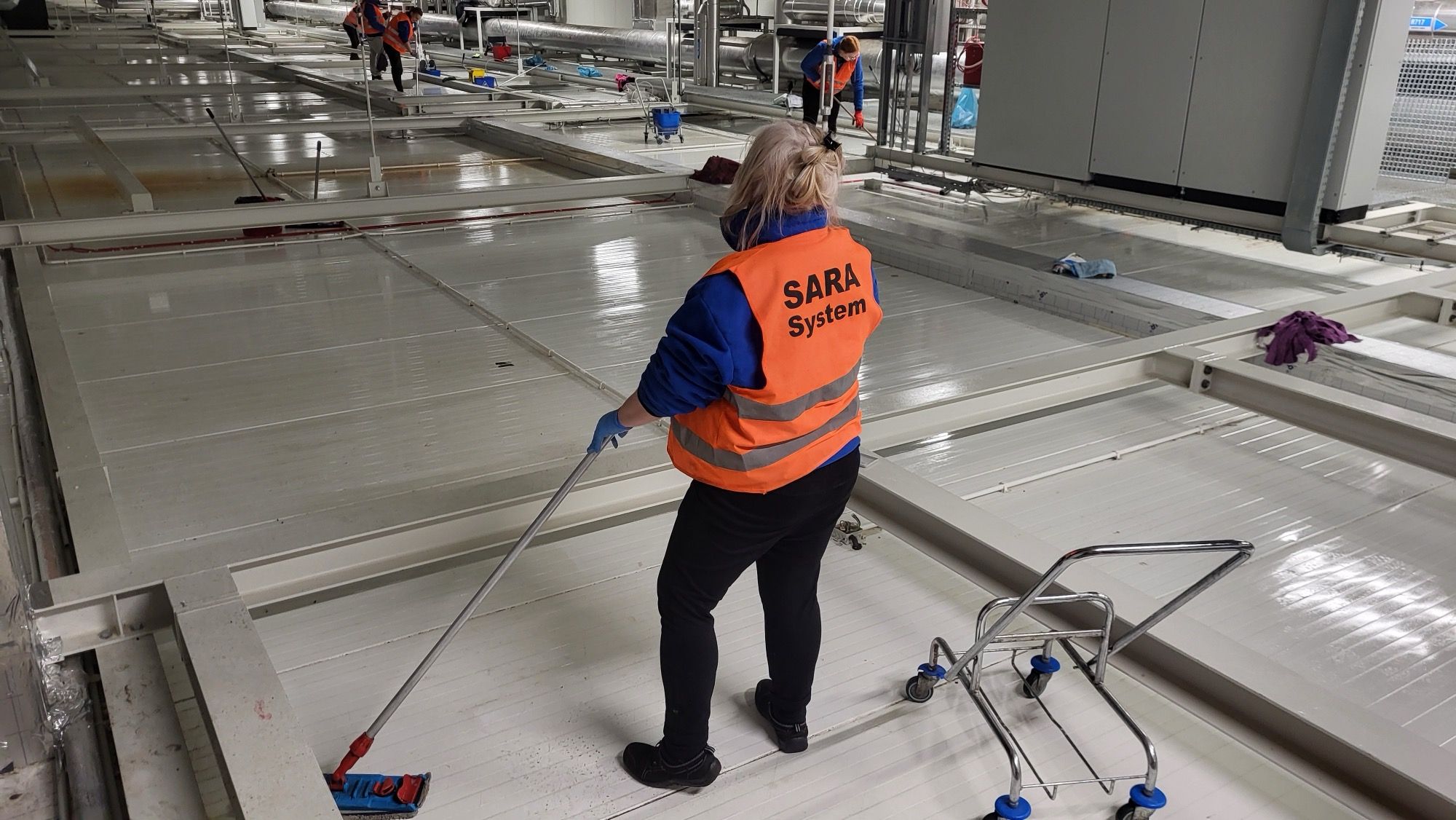
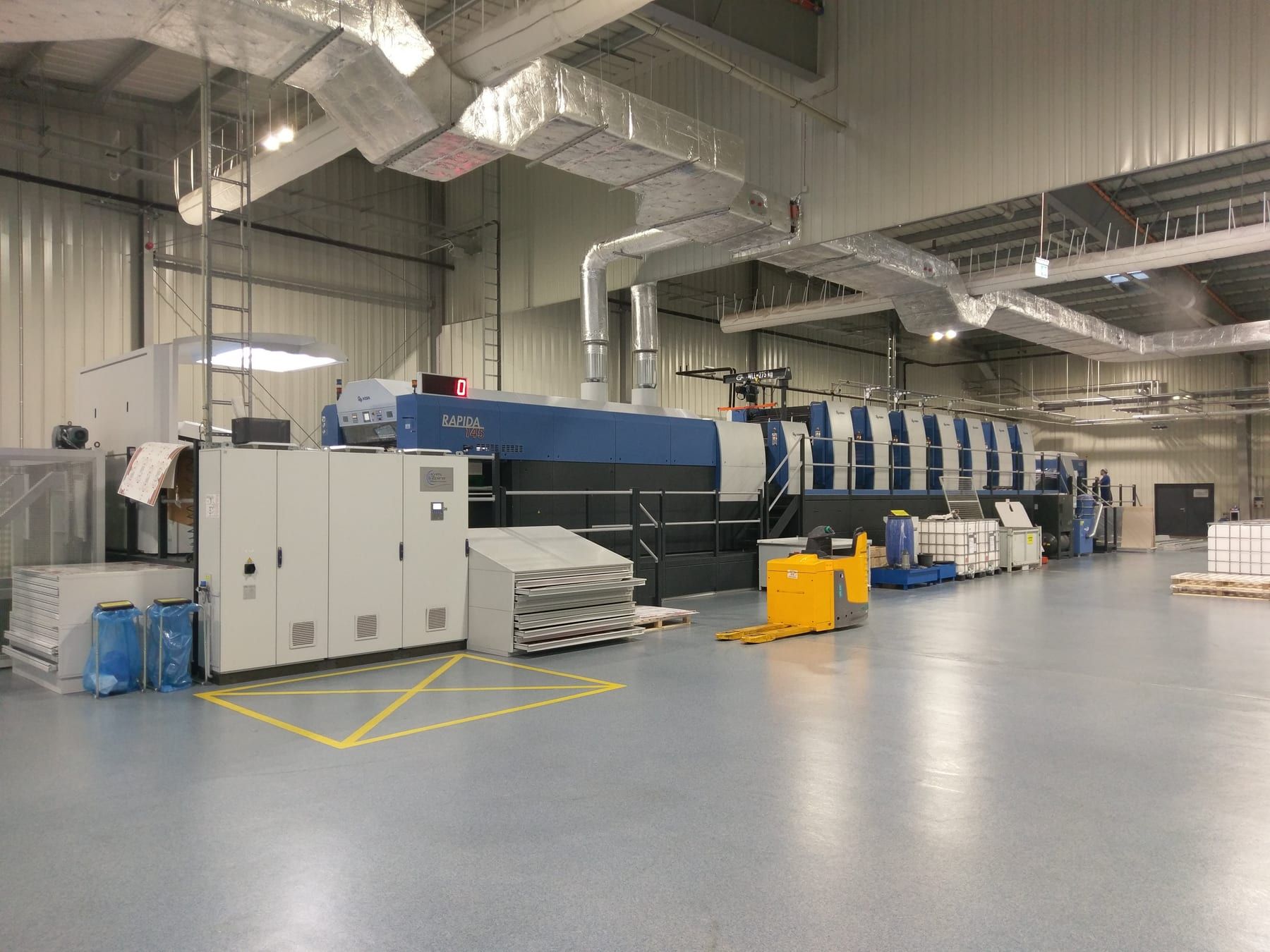
Factory cleaning covers floors, aisles and walkways, the areas around workstations and machines, and staff facilities — fitted around the plant’s shifts and shutdowns so that production does not have to stop. SARA SYSTEM cleans production areas at manufacturing plants in the Greater Poland, Lubusz and Lower Silesian voivodeships. We work 365 days a year, around the clock, and we carry out work that requires a line to stop during production shutdowns, on non-working days and on public holidays. Every client has two dedicated contract managers. Below you will find 12 questions worth asking any cleaning company before you sign a contract.
At a glance
- We work 365 days a year, around the clock.
- We carry out work that requires a line to stop during production shutdowns, on non-working days and on public holidays.
- We look after 470,500 m² of production and warehouse space under ongoing contracts.
- Of our clients, 54% are automotive plants, 28% are in logistics, 10% in the food industry and 8% in other industries.
- Every client has two dedicated contract managers. They cover for each other, so during audits, holidays or sudden staff absence the plant is never left without supervision.
- Our contract managers check the work on site every day, not only when a client raises a concern. The work follows an agreed schedule.
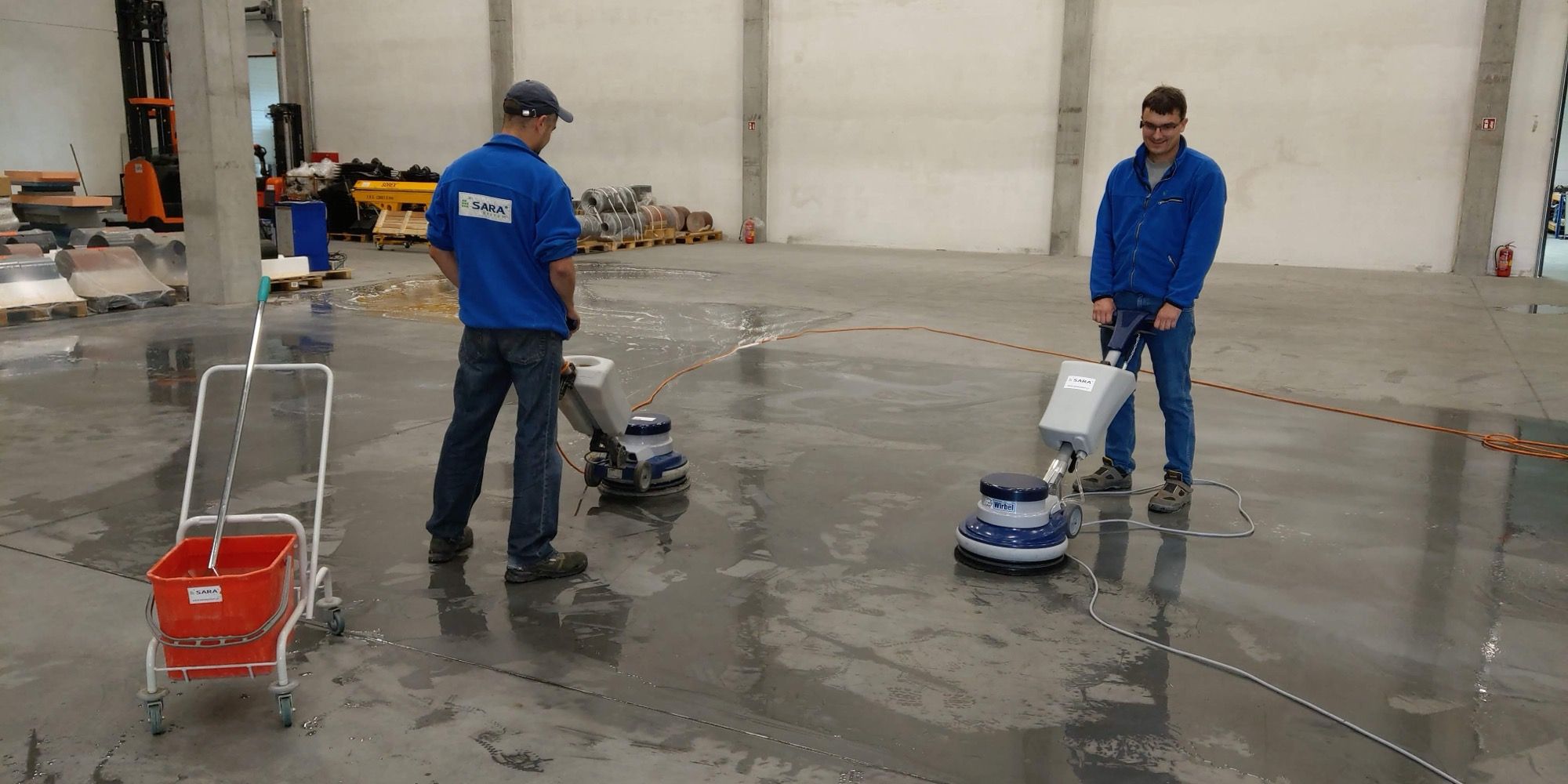
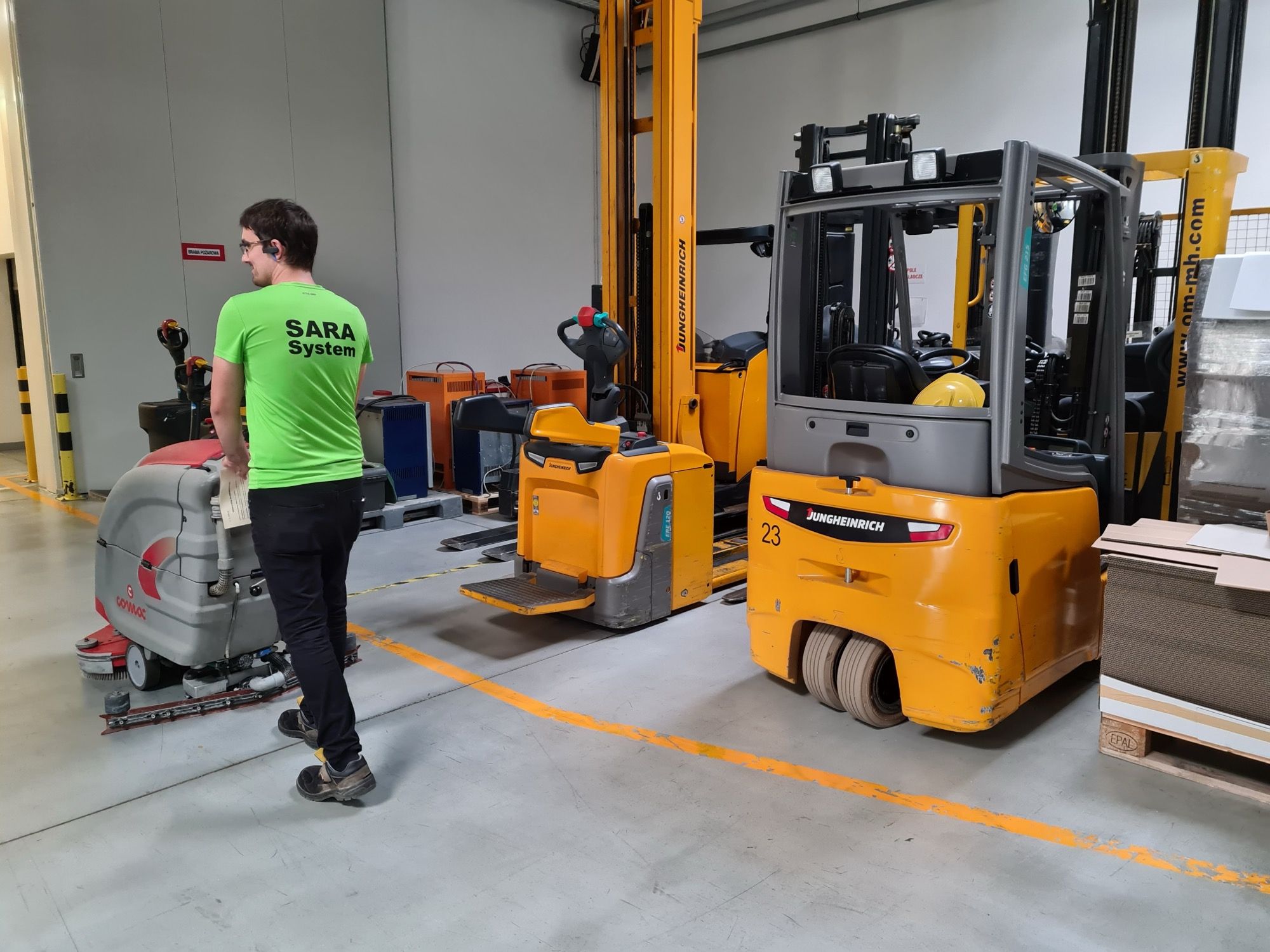
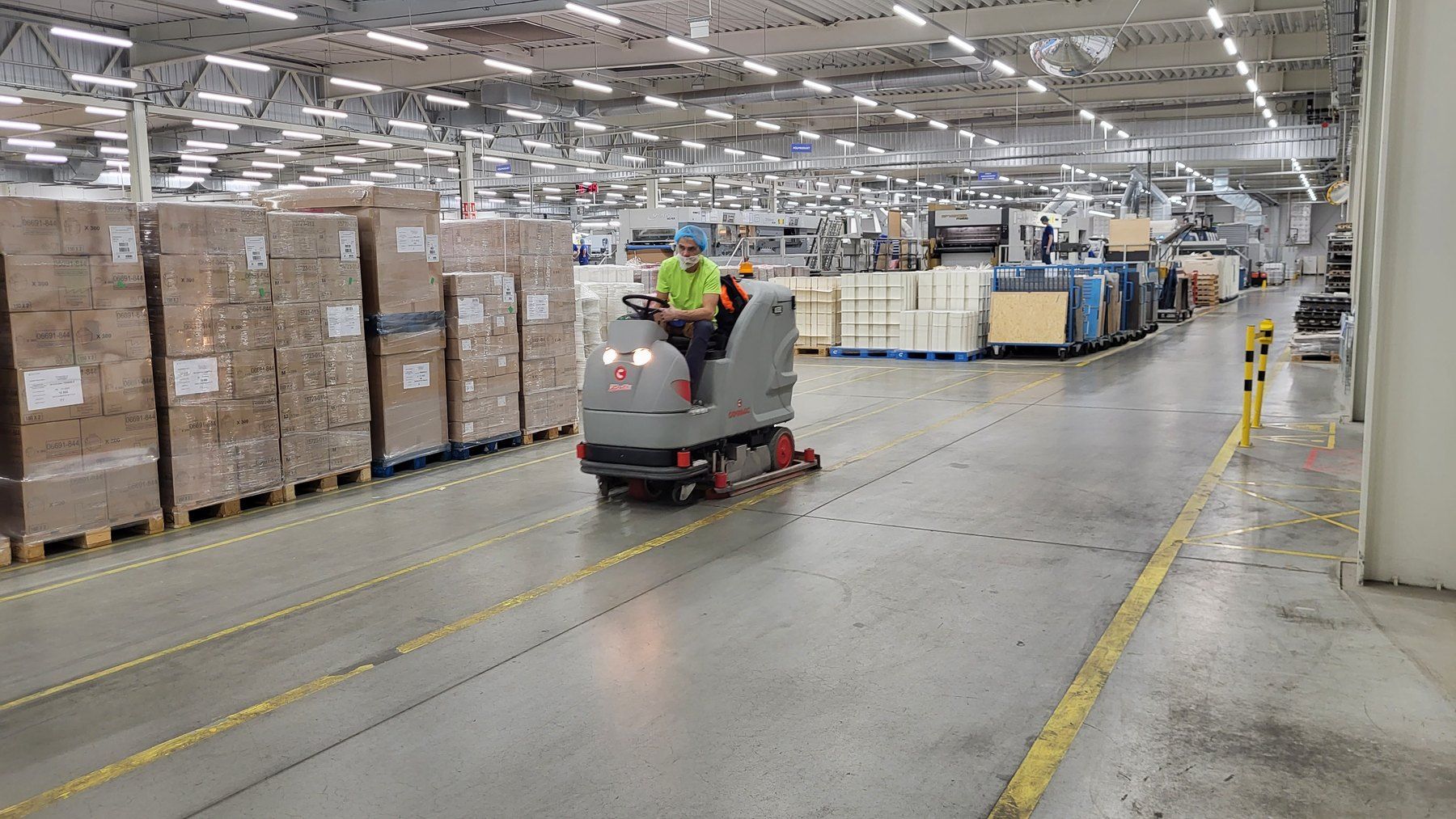
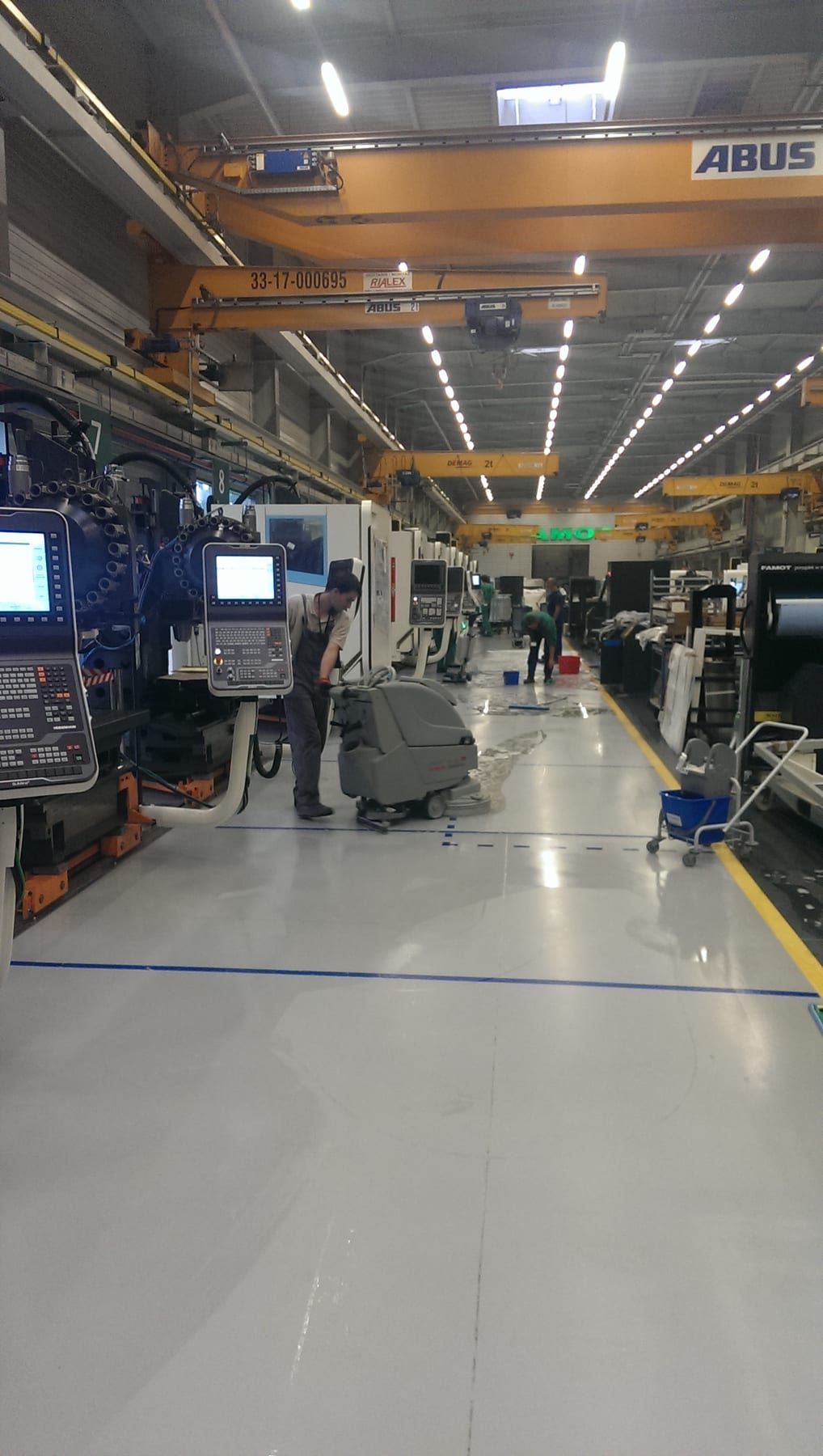
- We have more than 170 COMAC machines, over half of them scrubber dryers.
- We use RCM sweepers to sweep indoor floors and yards.
- We have our own in-house servicing for machines and equipment, so our machines don’t stand idle — we don’t depend on long lead times from external service providers.
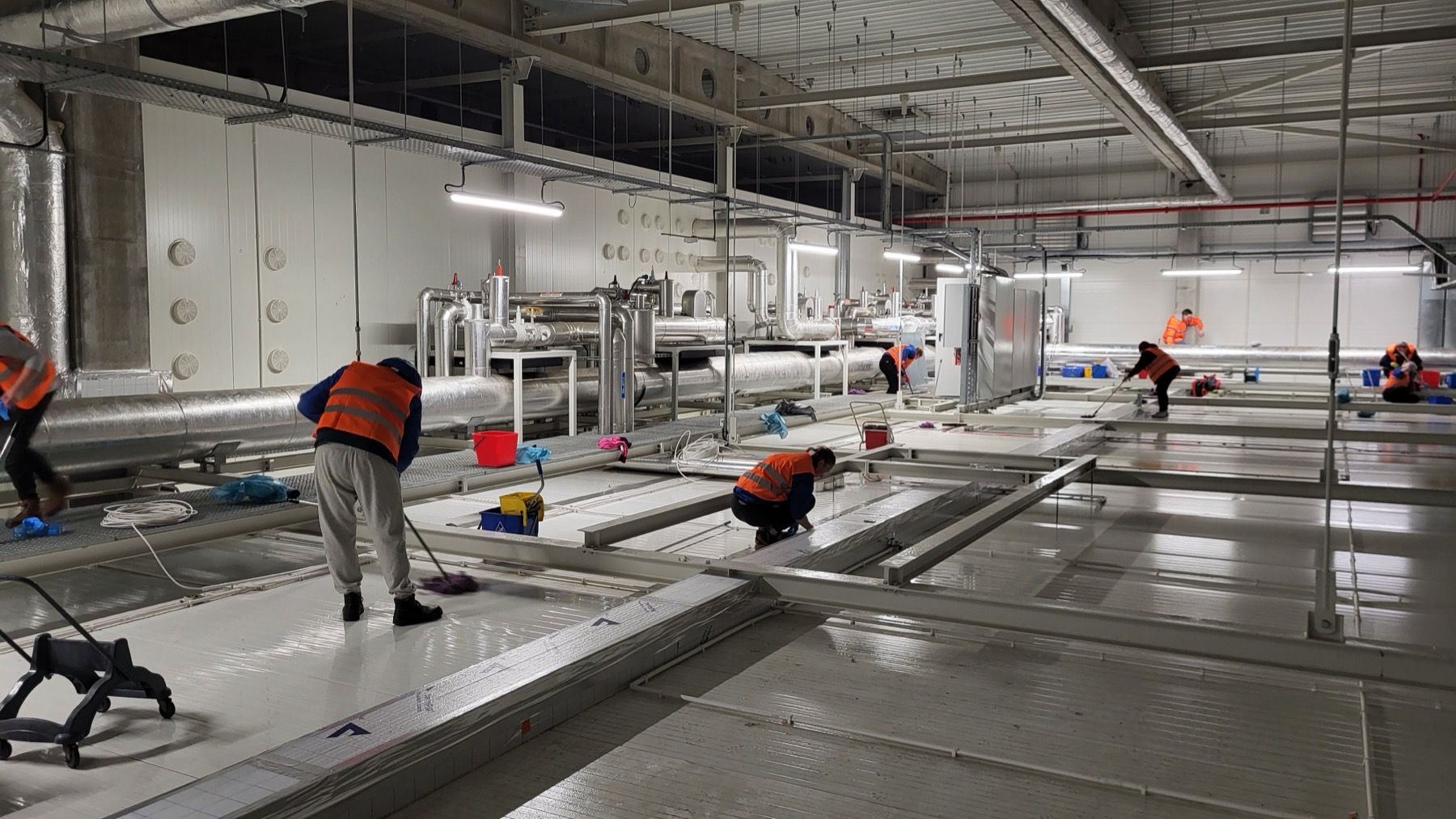
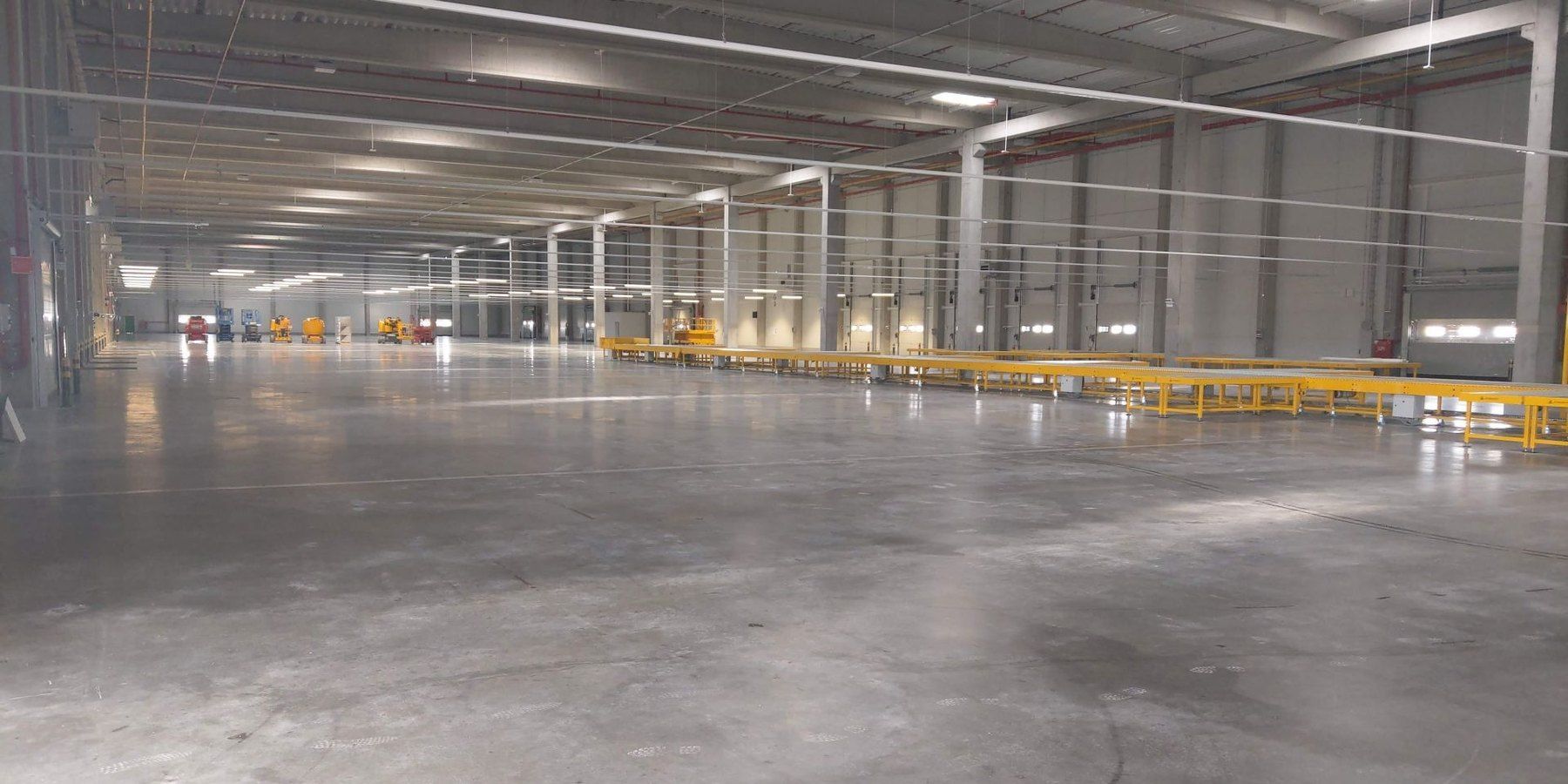
- The largest building we look after under an ongoing contract covers 112,000 m². We work there on three shifts, with 14 people per shift.
Who it is for
- Automotive plants and their suppliers — with 5S requirements and customer audits
- Food plants and packaging manufacturers with production hygiene rules
- Metalworking and plastics plants — with oil, coolants, swarf and dust on the floor
- Production buildings running two or three shifts, with no fixed break for cleaning
- EHS, maintenance and purchasing teams preparing a request for quotation for factory cleaning
What factory cleaning covers
A production building is several different areas under one roof, each with its own kind of dirt and its own access rules. A walkway used by forklift trucks is cleaned differently from the area around a press dripping oil, and differently again from a changing room or canteen.
Typical scope of work in a production area:
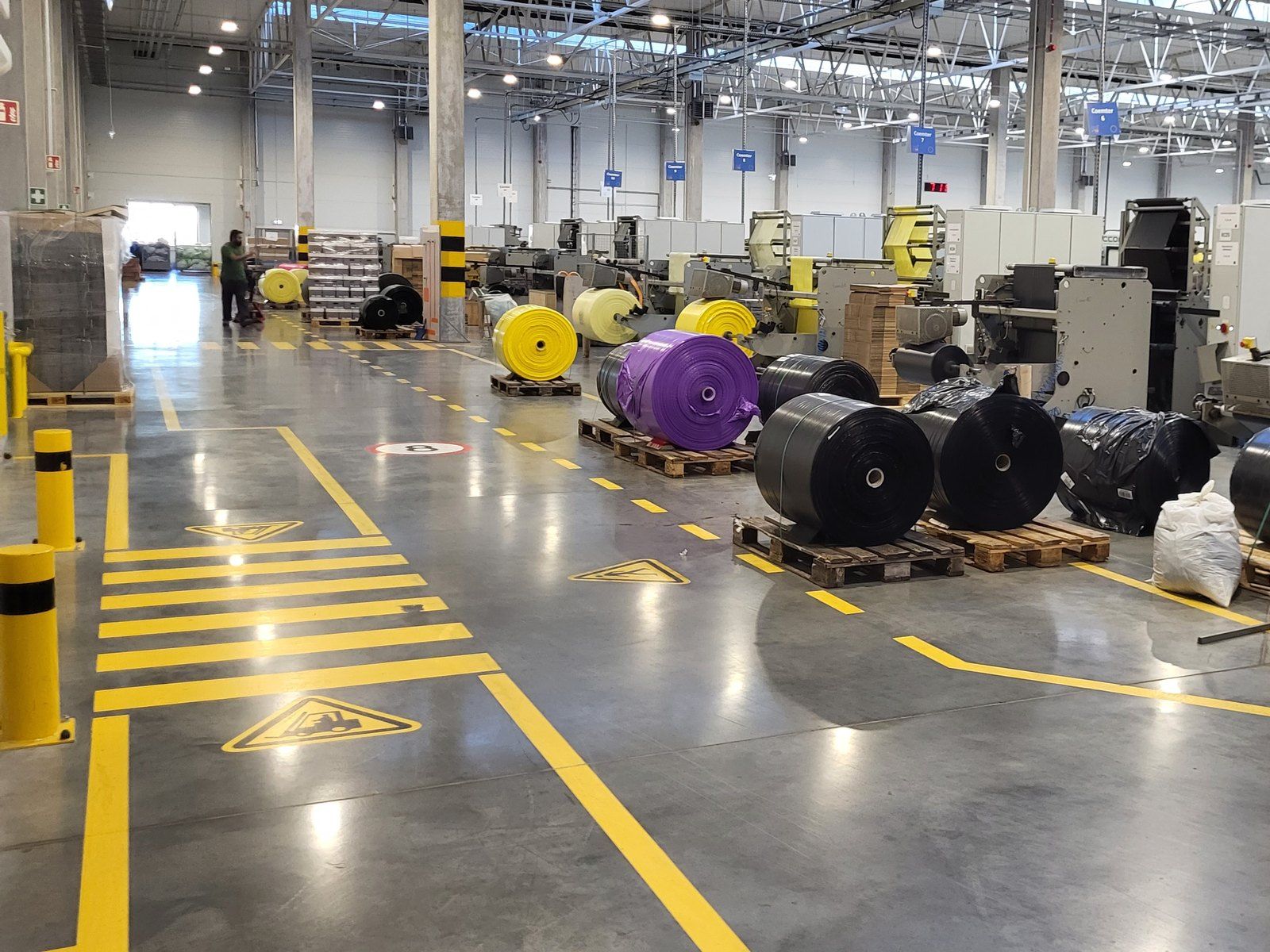
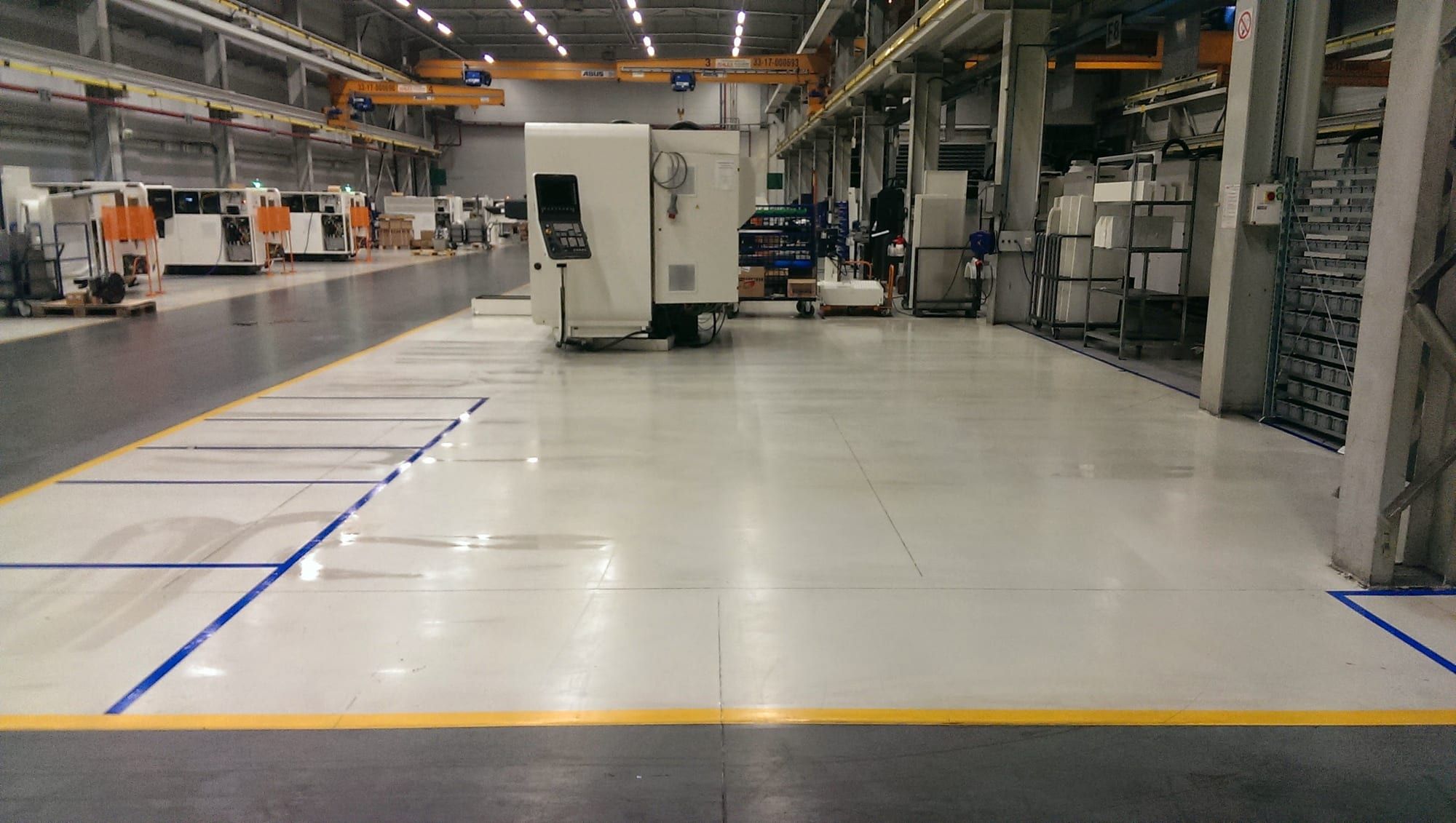
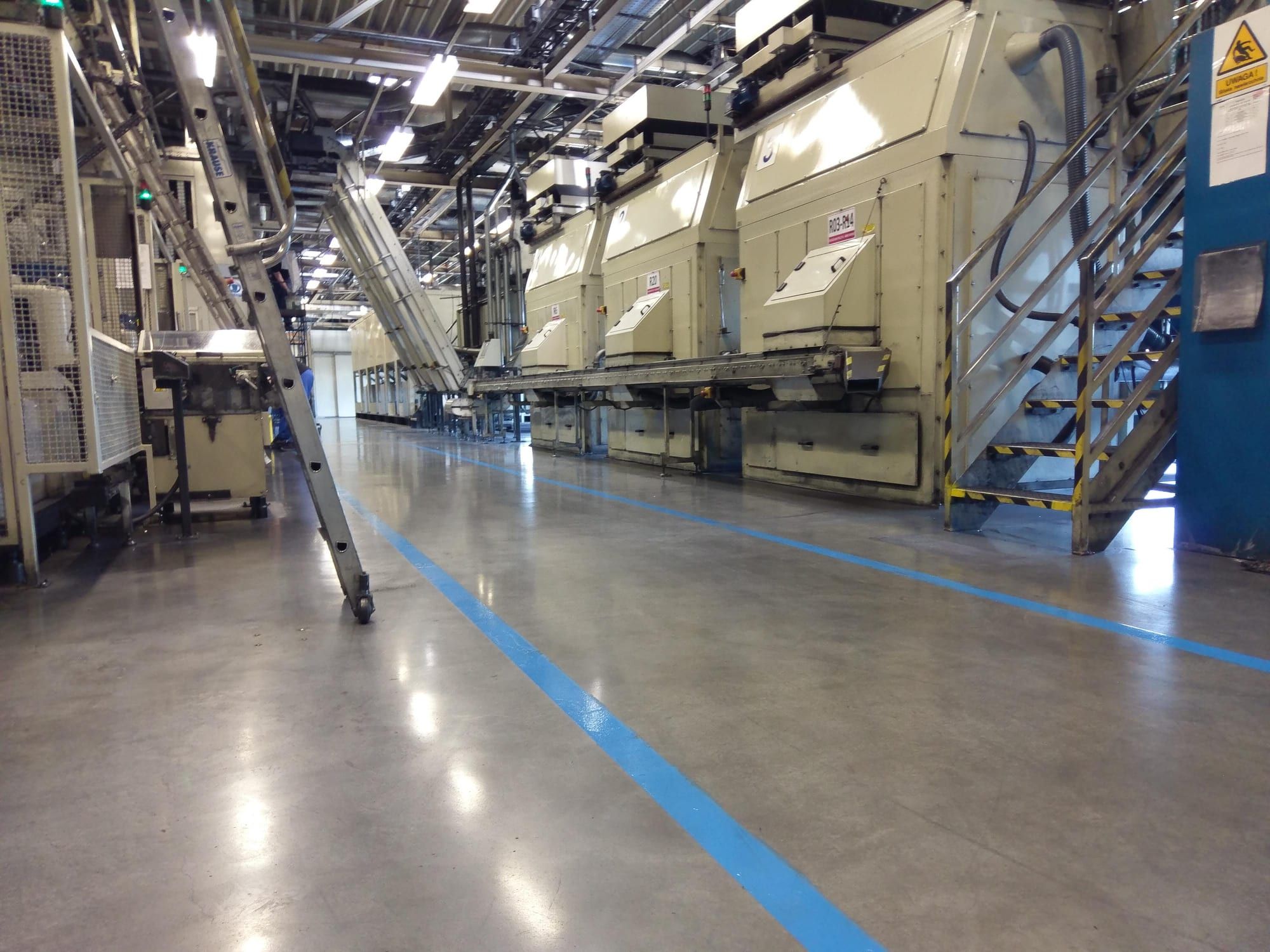
- production floors, aisles and walkways — machine sweeping and scrubbing
- areas around workstations and machines — swarf, spillages, oil and coolant leaks
- storage areas next to production, docks and loading bays
- bins and waste segregation points in the production area
- staff facilities, changing rooms, washrooms and canteens
- periodic work — high-level surfaces, structures, floor deep cleaning
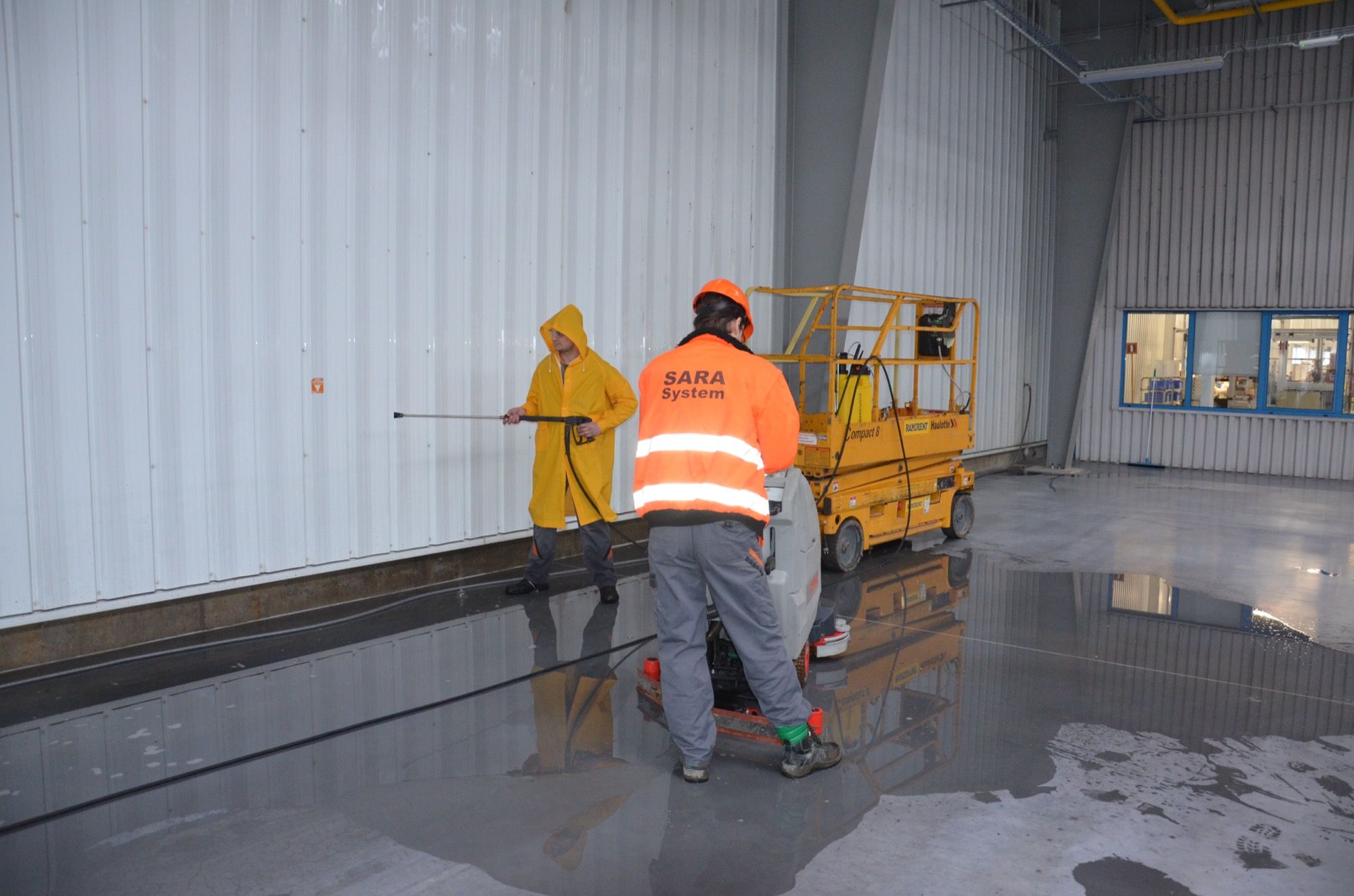
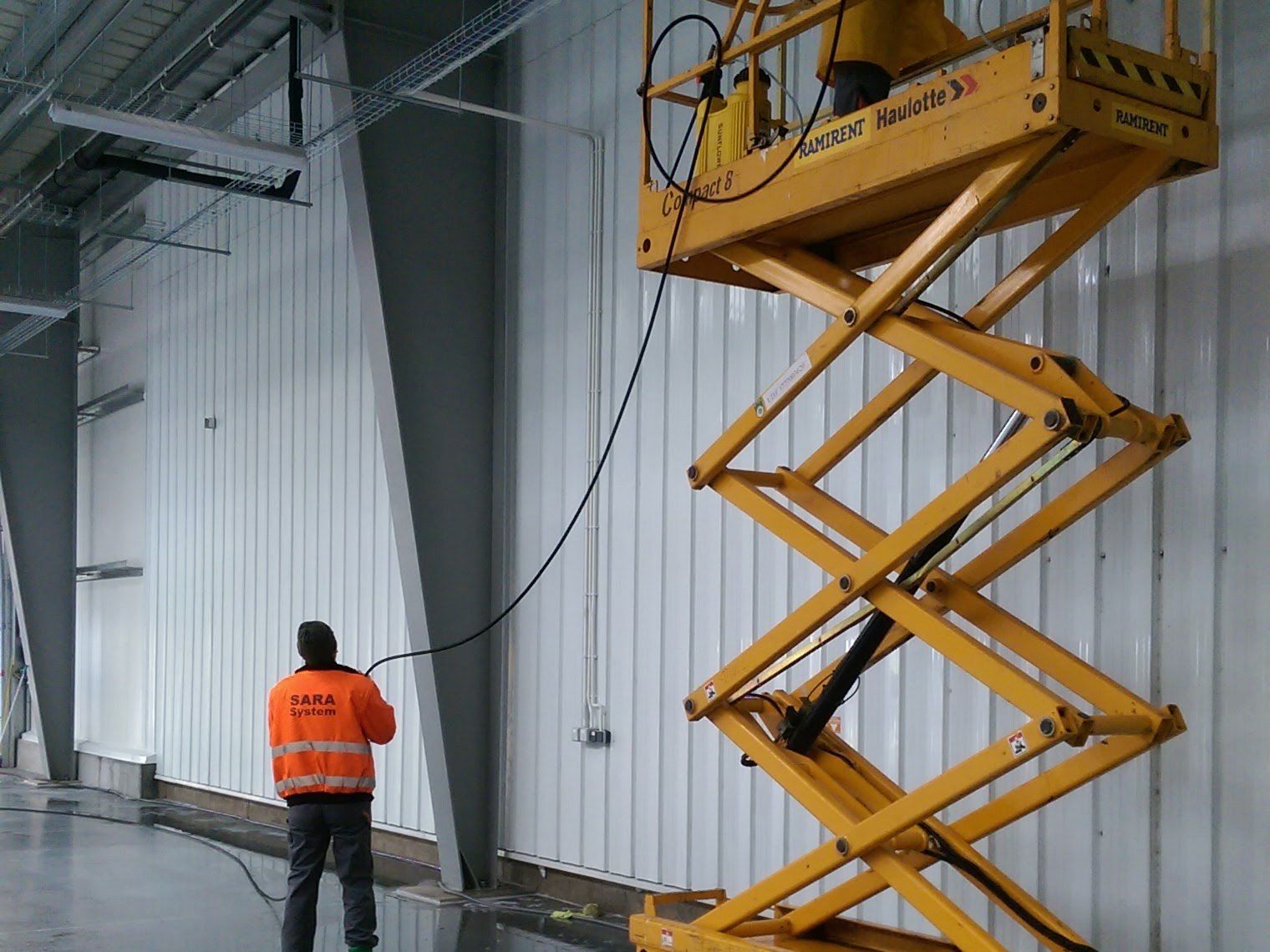
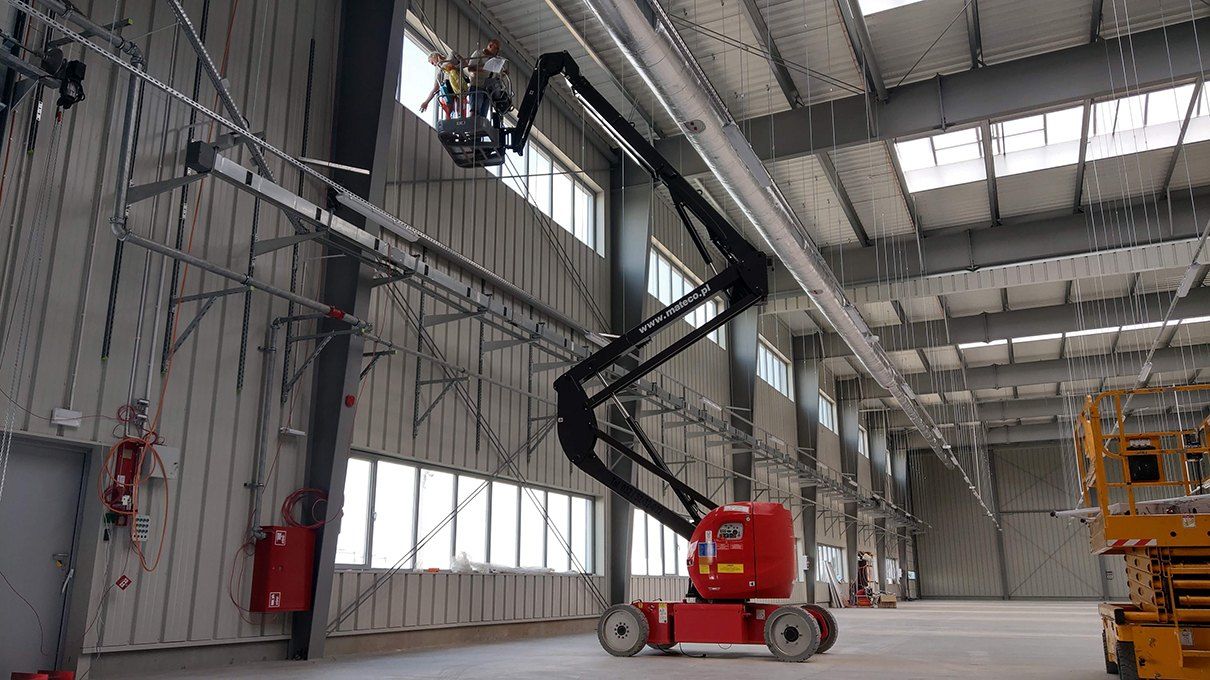
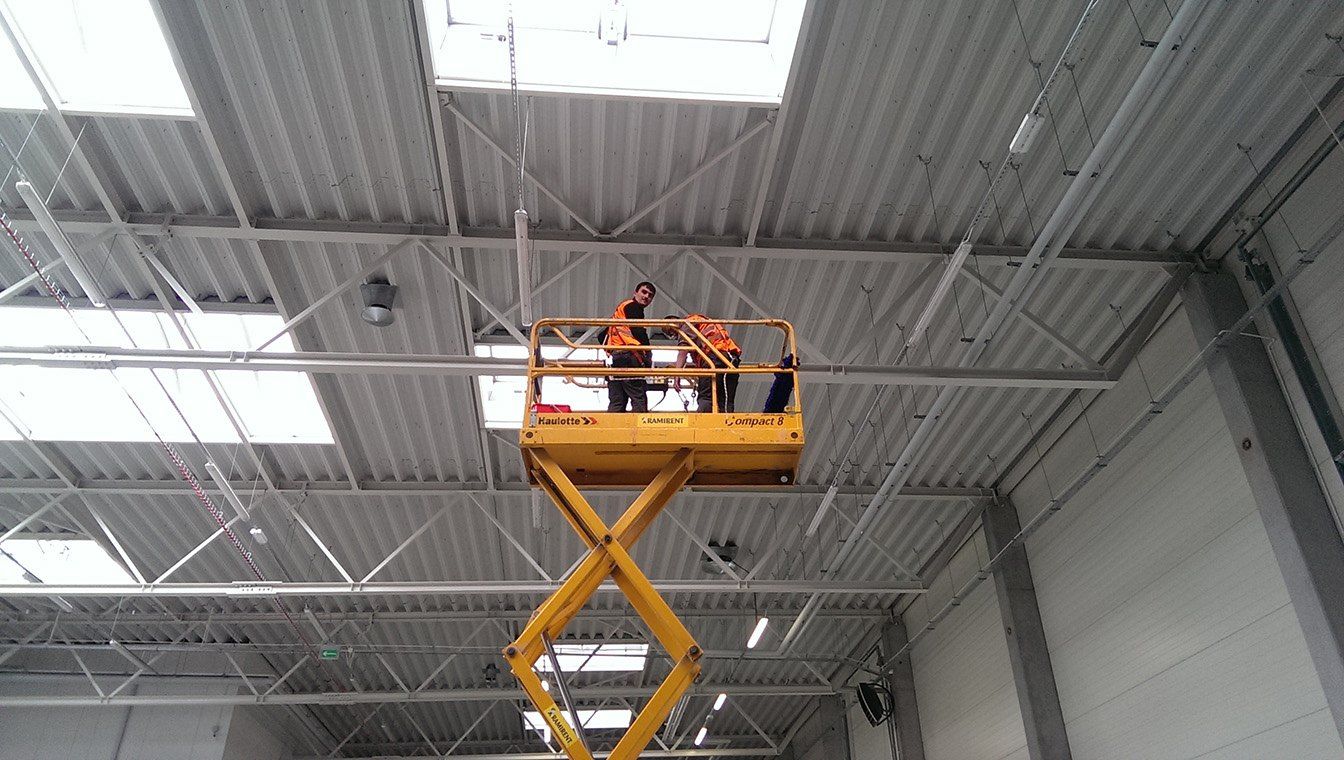
- Our operators hold UDT category IP licences (UDT: Poland’s Office of Technical Inspection) for boom lifts and scissor lifts.
- We clean production floors and walkways, the areas around workstations and machines, storage areas next to production, and staff facilities and washrooms.
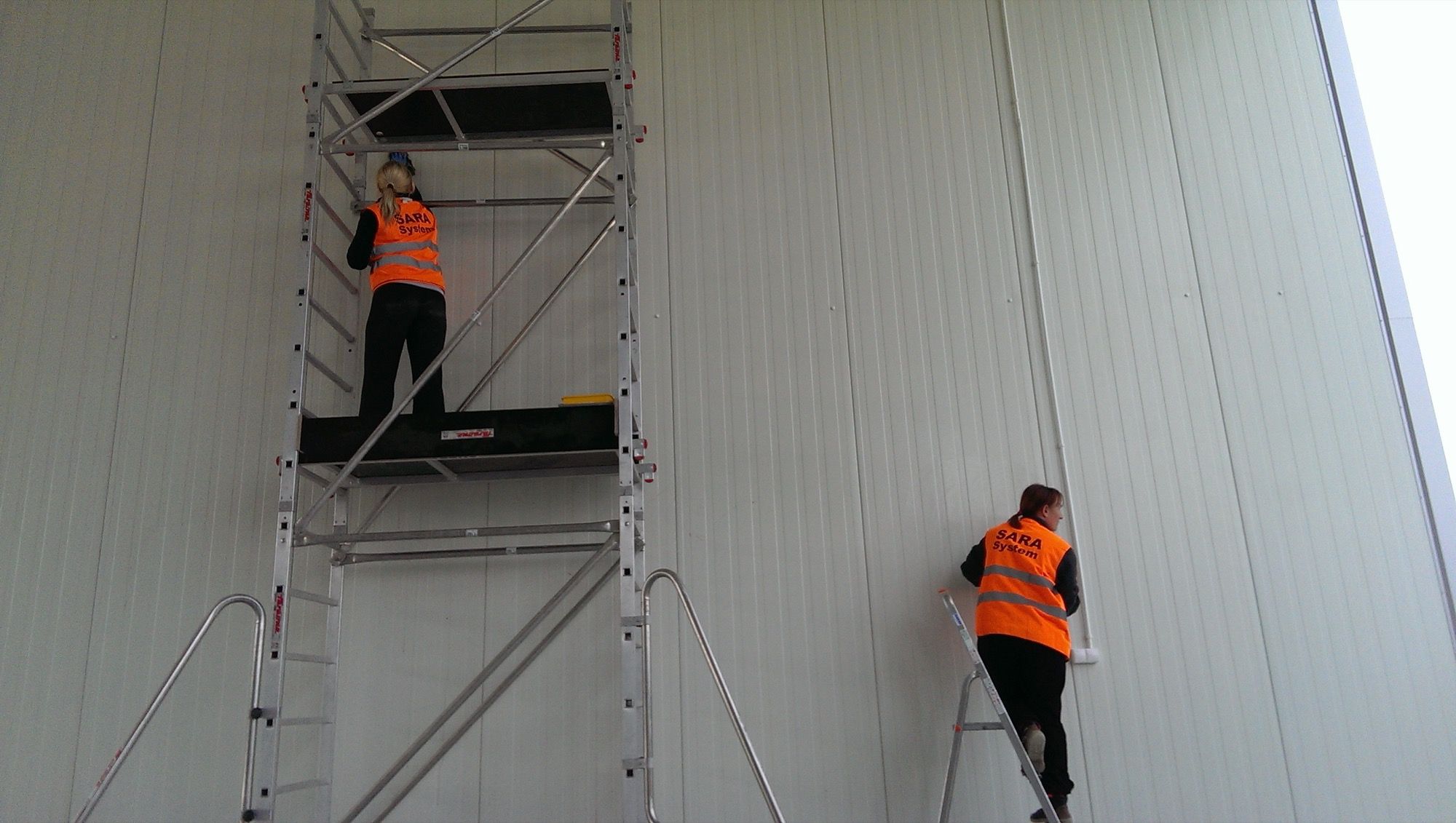
- For cleaning high-level surfaces — steel structures, beams and light fittings — we have scissor lifts. 12 of our operatives are qualified to work at height, and many of our staff also hold UDT (Poland’s Office of Technical Inspection) certification.
Cleaning in step with production
A building that runs two or three shifts has no “cleaning hours” in the usual sense. So the work is split into three windows — what can be done while the line is running, what needs a break between shifts, and what can only be done during a shutdown.
| Time window | What gets done |
|---|---|
| During a shift | Routine cleaning of walkways, emptying bins, clearing leaks and spillages, washrooms |
| Between shifts | Machine cleaning of aisles and walkways, staff facilities, canteens |
| Line shutdown, weekend, public holiday | Cleaning floors under lines and around machines, deep cleaning, high-level surfaces |
| Emergency | Response to a call-out — a leak, spillage or flood — whatever the time |
- Our 24/7 support team responds to every call-out immediately and decides straight away whether to send a mobile team to the site.
Plant standards: health and safety, 5S, industry requirements
Every plant has its own rules, which also apply to the cleaning contractor — restricted-access areas, personal protective equipment, signage, procedures around machines. In automotive plants, order at the workstation is part of the 5S system and customer audits. Food and packaging plants add HACCP and GMP hygiene requirements, and potentially explosive atmospheres call for ATEX-certified equipment.
That is why the contractor’s team should complete a site induction and job-specific training at your plant before starting, and it is worth writing the cleaning scope and procedures into an instruction agreed with your EHS team.
- Before we start, the team completes job-specific training at the client’s site: the plant’s health and safety rules, its zones and standards, such as 5S or HACCP.
- We have ATEX-certified equipment for work in potentially explosive atmospheres.
- We serve plants that make packaging for international food brands.
- We employ an in-house internal auditor for food safety systems, including HACCP.
How to compare quotes from cleaning companies
Quotes for factory cleaning are hard to compare, because every company describes the scope differently. A price per square metre without the frequency, staffing and equipment tells you nothing — two quotes at the same rate can mean a completely different number of people per shift.
The simplest approach is to ask every bidder the same questions and compare the answers, not just the figures. The list below is based on questions that plant managers ask — and that an AI model asks when it is asked to choose a contractor for a large production building.
How much might it cost?
Our cleaning cost calculator works out an indicative price range for your floor area, with worked examples and the method behind them. The final quote always follows a site survey.
Open the calculatorChecklist: what to ask a contractor
Questions worth asking any cleaning company before you sign a contract, whoever you choose.
- Which floor types do you work with — power-floated concrete, dry-shake hardener, resin, painted floors — and which products will you choose for ours?
- How will you organise the work around our shift pattern — what during production, what between shifts, and what during shutdowns and at weekends?
- How often will each task be done (daily, weekly, quarterly), and will we get the schedule in writing?
- What exactly is in scope — machine cleaning of floors, high-level surfaces, washrooms and staff facilities, docks and loading bays, waste segregation in the production area?
- Do you provide the people, machines and chemicals, or does any of these stay on our side?
- Which machines will you use, how many are there, and what happens when one breaks down?
- How many people will be on site, who will be the contract manager, and how do you organise holiday and sickness cover?
- How do you train your team in health and safety and in our plant’s rules — areas, 5S, HACCP, working around machines?
- How much public liability insurance do you hold, with which insurer, and does it cover damage to floors and machines?
- How do you check quality and report on the work done? How quickly do you respond to a call-out at night or on a public holiday?
- How do you price the work — per m², per hour or as a flat fee — and what is included and what is not?
- When can you start, and is a trial period on part of the site possible?
From our work
Do you clean production areas at night and at weekends?
Yes. We work 365 days a year, around the clock. We carry out work that requires a line to stop during production shutdowns, on non-working days and on public holidays.
Which industries do you provide factory cleaning for?
Of our clients, 54% are automotive plants, 28% are in logistics, 10% in the food industry and 8% in other industries. We also serve plants that make packaging for international food brands.
What machines do you use to clean production areas?
We work with COMAC scrubber dryers. We use RCM sweepers to sweep production buildings and yards.
What happens if there is a leak or spillage during a shift?
You report it to our 24/7 support team, which responds to every call-out immediately and decides straight away whether to send a mobile team to the site.
Can you handle a large building, e.g. 50,000 m²?
Yes. The largest building we look after under an ongoing contract covers 112,000 m² — we work there on three shifts, with 14 people per shift. In total, we look after 470,500 m² of production and warehouse space under ongoing contracts. We set the staffing and number of machines for a specific building after a site survey.
Often ordered together
Floor deep cleaning
Deep cleaning of factory and warehouse floors: tyre marks, oil, ground-in dust. Greater Poland, Lubusz and Lower Silesia. In 2025 we deep-cleaned 66,890 m² of floors.
Details Contract cleaningIntegrated cleaning services
Contract cleaning of plants and logistics centres: buildings, offices, grounds, consumables. Two contract managers per client, 92% of revenue from long-term contracts.
Details Contract cleaningWarehouse cleaning
Warehouse cleaning without stopping dispatch: forklift tyre marks, dust on high-bay racking, loading bays. 470,500 m² of floor space under ongoing contracts.
Details Specialist servicesOn-site waste management
A dedicated waste operative on your site: segregation of cardboard, plastic film, pallets and metal at source. Your plant remains the waste holder.
Details Technical services and maintenanceRoutine maintenance support
Routine maintenance support in plants: scheduled tasks such as wear-part replacement, lubrication, ventilation cleaning and minor repairs. In-house machine servicing.
Details Technical services and maintenanceMachinery and line cleaning
Cleaning of presses, paint lines, packaging machines and conveyors during changeovers and shutdowns, by teams prepared for your specific plant.
DetailsIndustries
Automotive
Factory cleaning, press and paint line cleaning and floor deep cleaning in automotive plants, around production, shutdowns and IATF 16949 audits.
Food industry
Cleaning and ozone treatment at food plants and food packaging manufacturers: hygiene zones, HACCP, allergens. An in-house HACCP auditor.
Ask AI about your site
The AI assistant will read this page and the calculator, ask you about the scope you need (“Factory cleaning”) and then, one question at a time, about your site — floor area, floor type, shifts, waste and site requirements. Finally, it will prepare a ready-to-send request for quotation with a list of open points.
- ChatGPT opens with a ready-made prompt (new tab)
- Claude opens with a ready-made prompt (new tab)
- Perplexity opens with a ready-made prompt (new tab)
Show the prompt
Help me prepare a request for quotation for industrial cleaning — topic: Factory cleaning.

First open and read these pages of the contractor SARA SYSTEM. Open them directly; do not rely on search results alone:
- https://www.sarasystem.pl/en/services/factory-cleaning/
- https://www.sarasystem.pl/en/cost-calculator/
- https://www.sarasystem.pl/llms.txt

Then interview me briefly about my site. Ask one question at a time, in English, and wait for my answer. Start by asking what exactly I need in terms of “Factory cleaning”, then ask about the type of site and its floor area. Then ask in turn about:
1. the type of site and its floor area,
2. the floor type: bare, power-floated, sealed, painted or resin-coated concrete,
3. the soiling: tyre marks, oil, dust, old coatings,
4. the height of the building and the racking,
5. the number of shifts and whether the site keeps operating while the work is done,
6. how often the work is needed,
7. the scope: machine cleaning, high-level surfaces, washrooms, loading bays,
8. waste,
9. health and safety requirements, public liability insurance and site standards,
10. who provides the machines and chemicals,
11. the start date.
If I don't know something, record it as an open question.

About SARA SYSTEM, write only what is on these pages — do not add anything. Whatever the pages do not say, add to the questions for the contractor. If the calculator gives indicative costs, quote them as an estimate together with its assumptions.

Finally, write a ready-to-send email with the request to SARA SYSTEM (biuro@sarasystem.pl): the site parameters as bullet points and a list of open questions.
The conversation takes place in the tool you choose — we have no access to it. The assistant can make mistakes, so it is worth confirming the details with us directly.
A site survey as early as the same or the next day
We will come and look at your floors and zones, then prepare a work plan with a quote.