Cleaning cost and waste segregation savings calculator
The indicative cost of contract cleaning for production buildings and warehouses, industrial floor deep cleaning and upholstery cleaning by spray extraction, plus the benefit of segregating waste on your site — with the method and assumptions set out in full. The result is always a price range excl. VAT; the final quote follows a site survey.
Cleaning and floors
Cleaning cost calculator
The cost of contract cleaning for a building depends first on staffing — how many people with a machine need to be on site on each shift — and only then on floor area. The calculator works the same way: positions with a ride-on scrubber dryer, operator FTEs across all shifts, and the monthly rates per FTE and per machine. One-off work — floor deep cleaning, deep cleaning with sealing, and upholstery cleaning by spray extraction — is priced per square metre.
A price range does not replace a quote: on site, what counts is the floor type, the soiling in each zone, machine access and the plant’s working pattern — and for upholstery, the type of fabric and how dirty it is.
Types of work in the calculator:
Worked examples
- Example 1Warehouse, 10,000 m²
Example 1: a warehouse of 10,000 m², ongoing floor cleaning on 1 shift — 1 ride-on scrubber dryer and 1 operator FTE: an indicative PLN 11,000–16,000 per month excl. VAT.
- Example 2Production and warehouse building, 38,000 m²
Example 2: a production and warehouse building of 38,000 m², ongoing floor cleaning on 2 shifts — 3 ride-on scrubber dryers and 6 operator FTEs: an indicative PLN 62,500–87,500 per month excl. VAT.
- Example 3Logistics centre, 25,000 m²
Example 3: a logistics centre of 25,000 m², ongoing floor cleaning in non-stop operation (24/7) — 2 ride-on scrubber dryers and 8.4 operator FTEs: an indicative PLN 85,000–118,000 per month excl. VAT.
- Example 4Production building, 5,000 m²
Example 4: a production building of 5,000 m², one-off industrial floor deep cleaning: an indicative PLN 9,000–15,000 for the whole job excl. VAT.
- Example 5Church, 100 church pews
Example 5: a church — 100 church pews (approx. 300 m² of upholstery), one-off upholstery cleaning by spray extraction: an indicative PLN 5,000–9,000 for the whole job excl. VAT (the lower limit is the minimum value of a one-off job).
- Example 6Office building, 500 office chairs, 20 armchairs and 20 3-seater sofas
Example 6: an office building — 500 office chairs, 20 armchairs and 20 3-seater sofas (approx. 390 m² of upholstery), one-off upholstery cleaning by spray extraction: an indicative PLN 5,500–12,000 for the whole job excl. VAT.
| Site | Scope of work | Staffing | Indicative, excl. VAT | Per m², excl. VAT |
|---|---|---|---|---|
| 1. Warehouse, 10,000 m² | ongoing floor cleaning on 1 shift | 1 ride-on scrubber dryer, 1 operator FTE | PLN 11,000–16,000 per month excl. VAT | PLN 1.10–1.60 per month |
| 2. Production and warehouse building, 38,000 m² | ongoing floor cleaning on 2 shifts | 3 ride-on scrubber dryers, 6 operator FTEs | PLN 62,500–87,500 per month excl. VAT | PLN 1.64–2.31 per month |
| 3. Logistics centre, 25,000 m² | ongoing floor cleaning in non-stop operation (24/7) | 2 ride-on scrubber dryers, 8.4 operator FTEs | PLN 85,000–118,000 per month excl. VAT | PLN 3.40–4.72 per month |
| 4. Production building, 5,000 m² | one-off industrial floor deep cleaning | a team with a machine, one-off | PLN 9,000–15,000 for the whole job excl. VAT | PLN 1.80–3.00 |
| 5. Church, 100 church pews | one-off upholstery cleaning by spray extraction | a team with a machine, one-off | PLN 5,000–9,000 for the whole job excl. VAT | PLN 16.66–30.00 |
| 6. Office building, 500 office chairs, 20 armchairs and 20 3-seater sofas | one-off upholstery cleaning by spray extraction | a team with a machine, one-off | PLN 5,500–12,000 for the whole job excl. VAT | PLN 14.10–30.77 |
How we calculate the cleaning cost
- We price ongoing cleaning by staffing, not by floor area. The number of positions is the floor area divided by the output of one position per shift, rounded up — every position started means another person with a ride-on scrubber dryer.
- The number of FTEs is the number of positions multiplied by the shift multiplier. One shift from Monday to Friday is one FTE per position, each additional shift adds FTEs, and non-stop operation around the clock, seven days a week, also needs cover at weekends and on public holidays.
- The monthly cost is the number of FTEs multiplied by the monthly rate per FTE, plus a ride-on scrubber dryer with servicing — one per position, shared by all shifts, so with shift work you don’t pay for the machine several times over. The FTE rate covers the operator, chemicals, workwear and PPE, holiday and sickness cover, and supervision by the contract manager.
- Deep cleaning and deep cleaning with sealing are one-off jobs: the area multiplied by the rate per square metre.
- Upholstery cleaning by spray extraction is also a one-off job: the upholstery area multiplied by the rate per square metre. When the area is not known, the calculator converts the number of office chairs, armchairs, sofas and church pews into square metres using the typical sizes in the assumptions table.
- If the result is below the minimum order value, the calculator shows the minimum.
- We round the lower limit down and the upper limit up — the result is always a range, never a single figure.
Rates and assumptions
| Parameter | Value |
|---|---|
| Position rate — FTE and machine |
|
| Output of one position in ongoing cleaning | 13,000 m² of floor per shift |
| Shift pattern — FTEs per position |
|
| Rates for one-off work |
|
| Minimum order value |
|
| Upholstery cleaning by spray extraction — rate and furniture conversion |
|
Waste segregation
How much you can save by segregating waste
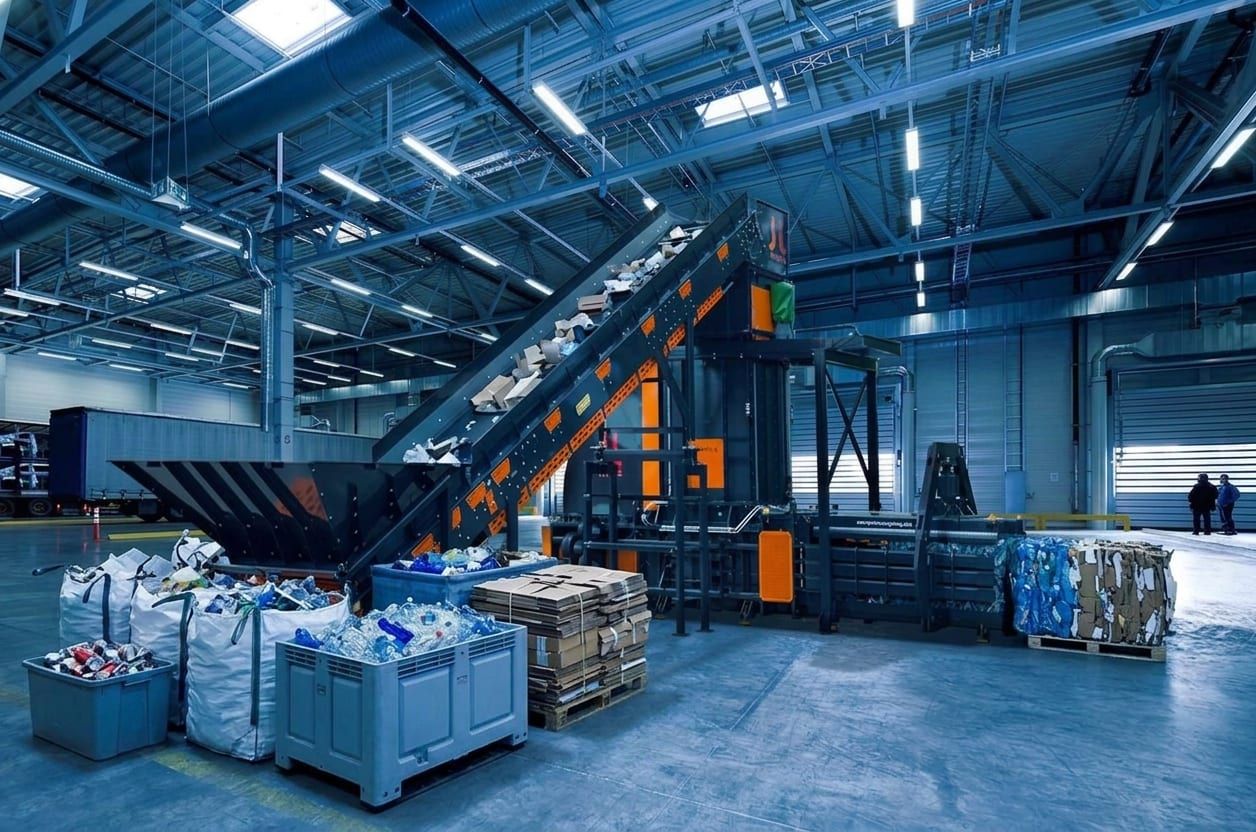
Cardboard and stretch film weigh little but take up a large share of a general waste container — and the plant pays every time it is emptied. When recyclables go into dedicated containers for segregated waste, there is less general waste, so fewer collections are needed, and the plant sells the segregated cardboard, film or wood for extra income.
The calculator works out two things: how much the cost of general waste collection falls, and what the recovered cardboard and film are worth. It also shows how much space the material will take up in a separate container — loose and in a compactor container. The result is a gross benefit, before the labour cost of segregation, which depends on how the plant is organised.
You enter your plant’s data yourself — the number and capacity of containers, how often they are collected and the cost of one collection from your invoice — because waste contractors’ rates vary between plants. The calculator only adds the assumptions from the table below.
We segregate waste on the client’s premises and organise its collection; the plant remains the waste holder.
Worked examples
- Example 1Production plant in Niepruszewo: 5 KP-7 containers (7 m³)
Example 1: a production plant in Niepruszewo — 5 KP-7 containers (7 m³) for general waste, collected 4 times a month, PLN 750 excl. VAT per collection, cardboard 25% and film 10% of the volume, without a baler. General waste collection cost: PLN 15,000 per month excl. VAT today, an indicative PLN 10,000–11,500 after segregation; total benefit of segregation: an indicative PLN 3,700–5,000 per month excl. VAT (PLN 44,500–59,500 per year), before the labour cost of segregation. After segregation, cardboard and film take up approx. 34–45 m³ per month loose; in a compactor container it would be approx. 7.3–9.5 m³.
- Example 2Logistics centre in Tarnowo Podgórne: 4 KP-10 containers (10 m³)
Example 2: a logistics centre in Tarnowo Podgórne — 4 KP-10 containers (10 m³) for general waste, collected 6 times a month, PLN 950 excl. VAT per collection, cardboard 35% and film 15% of the volume, with a baler or compactor container. General waste collection cost: PLN 22,800 per month excl. VAT today, an indicative PLN 12,500–15,000 after segregation; total benefit of segregation: an indicative PLN 9,000–13,500 per month excl. VAT (PLN 108,000–158,000 per year), before the labour cost of segregation. After segregation and compaction, cardboard and film take up approx. 18–24 m³ per month instead of 84–108 m³ loose.
- Example 3Large production plant in Nowa Sól: 10 KP-10 containers (10 m³)
Example 3: a large production plant in Nowa Sól — 10 KP-10 containers (10 m³) for general waste, collected 4 times a month, PLN 900 excl. VAT per collection, cardboard 30% and film 10% of the volume, with a baler or compactor container. General waste collection cost: PLN 36,000 per month excl. VAT today, an indicative PLN 23,000–26,000 after segregation; total benefit of segregation: an indicative PLN 11,500–17,000 per month excl. VAT (PLN 138,000–202,000 per year), before the labour cost of segregation. After segregation and compaction, cardboard and film take up approx. 23–30 m³ per month instead of 112–144 m³ loose.
| Plant | Collection cost today, per month | After segregation, per month | Cardboard and film, volume per month | Value of recyclables, per month | Benefit per month | Benefit per year |
|---|---|---|---|---|---|---|
| 1. Production plant in Niepruszewo: 5 KP-7 containers (7 m³) | PLN 15,000 | PLN 10,000–11,500 | 34–45 m³ loose | PLN 30–210 | PLN 3,700–5,000 | PLN 44,500–59,500 |
| 2. Logistics centre in Tarnowo Podgórne: 4 KP-10 containers (10 m³) | PLN 22,800 | PLN 12,500–15,000 | 18–24 m³ compacted (loose: 84–108 m³) | PLN 1,000–2,900 | PLN 9,000–13,500 | PLN 108,000–158,000 |
| 3. Large production plant in Nowa Sól: 10 KP-10 containers (10 m³) | PLN 36,000 | PLN 23,000–26,000 | 23–30 m³ compacted (loose: 112–144 m³) | PLN 1,400–3,900 | PLN 11,500–17,000 | PLN 138,000–202,000 |
How we calculate the benefit of segregation
- Monthly volume of general waste = number of containers × capacity × collections per month. We assume the container is full at every collection.
- Mass = volume × bulk density. The plant counts in containers, but the market pays by the tonne, which is why bulk density is a key assumption.
- Current cost = number of collections × cost of one collection from the invoice. Without an invoice, the calculator estimates it from the mass and the market range of cost per tonne.
- Share of volume moving into the recyclables stream = (cardboard share + film share) × segregation efficiency.
- Cost after segregation = current cost reduced by that share. We assume the number of general waste collections can be cut in the same proportion.
- Income from recyclables = mass of cardboard and film × buy-back price — higher for material baled in a press, lower for loose material. The mass follows from the loose density: a press changes the volume, not the mass.
- Volume of recyclables in a separate container = the share of volume moved out of general waste. Loose, it takes up as much space as it did in the general waste container; in a compactor container, cardboard takes up 6 times less space and stretch film 3 times less. The calculator converts this into the number of containers of the same capacity per month — with a press, the material needs several times fewer collections. The calculator does not include wood.
- Benefit = saving on collection + income from recyclables. We round the lower limit down and the upper limit up.
Rates and assumptions
| Parameter | Value |
|---|---|
| Cost of general waste collection (estimate when there is no invoice) | PLN 600–1,000 per tonne excl. VAT |
| Bulk density of general waste, cardboard and film |
|
| Buy-back prices for cardboard and film |
|
| Segregation efficiency — the share of cardboard and film that goes into the recyclables stream | 70–90% |
| Compaction of cardboard and film in a compactor container |
|
Is the calculator result a quote?
No. The calculator gives an indicative price range excl. VAT based on a few parameters. We prepare a binding quote after a site survey, once we know the floor, the zones and the plant’s working pattern.
What does the cost of contract cleaning for a production building or warehouse depend on?
Above all, on staffing: how many operator positions with a machine are needed on one shift, and how many shifts the plant works. Floor area determines the number of positions, and the shift pattern the number of FTEs. Then come the floor type and soiling, how much of the floor is obstructed, and the scope of work beyond the floor.
How much can a plant save by segregating cardboard and film?
The biggest saving comes from fewer general waste collections: cardboard and film are light but take up a large share of the container. On top of that comes income from selling the material — several times higher when cardboard is baled in a press. A press also reduces the volume of the material — cardboard sixfold and film threefold — so fewer collections of recyclables are needed. Worked examples are in the calculator on this page.
Does SARA SYSTEM deal with what happens to the waste after segregation?
Yes — we organise collection. We segregate waste on the client’s premises; the plant remains the waste holder.
How much does contract cleaning of a 10,000 m² warehouse cost?
For ongoing floor cleaning on one shift — one operator with a ride-on scrubber dryer — an indicative PLN 11,000–16,000 per month excl. VAT. The final quote follows a site survey.
A site survey as early as the same or the next day
We will come and look at your floors and zones, then prepare a work plan with a quote.