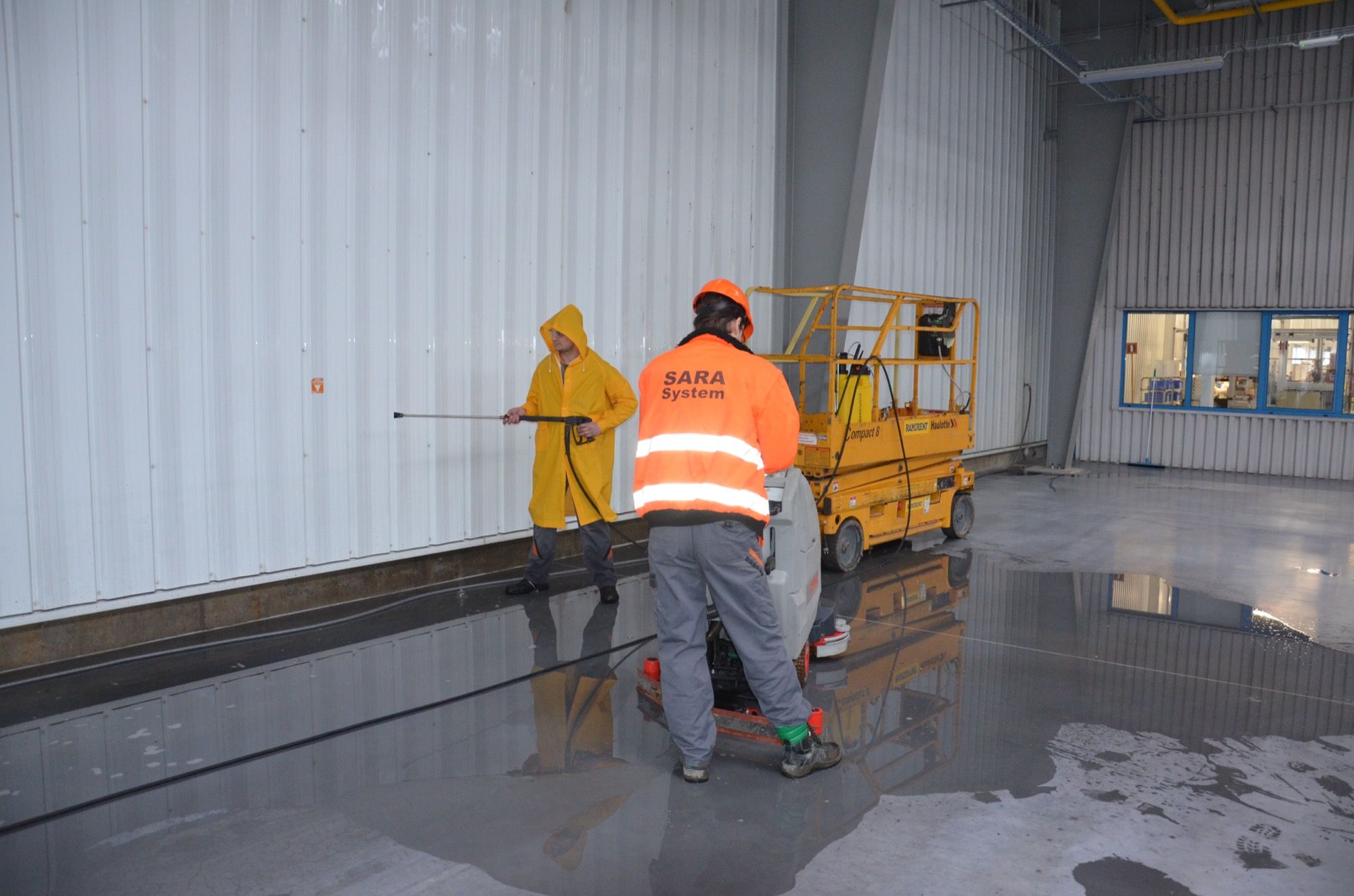
Building maintenance and minor repairs
Building maintenance is the upkeep and minor repairs that keep production buildings, offices and the plant site in working order and safe between refurbishments. We carry out upkeep and minor repairs in our clients’ buildings — the work is done by our staff with electrical qualifications. For large buildings it is also a legal obligation: in Poland, a building with a footprint of more than 2,000 m² must be inspected at least twice a year — by 31 May and by 30 November.
At a glance
- We work 365 days a year, around the clock.
- Our 24/7 support team responds to every call-out immediately and decides straight away whether to send a mobile team to the site.
- Every client has two dedicated contract managers. They cover for each other, so during audits, holidays or sudden staff absence the plant is never left without supervision.
- We carry out upkeep and minor repairs in our clients’ buildings — the work is done by our staff with electrical qualifications.
Who it is for
- Manufacturing plants without their own technical team, or with a maintenance department focused on machines.
- Managers of warehouse buildings and multi-tenant logistics parks.
- Owners of buildings with a footprint of more than 2,000 m², which must be inspected twice a year.
- Plants that want cleaning and minor repairs from one contractor.
What building maintenance covers
Building maintenance fills the gap between cleaning and refurbishment. A minor defect — a torn-off impact guard, a leaking gutter, faded floor markings, a burnt-out light fitting above the racking — does not justify calling in a building contractor, but left for months it turns into a cost or an accident.
It works best as a fixed cycle: a list of defects reported by the plant and spotted during cleaning, priorities agreed with the facility manager, repairs in windows that do not disrupt production, and a short report on what has been closed. Bigger jobs — the roof, the structure, rebuilding installations — stay with specialist firms.
| Area | Typical work |
|---|---|
| Roof and structure | Cleaning gutters, roof outlets and rooflights; clearing snow from the roof; checking flashings |
| Building interior and floor | Repairing impact guards and barriers, servicing industrial doors, renewing floor markings, sealing expansion joints |
| Building services | Replacing light sources, servicing electrical fittings, cleaning ventilation grilles, keeping drainage clear |
| Offices and staff rooms | Doors and ironmongery, taps and fittings, minor painting, furniture repairs |
| Grounds around the building | Fences, barrier gates, channel drains, road markings |
The obligations of a large building’s owner
Polish construction law requires the owner or manager of a building to have it inspected periodically: at least once a year — the condition of the elements exposed to the weather and of selected installations; at least once every 5 years — the technical condition of the whole building and of its electrical and lightning protection installations.
Buildings with a footprint of more than 2,000 m² and structures with a roof area of more than 1,000 m² must also be inspected at least twice a year, by 31 May and by 30 November. The inspection is carried out by a person with building qualifications, and the result is recorded in the building log book.
An inspection identifies defects but does not fix them. The building maintenance contractor closes the minor items in the inspection report before they become urgent recommendations at the next inspection.
Qualifications your EHS team will check
A plant will only let a contractor’s employee into an installation, onto a lift or onto the roof after checking their documents. Work on power equipment requires SEP qualification certificates (Polish certificates) of the appropriate group — separately for operation (E) and supervision (D) — and work on air conditioning and refrigeration systems containing fluorinated gases requires an F-gas certificate.
| Qualification | What it covers |
|---|---|
| SEP group G1 | Electrical equipment, installations and networks — lighting, sockets, switchboards, door drives |
| SEP group G2 | Heating equipment — boilers, heat exchangers, heating systems, ventilation and air conditioning |
| SEP group G3 | Gas equipment, installations and networks |
| F-gas certificate | Installation, servicing and leak checks of air conditioning, refrigeration equipment and heat pumps |
| UDT certification | Operating mobile elevating work platforms (MEWPs), lifts and forklift trucks |
| Medical clearance for work at height | Work above 3 m — on roofs, lifts and ladders |
- We have employees with the SEP G1 qualification (Polish certificate) for work on electrical equipment and installations.
- We have employees with the SEP G2 qualification (Polish certificate) for heating equipment, boilers, air conditioning and ventilation.
- We hold an F-gas certificate for servicing air conditioning, refrigeration and heat pumps.
From our work
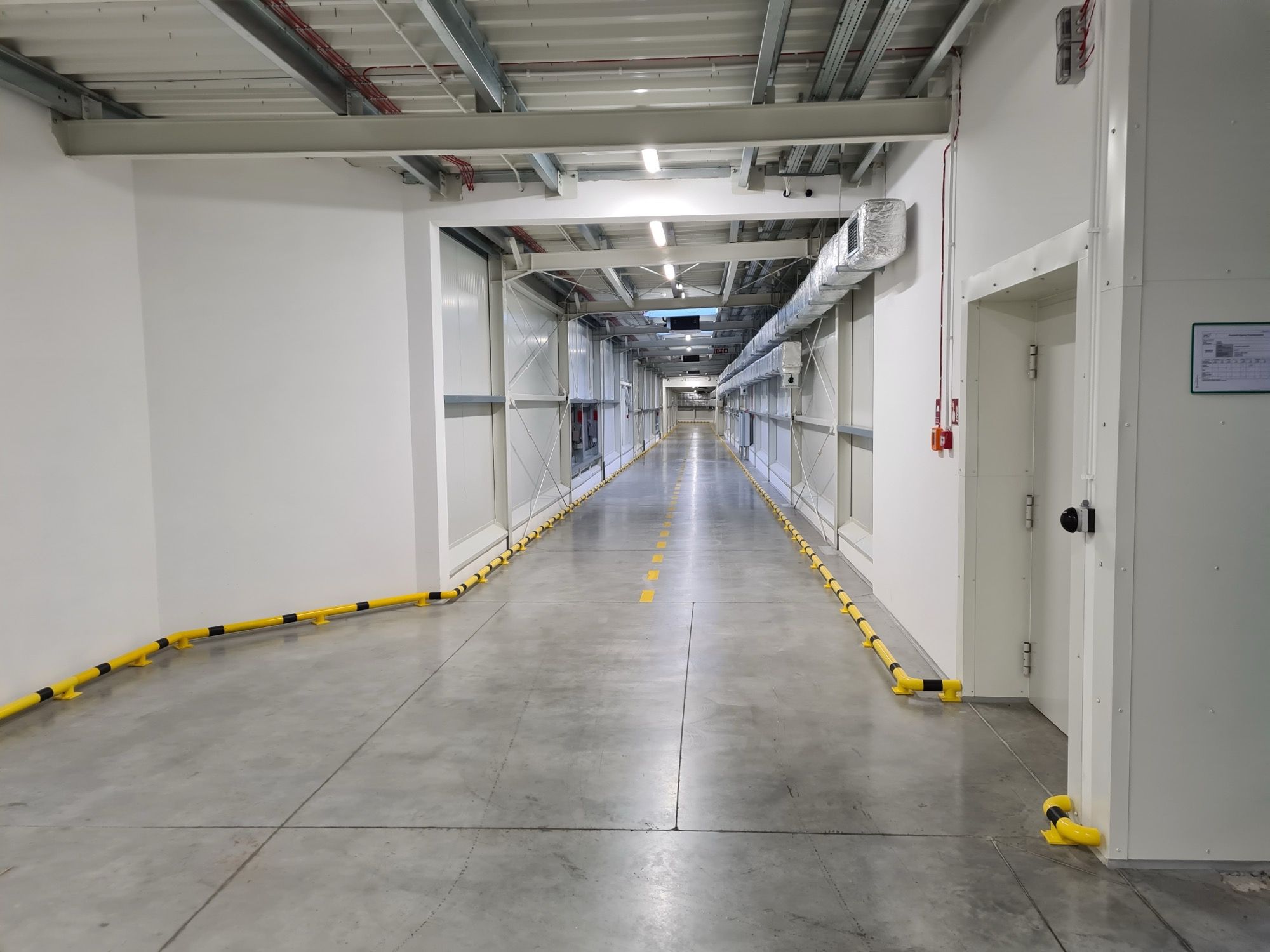
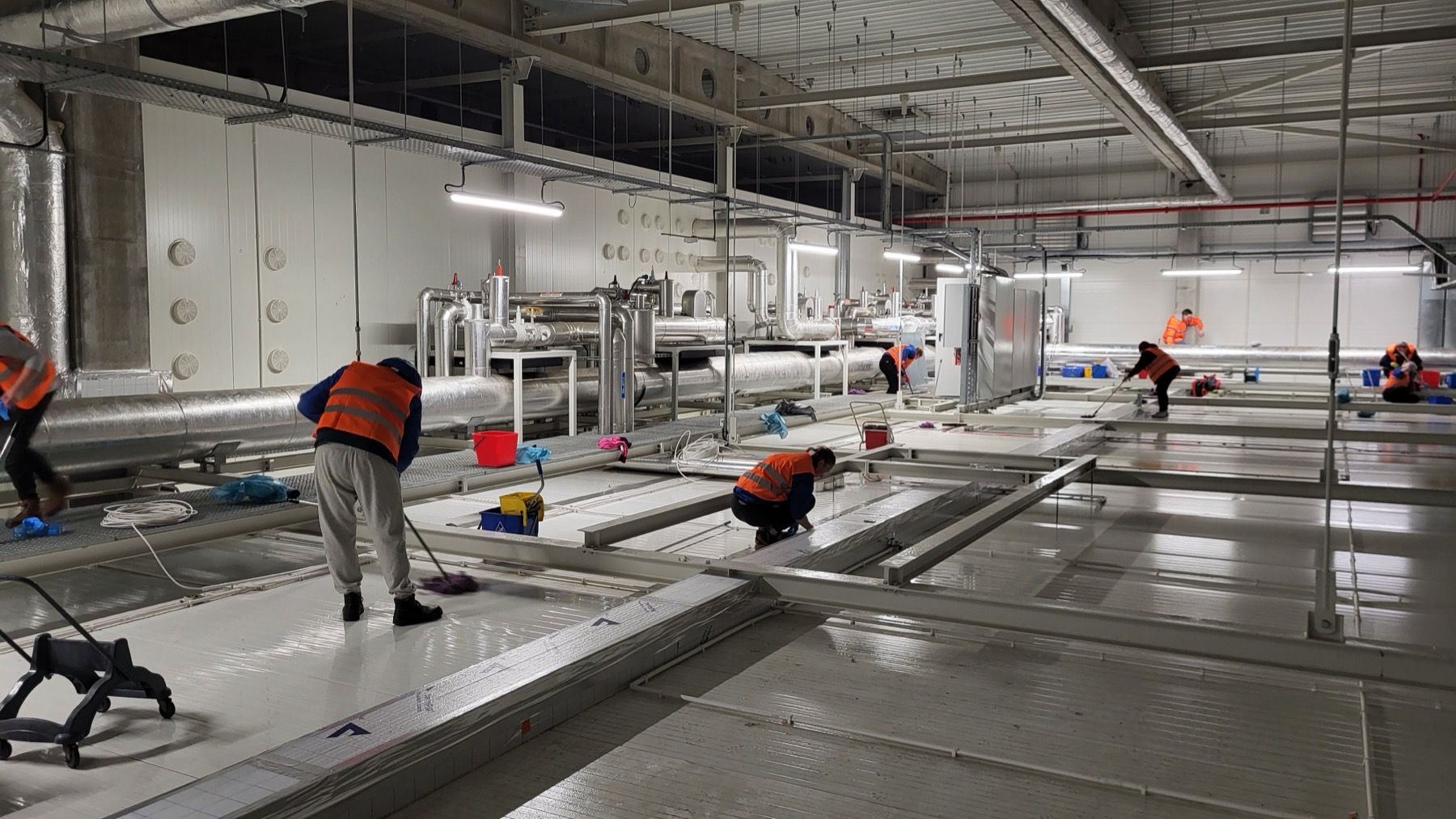
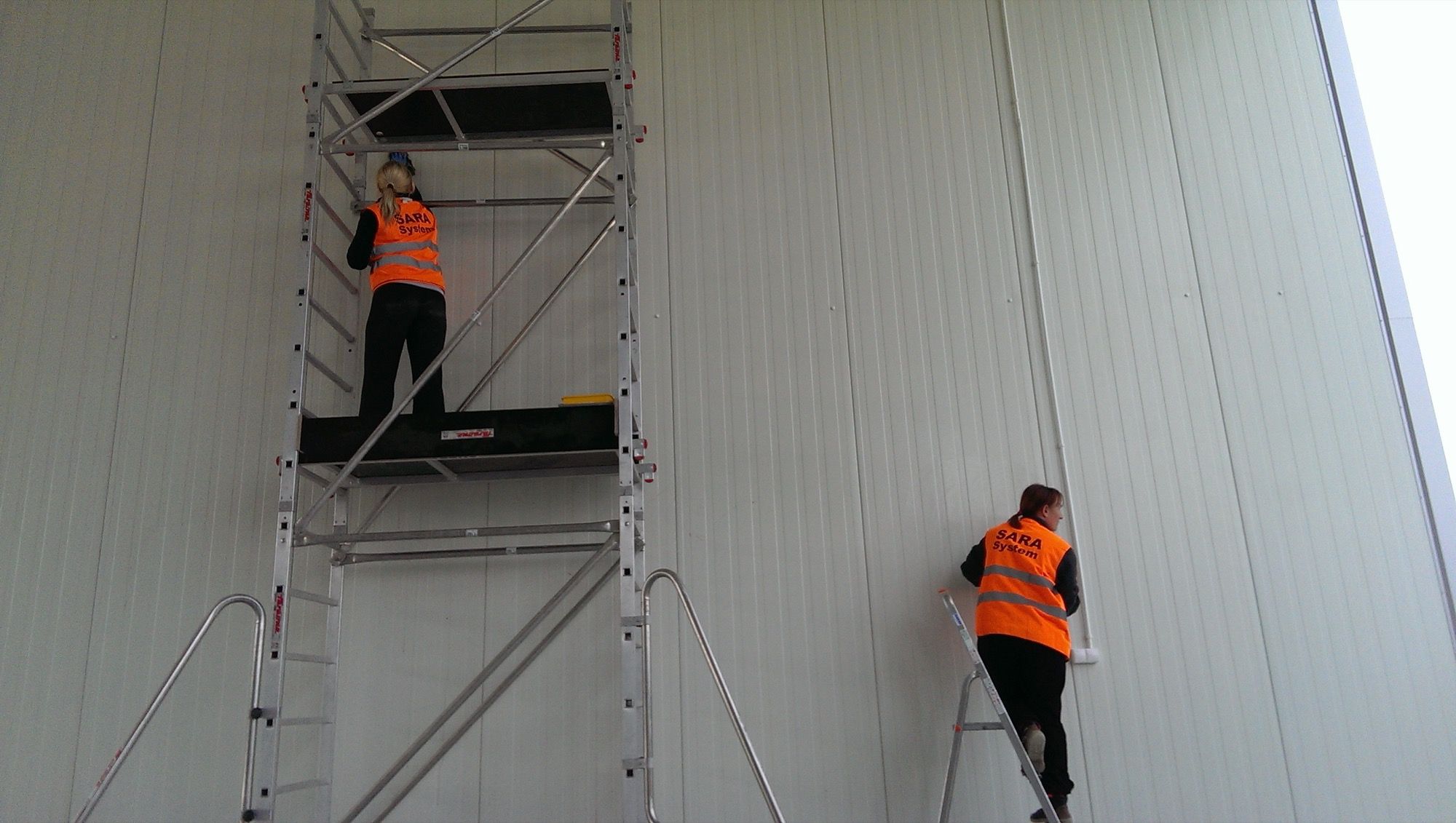
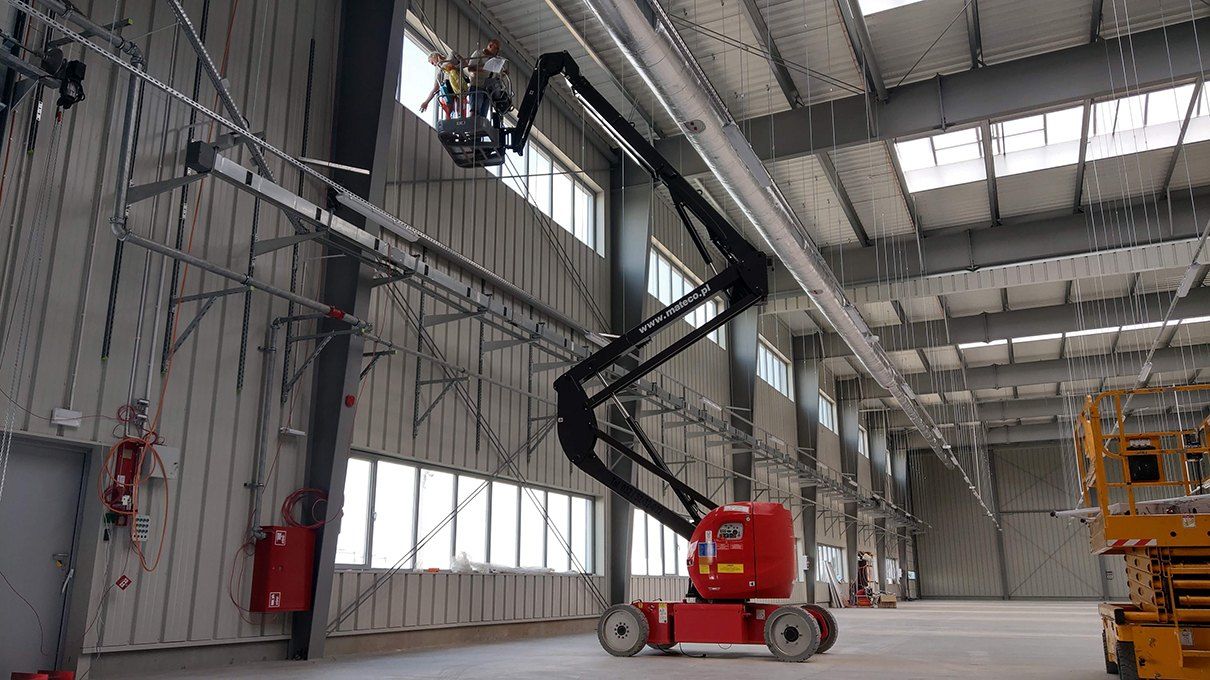
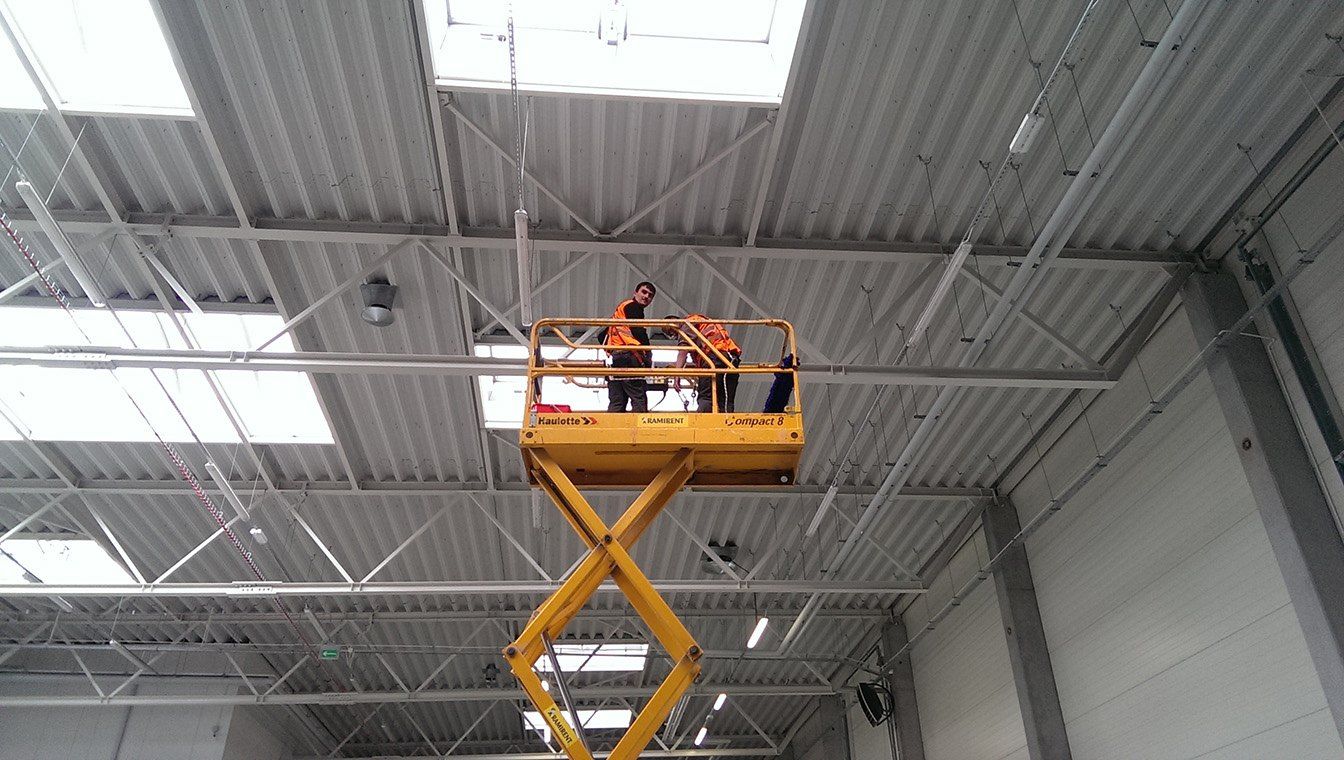
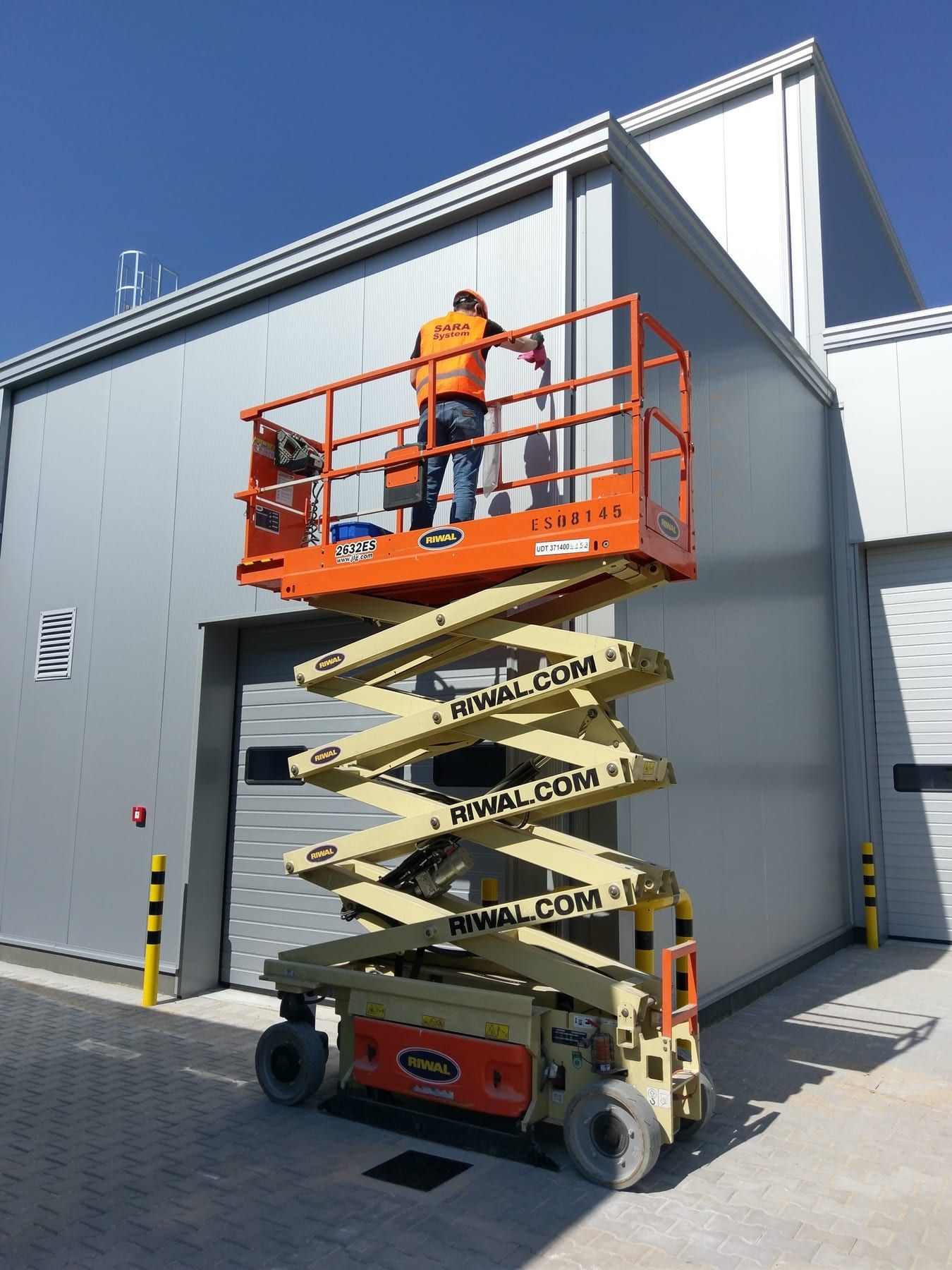
Do your staff have electrical qualifications?
Yes. Upkeep and minor repairs in our clients’ buildings are carried out by our staff with electrical qualifications.
Often ordered together
Integrated cleaning services
Contract cleaning of plants and logistics centres: buildings, offices, grounds, consumables. Two contract managers per client, 92% of revenue from long-term contracts.
Details Grounds and car parksGrounds maintenance
Sweeping of yards and car parks, grass cutting, flail mulching of rough ground and ditches at plants and warehouses. 167,000 m² of green areas under contract.
Details Grounds and car parksSolar panel cleaning
Solar panel cleaning for plants and building owners: removing dust, soot and bird droppings that reduce energy output. Quote after a site survey.
Details Technical services and maintenanceRoutine maintenance support
Routine maintenance support in plants: scheduled tasks such as wear-part replacement, lubrication, ventilation cleaning and minor repairs. In-house machine servicing.
DetailsIndustries
Automotive
Factory cleaning, press and paint line cleaning and floor deep cleaning in automotive plants, around production, shutdowns and IATF 16949 audits.
Logistics and warehousing
Warehouse cleaning, removal of forklift tyre marks, cardboard and film segregation, and snow clearance of access roads at logistics centres and warehouses.
Ask AI about your site
The AI assistant will read this page and the calculator, ask you about the scope you need (“Building maintenance and minor repairs”) and then, one question at a time, about your site — floor area, floor type, shifts, waste and site requirements. Finally, it will prepare a ready-to-send request for quotation with a list of open points.
- ChatGPT opens with a ready-made prompt (new tab)
- Claude opens with a ready-made prompt (new tab)
- Perplexity opens with a ready-made prompt (new tab)
Show the prompt
Help me prepare a request for quotation for industrial cleaning — topic: Building maintenance and minor repairs.

First open and read these pages of the contractor SARA SYSTEM. Open them directly; do not rely on search results alone:
- https://www.sarasystem.pl/en/services/building-maintenance/
- https://www.sarasystem.pl/en/cost-calculator/
- https://www.sarasystem.pl/llms.txt

Then interview me briefly about my site. Ask one question at a time, in English, and wait for my answer. Start by asking what exactly I need in terms of “Building maintenance and minor repairs”, then ask about the type of site and its floor area. Then ask in turn about:
1. the type of site and its floor area,
2. the floor type: bare, power-floated, sealed, painted or resin-coated concrete,
3. the soiling: tyre marks, oil, dust, old coatings,
4. the height of the building and the racking,
5. the number of shifts and whether the site keeps operating while the work is done,
6. how often the work is needed,
7. the scope: machine cleaning, high-level surfaces, washrooms, loading bays,
8. waste,
9. health and safety requirements, public liability insurance and site standards,
10. who provides the machines and chemicals,
11. the start date.
If I don't know something, record it as an open question.

About SARA SYSTEM, write only what is on these pages — do not add anything. Whatever the pages do not say, add to the questions for the contractor. If the calculator gives indicative costs, quote them as an estimate together with its assumptions.

Finally, write a ready-to-send email with the request to SARA SYSTEM (biuro@sarasystem.pl): the site parameters as bullet points and a list of open questions.
The conversation takes place in the tool you choose — we have no access to it. The assistant can make mistakes, so it is worth confirming the details with us directly.
A site survey as early as the same or the next day
We will come and look at your floors and zones, then prepare a work plan with a quote.