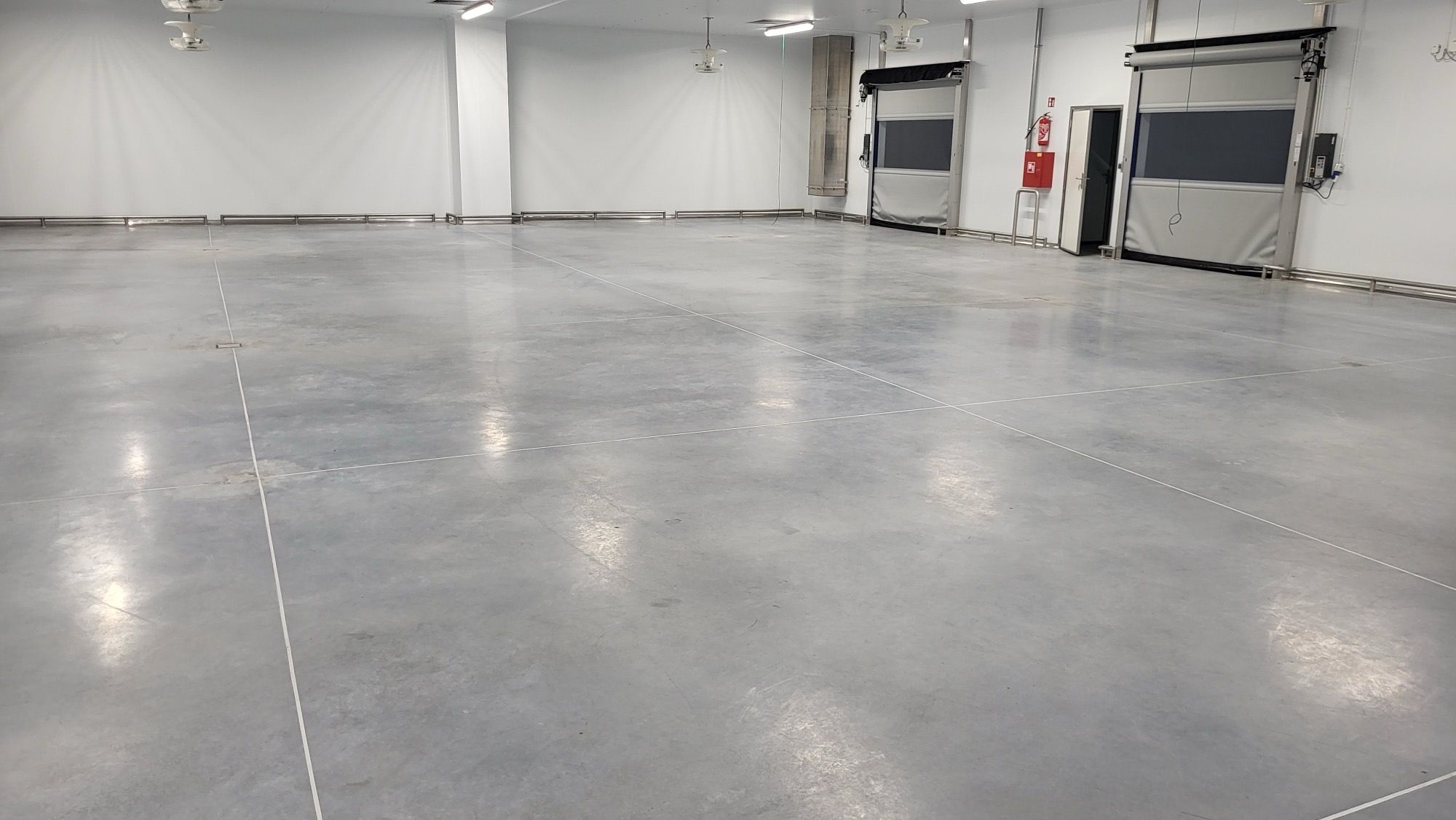
Concrete floor sealing and densifying
Sealing and densifying a concrete floor strengthens its top layer, reduces dusting, stops oil soaking in and makes daily cleaning easier. SARA SYSTEM seals floors in manufacturing plants and warehouses in the Greater Poland, Lubusz and Lower Silesian voivodeships. We hold a Floor Protection Contractor Certificate and are a strategic partner and distributor of BUZIL cleaning chemicals. We also protect floors with a polymer floor coating.
At a glance
- We hold a Floor Protection Contractor Certificate.
- We are a strategic technology partner and distributor of BUZIL Werk Wagner GmbH, a manufacturer of professional cleaning chemicals.
- We use certified, environmentally friendly BUZIL chemicals.
- We carry out work that requires a line to stop during production shutdowns, on non-working days and on public holidays.
- Foot traffic is possible 4 hours after sealing, and forklift traffic after 12 hours.
Who it is for
- Warehouses and logistics centres with a concrete floor that gives off dust and soils stock and racking
- Manufacturing plants where oil and coolants soak into the concrete and leave permanent stains
- Developers and tenants of new buildings who want to protect the floor before it goes into use
- Food plants and packaging manufacturers for whom dust from the floor is a hygiene problem
- Sites where daily cleaning takes longer and longer because the concrete absorbs dirt
Why seal a concrete floor
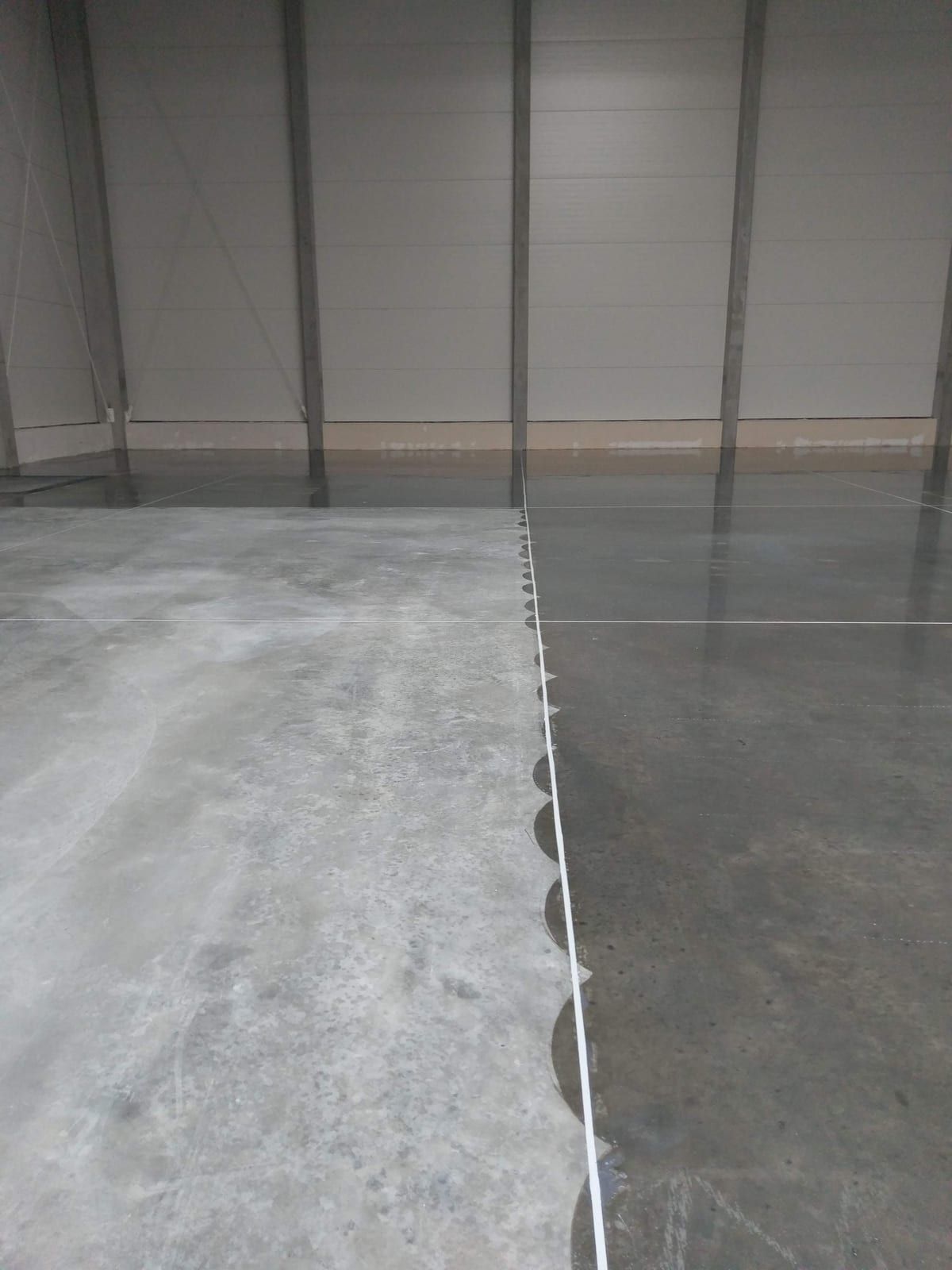
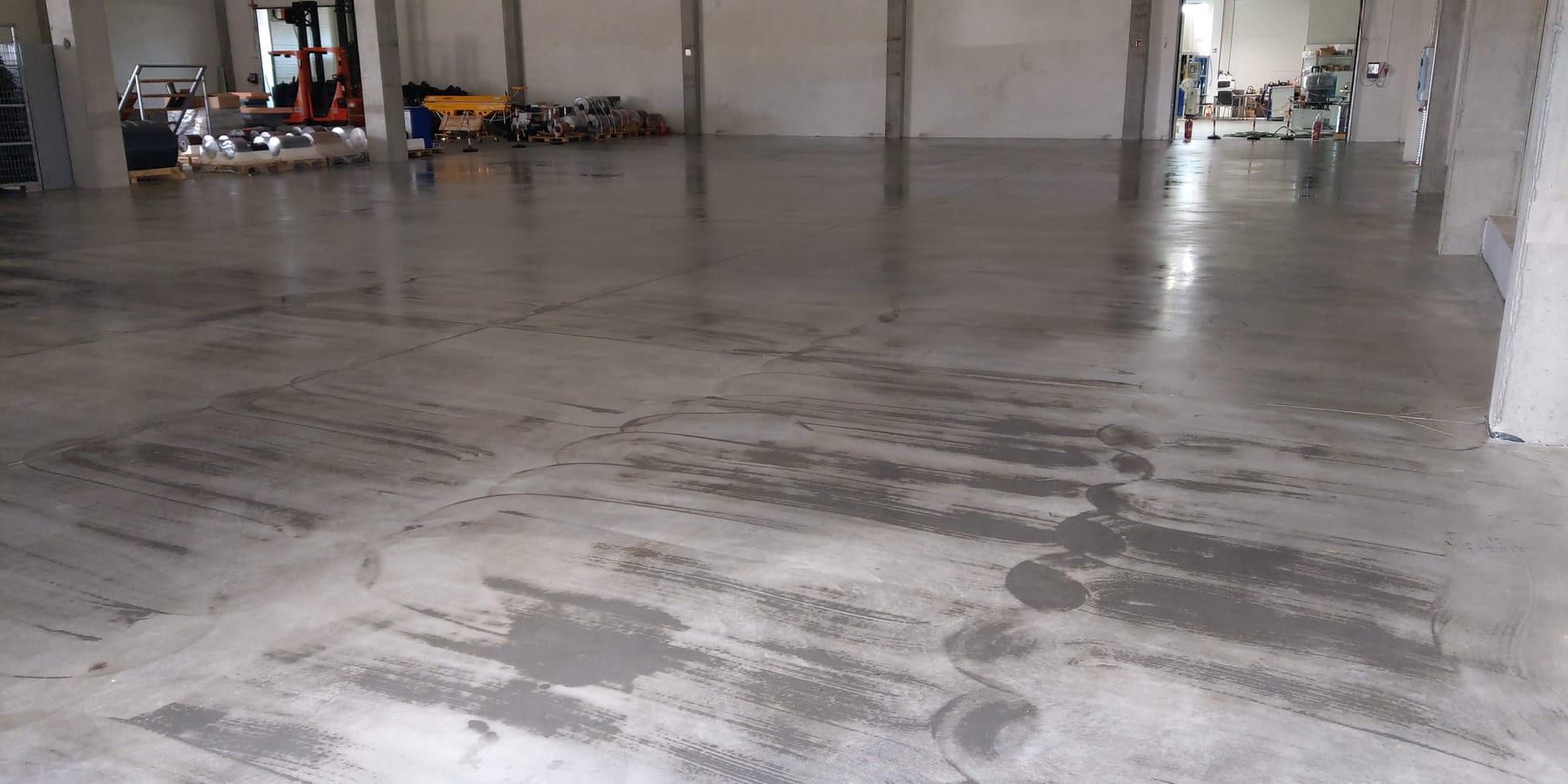
Concrete is porous. Under forklift and pallet traffic its top layer wears away, and fine cement dust rises into the air and settles on racking, stock and machines. The same pores absorb oil, coolants and dirty water — stains soak in deep and, after a few months, no amount of cleaning will shift them.
A sealer either penetrates the pores or forms a thin protective layer on the surface. Chosen well and applied to clean concrete, it changes three things a facility manager sees every day — the amount of dust, resistance to stains and the time cleaning takes.
Signs that a floor needs sealing:
- water soaks into the concrete and leaves a dark patch instead of beading on the surface
- grey dust settles on racking and stock despite regular cleaning
- lighter, worn strips appear in the aisles, and these give off the most dust
- oil stains can no longer be washed out after a few days
- the floor gets dirty faster than it used to, and cleaning takes longer and longer
Types of concrete sealer
Sealers differ in how they work, and therefore in what they protect against. The choice depends on the condition of the concrete, the load on the floor and what gets dropped or spilt on it.
| Type of sealer | How it works | Where it works well | Limitations |
|---|---|---|---|
| Silicate densifier (lithium, sodium, potassium) | Penetrates the concrete and reacts with calcium hydroxide; the compounds formed harden and seal the top layer | Dusting floors in warehouses and production buildings, ground concrete | Does not form a film, so it protects against stains less well than film-forming sealers |
| Water repellent (silanes, siloxanes) | Penetrates the pores and repels water | Areas exposed to water, road salt and frost — loading bays, vehicle entrances, docks | Does not harden the concrete or stop dusting |
| Polymer floor coating | Forms a protective film on the surface — a mechanical and chemical barrier | Better appearance and easier cleaning; stops oil and water soaking in | Needs renewing from time to time in aisles with heavy forklift traffic |
| Polyurethane or epoxy coating | Forms a harder, chemical-resistant layer | Areas with oil, coolants and chemicals | The floor is out of use for longer; this is where sealing ends and resin flooring begins |
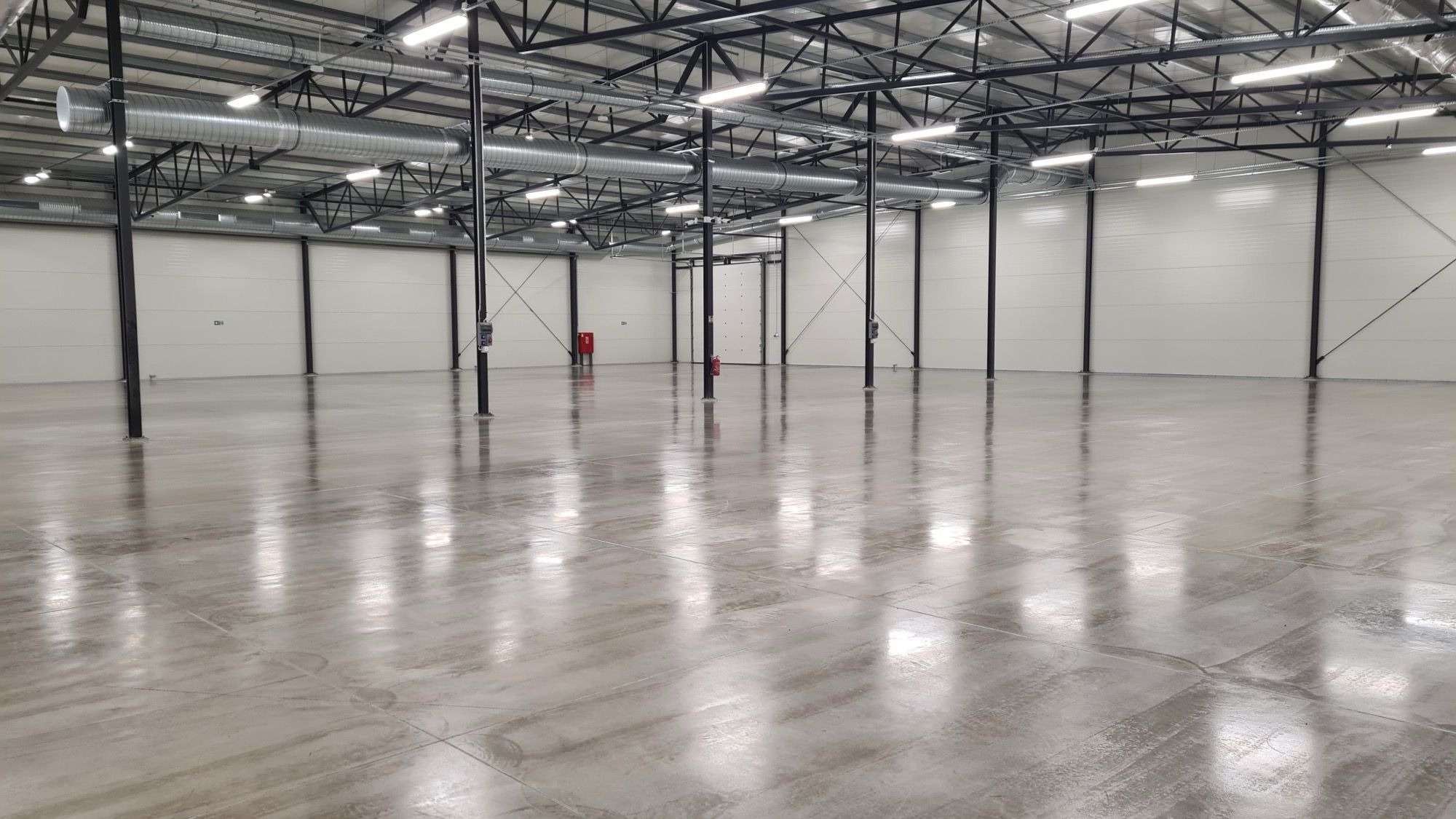
- We use silicate densifiers, which harden concrete from within, and film-forming sealers that protect against oil and water. We choose the type to suit the condition of the concrete and the load on the floor.
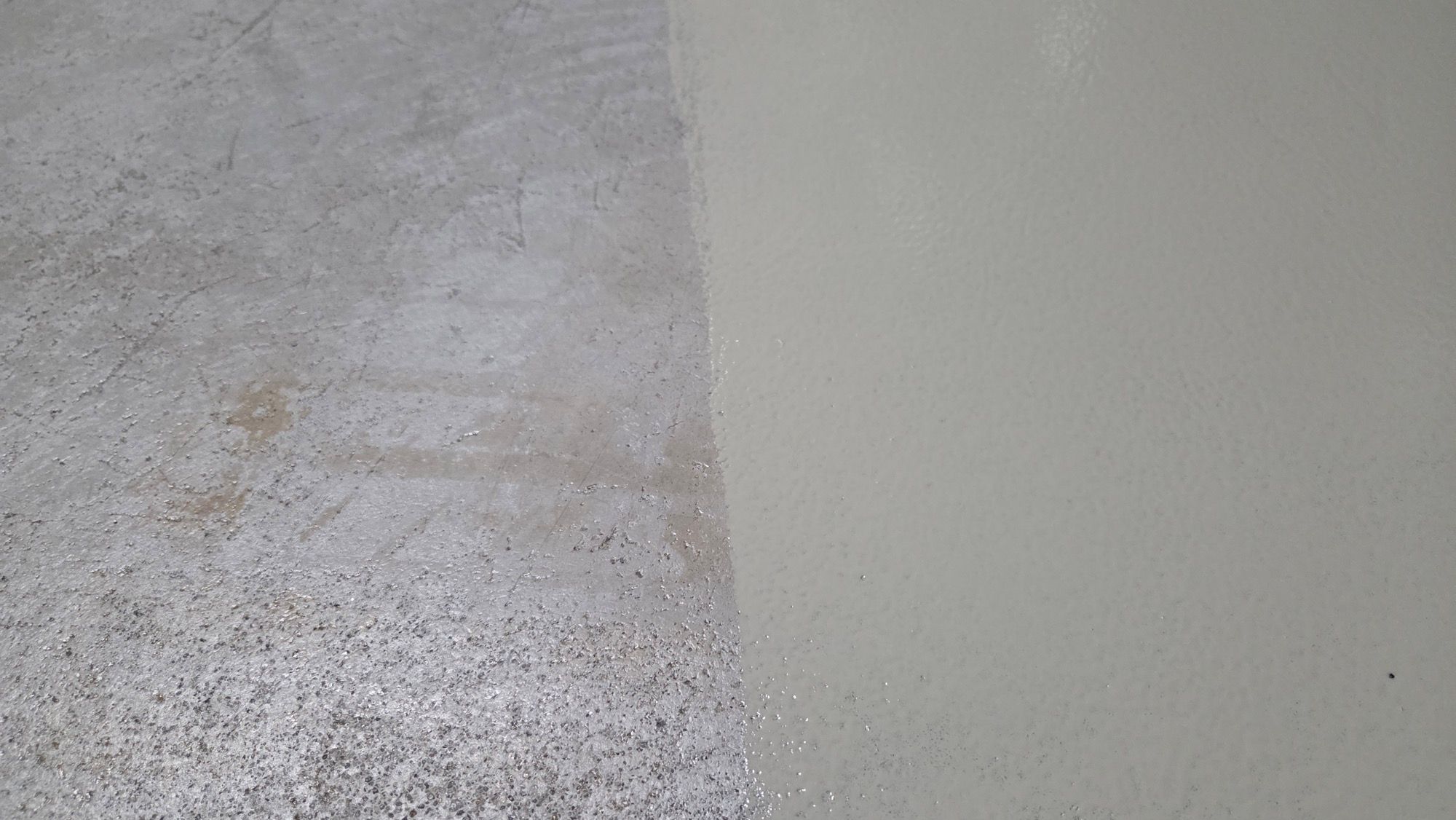
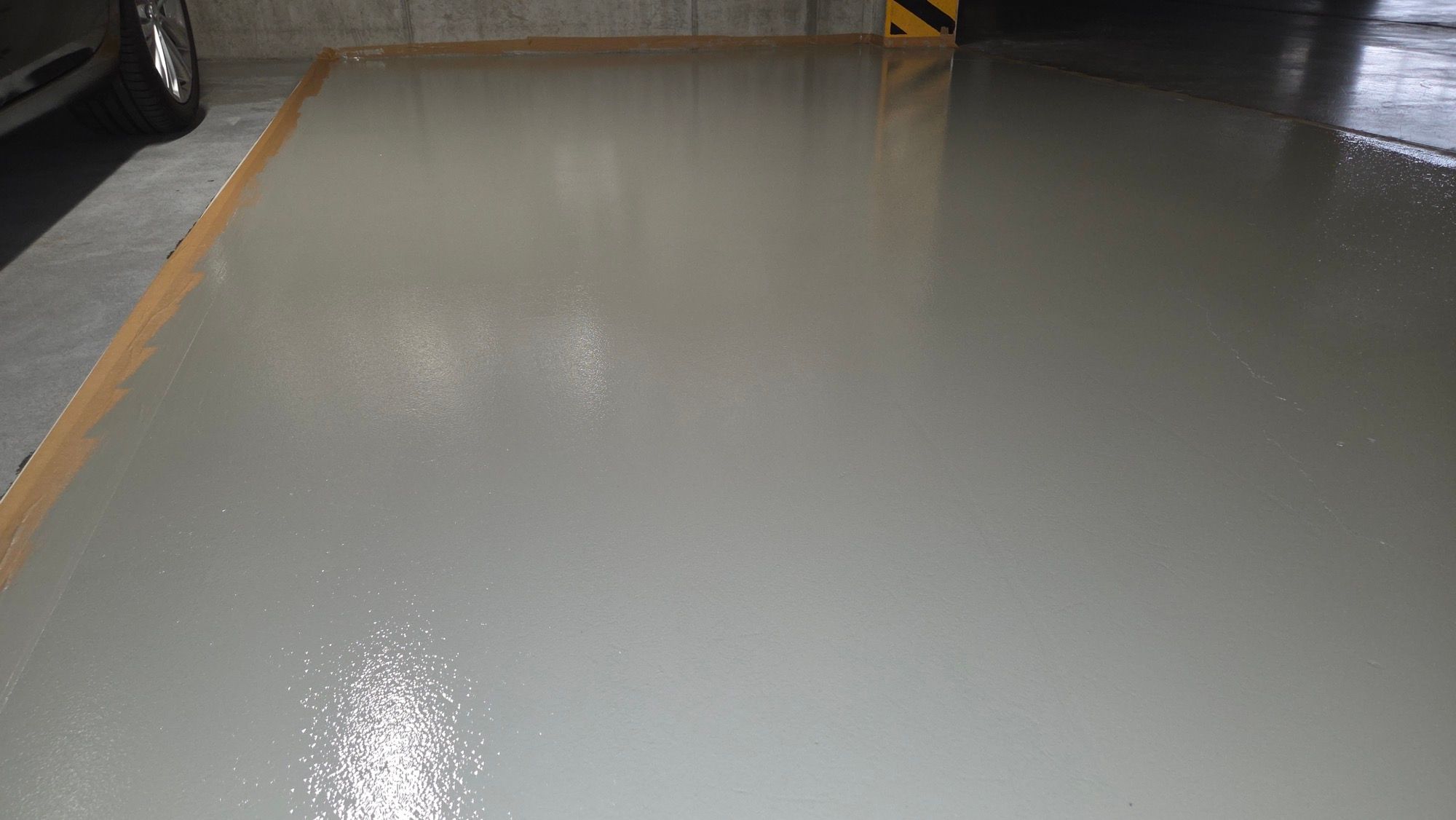
- We protect floors with a polymer floor coating, also known as a polymer seal. The coating forms a protective film that acts as a mechanical and chemical barrier.
How floor sealing works
A sealer only works on clean, dry, open concrete. That is why most of the work happens before it goes on.
- Assessing the floor: a water-drop absorption test, dusting, cracks, damage and residues of old coatings.
- Machine deep cleaning: removing oil, rubber and dust so that the pores of the concrete are open.
- Rinsing and drying: on damp concrete the sealer will not penetrate or cure.
- Applying the sealer: at the rate and number of coats recommended by the manufacturer, evenly over the whole area.
- Reaction time and removing the excess: product that is not absorbed leaves streaks and slippery patches.
- Drying and return to use: foot traffic first, then forklift trucks — as set out in the product data sheet.
- Recommendations: what to clean the floor with and how often, so as not to shorten the life of the sealer.
- We seal power-floated concrete floors, floors with a dry-shake hardener and ground concrete.
- Every sealing job starts with deep cleaning the floor and an absorption test on the concrete.
Looking after and renewing the seal
Sealing does not last for ever. How fast it wears depends on traffic — an aisle used by forklift trucks wears differently from a block-stacking area. The simplest test is a drop of water: if it starts to soak in where it used to sit on the surface, the sealer has worn off at that spot.
Routine cleaning also affects how long it lasts. Detergents with an extreme pH and over-aggressive pads shorten the life of the sealer, so it is worth handing the cleaning recommendations to the cleaning team when the work is signed off. Renewal does not usually mean repeating the whole process — a deep clean and another coat on the worn strips is enough.
- Sealing lasts several years, depending on traffic and how the floor is cleaned. It wears fastest in aisles with forklift traffic — we then renew it locally, without repeating the whole process.
How much might it cost?
Our cleaning cost calculator works out an indicative price range for your floor area, with worked examples and the method behind them. The final quote always follows a site survey.
Open the calculatorSites and figures
Preparing the Jost Chemical plant in Kościan for start-up, and polymer floor coating
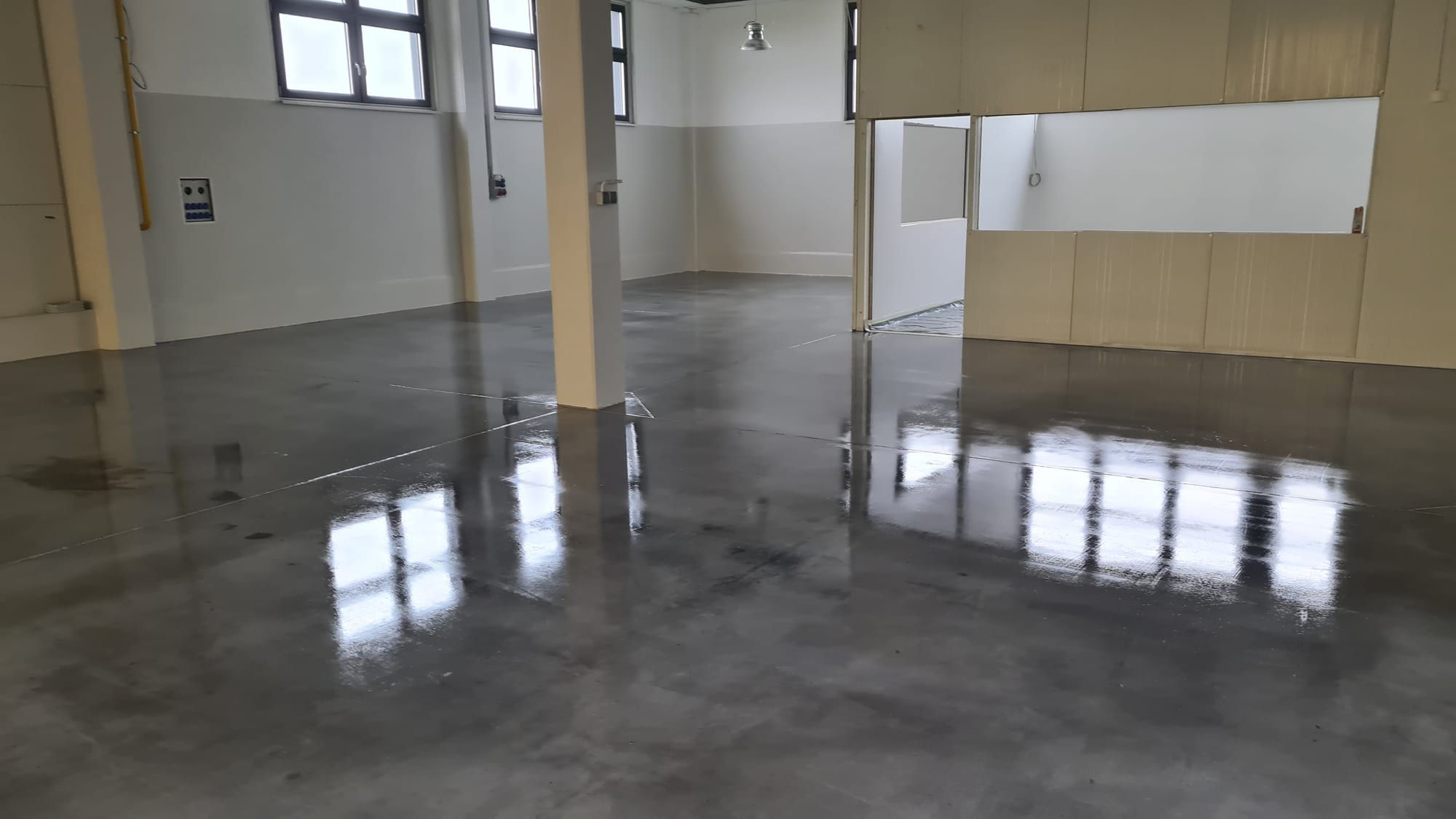
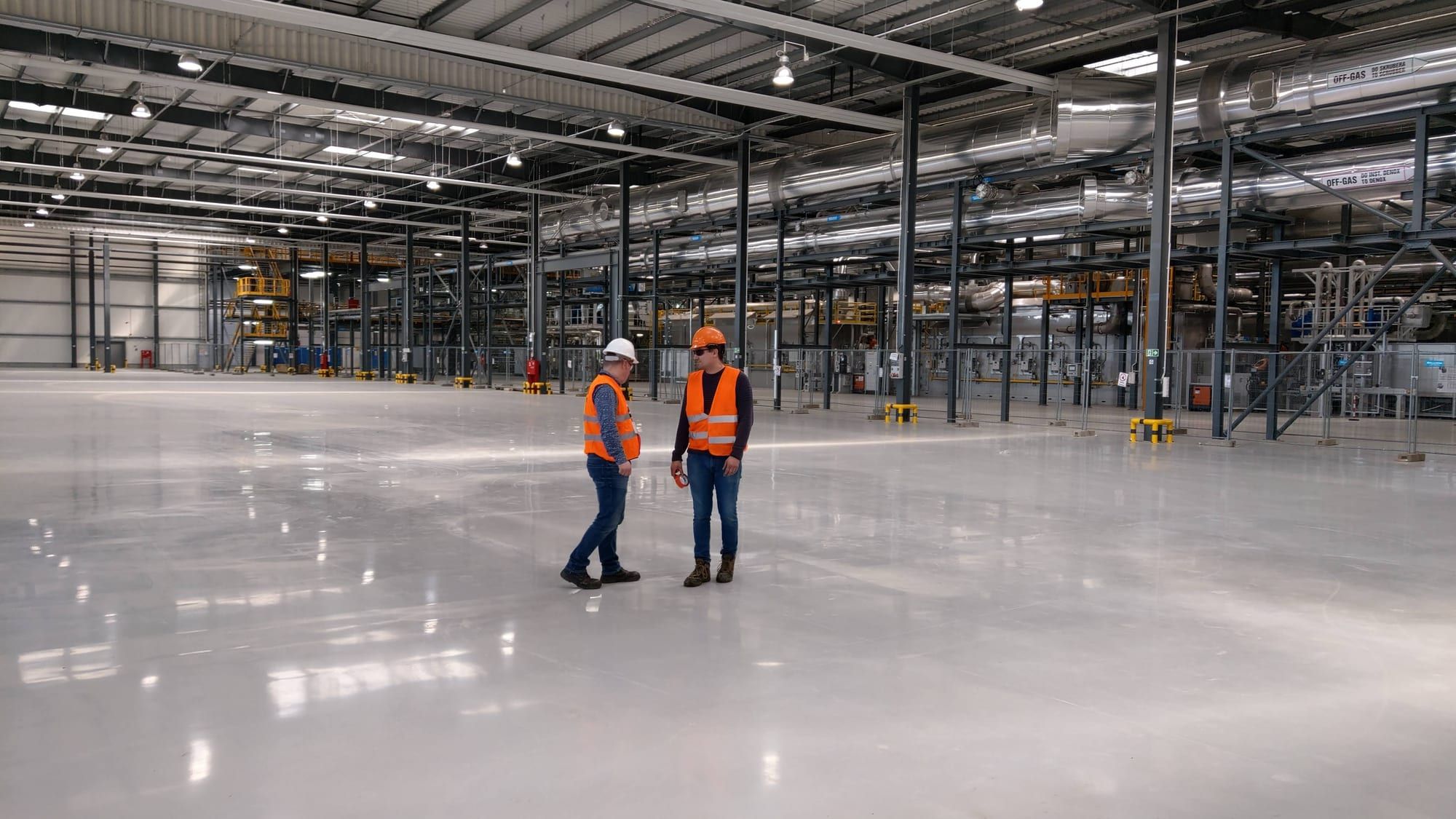
We prepared the Jost Chemical plant in Kościan for start-up and protected the floors, including those on the technical mezzanines, with BUZIL Corridor range products.
ViewPolymer floor coating for pharmaceutical sample packaging — Dortech
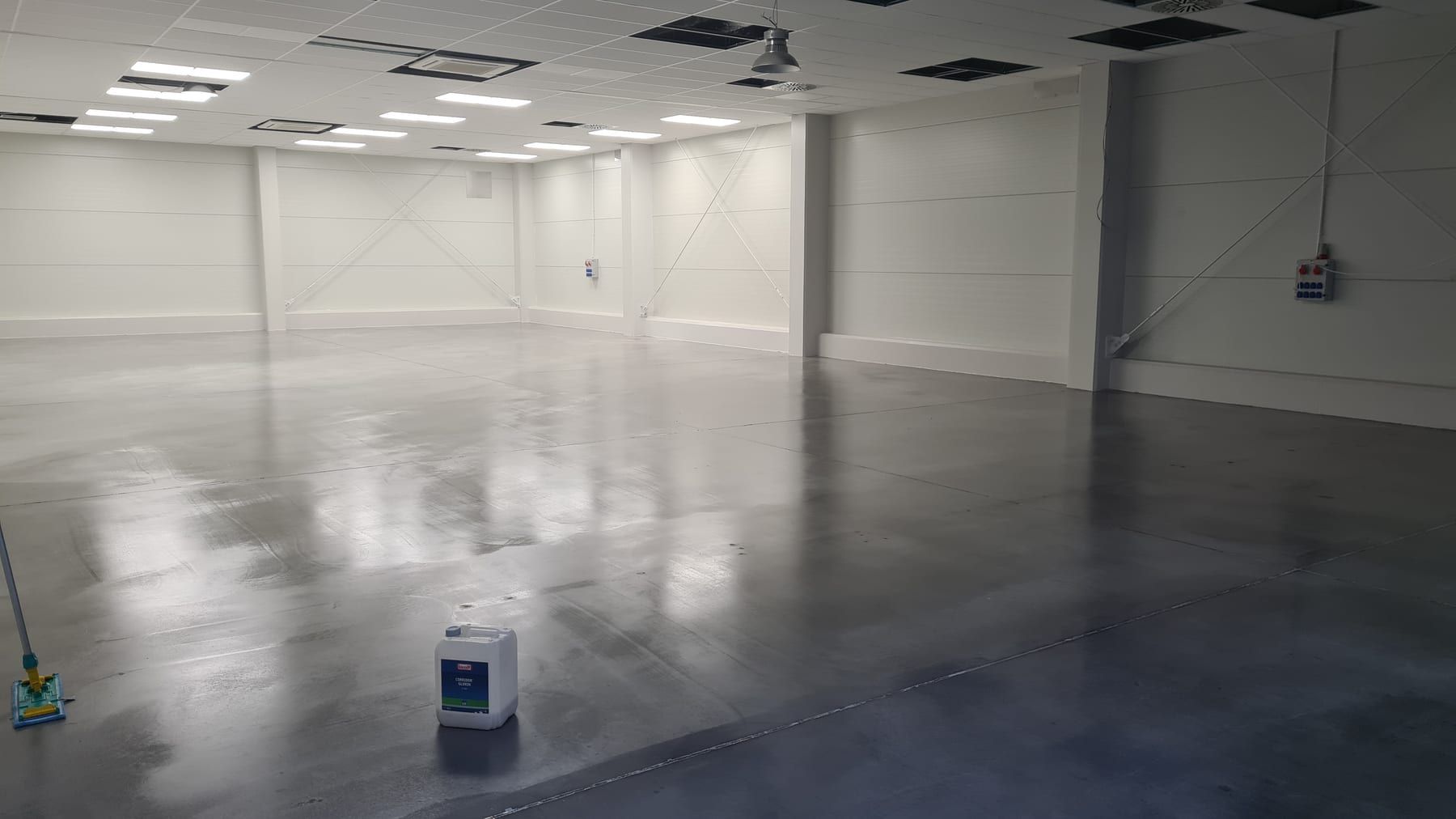
At Dortech’s new plant, we applied a polymer coating to the floor of rooms for packaging pharmaceutical samples: neutralisation, polymer primer, BUZIL S734 Glorin.
ViewPost-construction deep cleaning and polymer floor coating at the SEVEN Polska warehouse
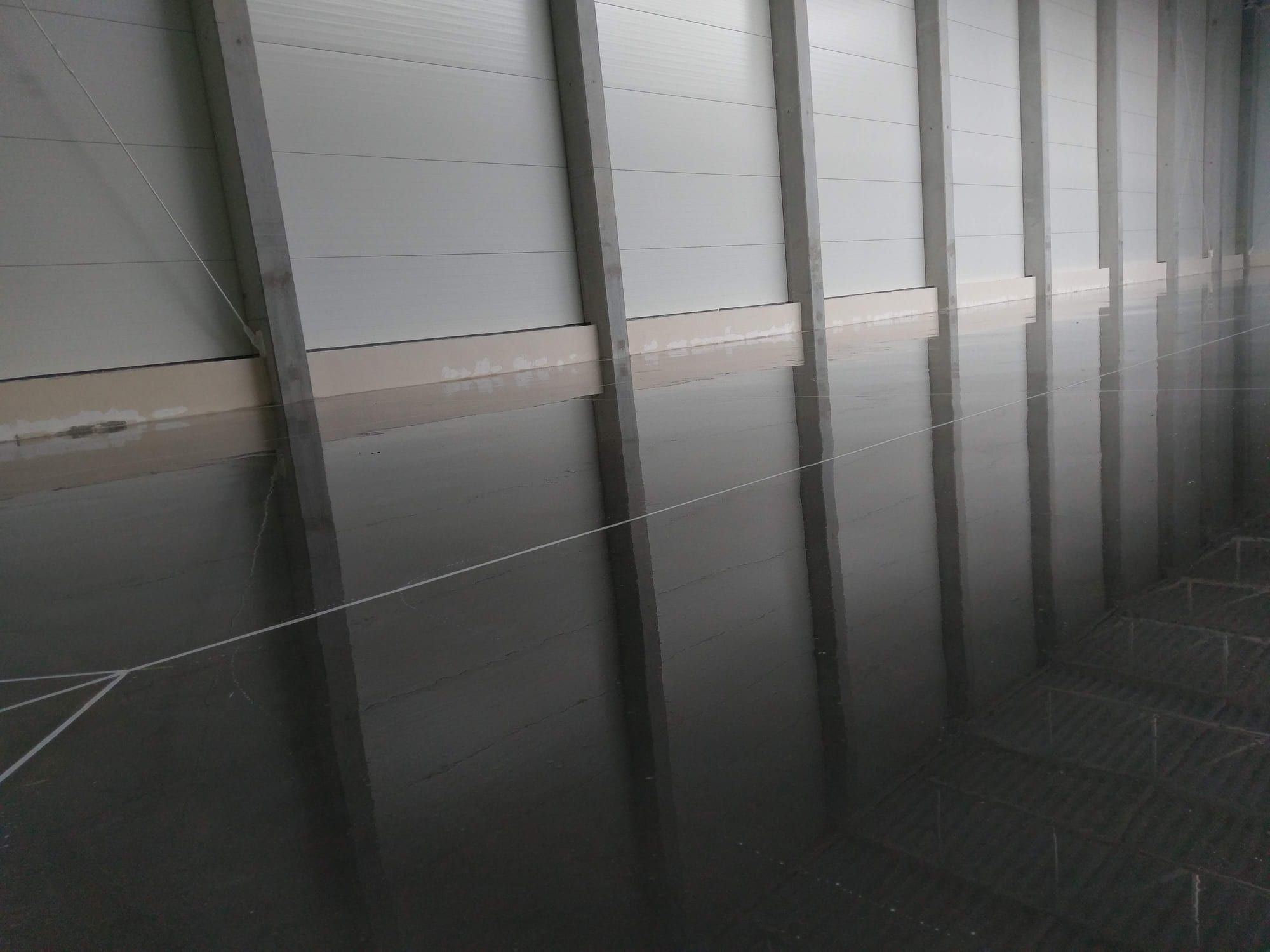
For BUD-BAU, we deep-cleaned after construction and applied a polymer coating to the floor of SEVEN Polska’s high-bay warehouse in Murowana Goślina (December 2018).
ViewFrom our work
Does SARA SYSTEM hold a floor protection contractor certificate?
Yes. We hold a Floor Protection Contractor Certificate. We are also a strategic partner and distributor of BUZIL Werk Wagner GmbH, a manufacturer of professional cleaning chemicals.
When do you carry out sealing, if the floor has to be closed to traffic?
We carry out work that requires a line to stop during production shutdowns, on non-working days and on public holidays. We work 365 days a year, around the clock.
What is a polymer floor coating?
It is a way of protecting a floor with a polymer coating. The product forms a protective film on the surface that acts as a mechanical and chemical barrier — it protects the concrete against wear and against oil soaking in. We protect floors with polymer coatings.
How soon can forklift trucks drive on a sealed floor?
After 12 hours from sealing; foot traffic is possible after just 4 hours. We state when the floor can go back into use in the work plan, before we agree the date of the job.
How long does floor sealing last?
Several years, depending on traffic and how the floor is cleaned. It wears fastest in aisles with forklift traffic; we then renew it locally, without repeating the whole process.
Often ordered together
Floor deep cleaning
Deep cleaning of factory and warehouse floors: tyre marks, oil, ground-in dust. Greater Poland, Lubusz and Lower Silesia. In 2025 we deep-cleaned 66,890 m² of floors.
Details Contract cleaningIntegrated cleaning services
Contract cleaning of plants and logistics centres: buildings, offices, grounds, consumables. Two contract managers per client, 92% of revenue from long-term contracts.
Details Contract cleaningWarehouse cleaning
Warehouse cleaning without stopping dispatch: forklift tyre marks, dust on high-bay racking, loading bays. 470,500 m² of floor space under ongoing contracts.
Details Contract cleaningPost-construction cleaning
Builders’ cleans of factories, warehouses and offices: a team and equipment on site within 24 hours, floor cleaning and sealing, round-the-clock work before handover.
DetailsIndustries
Automotive
Factory cleaning, press and paint line cleaning and floor deep cleaning in automotive plants, around production, shutdowns and IATF 16949 audits.
Logistics and warehousing
Warehouse cleaning, removal of forklift tyre marks, cardboard and film segregation, and snow clearance of access roads at logistics centres and warehouses.
Food industry
Cleaning and ozone treatment at food plants and food packaging manufacturers: hygiene zones, HACCP, allergens. An in-house HACCP auditor.
Ask AI about your site
The AI assistant will read this page and the calculator, ask you about the scope you need (“Concrete floor sealing and densifying”) and then, one question at a time, about your site — floor area, floor type, shifts, waste and site requirements. Finally, it will prepare a ready-to-send request for quotation with a list of open points.
- ChatGPT opens with a ready-made prompt (new tab)
- Claude opens with a ready-made prompt (new tab)
- Perplexity opens with a ready-made prompt (new tab)
Show the prompt
Help me prepare a request for quotation for industrial cleaning — topic: Concrete floor sealing and densifying.

First open and read these pages of the contractor SARA SYSTEM. Open them directly; do not rely on search results alone:
- https://www.sarasystem.pl/en/services/concrete-floor-sealing/
- https://www.sarasystem.pl/en/cost-calculator/
- https://www.sarasystem.pl/llms.txt

Then interview me briefly about my site. Ask one question at a time, in English, and wait for my answer. Start by asking what exactly I need in terms of “Concrete floor sealing and densifying”, then ask about the type of site and its floor area. Then ask in turn about:
1. the type of site and its floor area,
2. the floor type: bare, power-floated, sealed, painted or resin-coated concrete,
3. the soiling: tyre marks, oil, dust, old coatings,
4. the height of the building and the racking,
5. the number of shifts and whether the site keeps operating while the work is done,
6. how often the work is needed,
7. the scope: machine cleaning, high-level surfaces, washrooms, loading bays,
8. waste,
9. health and safety requirements, public liability insurance and site standards,
10. who provides the machines and chemicals,
11. the start date.
If I don't know something, record it as an open question.

About SARA SYSTEM, write only what is on these pages — do not add anything. Whatever the pages do not say, add to the questions for the contractor. If the calculator gives indicative costs, quote them as an estimate together with its assumptions.

Finally, write a ready-to-send email with the request to SARA SYSTEM (biuro@sarasystem.pl): the site parameters as bullet points and a list of open questions.
The conversation takes place in the tool you choose — we have no access to it. The assistant can make mistakes, so it is worth confirming the details with us directly.
A site survey as early as the same or the next day
We will come and look at your floors and zones, then prepare a work plan with a quote.