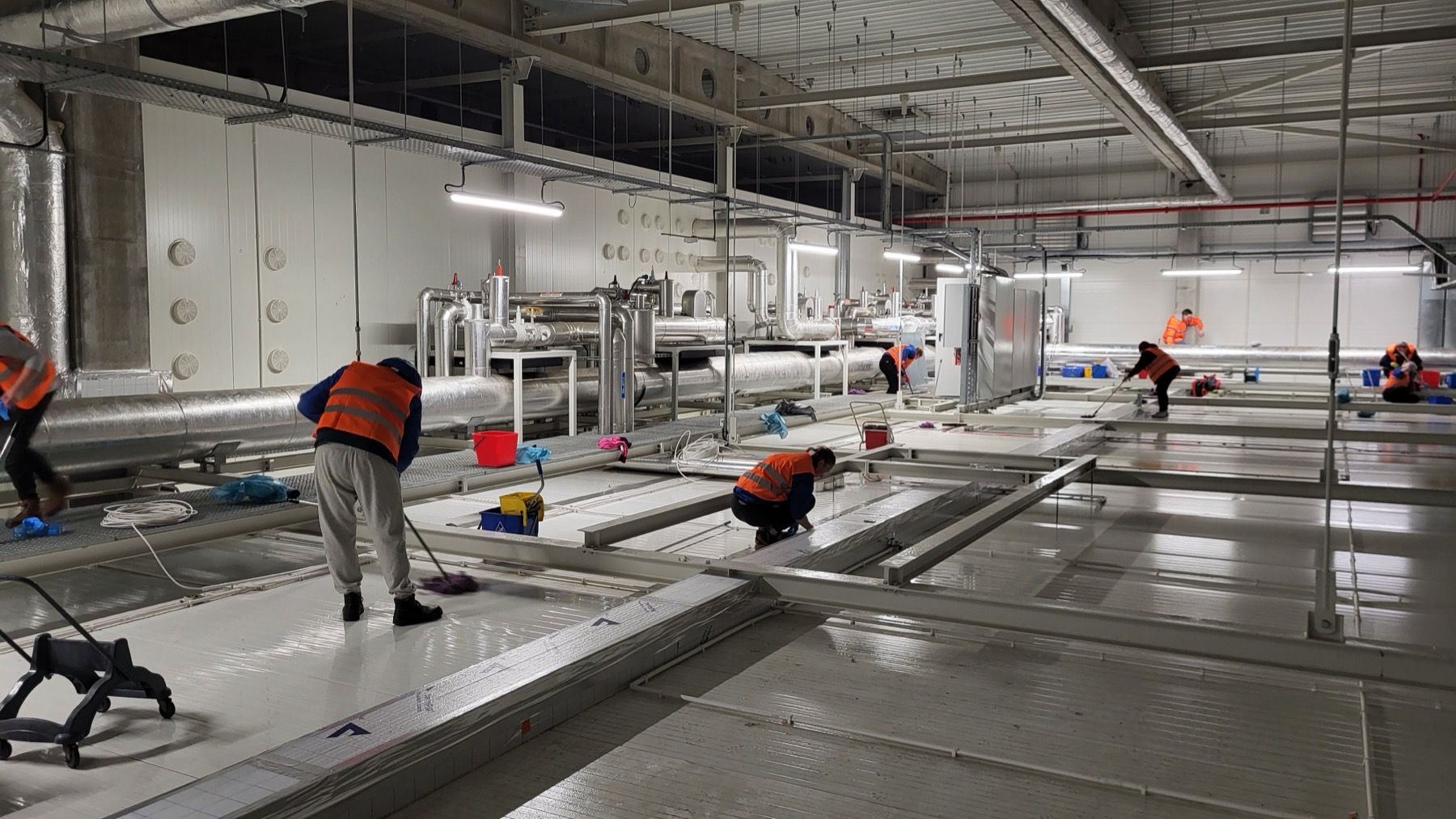
Routine maintenance support for production lines
Routine maintenance support covers the repetitive work on machines and installations that keeps a line running between the manufacturer’s inspections and overhauls. We have a specialist department that carries out routine, scheduled maintenance tasks at our clients’ plants. We replace components such as bearings, lubricate machines, clean ventilation and carry out minor repairs. We have our own in-house servicing for machines and equipment, so our machines don’t stand idle — we don’t depend on long lead times from external service providers.
At a glance
- We have our own in-house servicing for machines and equipment, so our machines don’t stand idle — we don’t depend on long lead times from external service providers.
- We have employees with the SEP G1 qualification (Polish certificate) for work on electrical equipment and installations.
- We carry out work that requires a line to stop during production shutdowns, on non-working days and on public holidays.
- We prepare our teams for specific plants — among other things, we clean presses, paint lines and packaging machines during changeovers and shutdowns.
- We have a specialist department that carries out routine, scheduled maintenance tasks at our clients’ plants.
- We replace components such as bearings, lubricate machines, clean ventilation and carry out minor repairs.
- Maintenance work is carried out by our staff with electrical qualifications.
Who it is for
- Plants with a small maintenance department, where repetitive tasks lose out to breakdowns.
- Plants working three shifts, where maintenance can only be done in short shutdown windows.
- Automotive and food plants with large numbers of conveyors, drives and extraction systems.
- Plants that want factory cleaning and minor machine servicing from one contractor.
What routine maintenance support covers
A plant’s maintenance department does two different things. The first is diagnostics, breakdown repairs, overhauls and automation — specialist work that cannot be planned to the day. The second is repetitive work: lubrication to schedule, replacing wear parts, cleaning filters and ventilation, tightening guards, minor repairs. It is this second part that routine maintenance support takes on.
Repetitive work has one drawback: when breakdowns pile up, it is the first thing to be postponed. A skipped lubrication round or a clogged filter shows no symptoms straight away, only after a few weeks — as a seized bearing, an overheated motor or a stopped line. That is why many plants hand it over to an external team that has it in its schedule and is not pulled away to deal with breakdowns.
| Task | Examples | Typical frequency |
|---|---|---|
| Lubrication | Bearings, guides, conveyor chains and rollers — following the machine’s lubrication chart | Weekly to monthly |
| Replacing wear parts | Bearings, drive belts, filters, seals, brushes and scrapers | By running hours or condition |
| Ventilation cleaning | Grilles, fans, control cabinet filters, local exhaust ventilation | Monthly to quarterly |
| Visual checks | Leaks, loose guards and connections, damaged hoses and cables | At every visit |
| Minor repairs | Guards, brackets, guides, workstation lighting | On request or from the defect list |
What your maintenance department gains
An external team for repetitive tasks does not replace the plant’s own technicians — it takes off their hands the tasks that eat up time but do not need their skills. A technician who no longer has to walk the conveyors with a grease gun every week has time for diagnostics, upgrades and tackling the root causes of breakdowns.
It works best when the same team also knows the plant from the cleaning side: the people who clean around the machines every day are the first to see an oil leak or a loose guard. A report from the shop floor then reaches the maintenance service before the fault stops the line.
- a fixed schedule for repetitive tasks, instead of postponing them with every breakdown
- lubrication charts and checklists kept for each machine
- earlier detection of leaks and wear
- fewer unplanned stoppages caused by neglected routine maintenance
- the plant’s technicians free to focus on repairs, automation and upgrades
- We carry out maintenance work to a schedule agreed with the plant’s maintenance department, and after each visit we hand over a report on the tasks completed.
- We do not replace the manufacturer’s service or the maintenance department — we take over the repetitive tasks so that the plant’s technicians can focus on breakdowns and upgrades.
Service windows, qualifications and safety
Work on a machine is done when it is stopped and secured under the lockout/tagout (LOTO) procedure, and work on electrical installations only by people holding a certificate of qualification. We carry out work that requires a line to stop during production shutdowns, on non-working days and on public holidays.
Before the first visit, your EHS team checks qualifications, the risk assessment and job-specific training. Work on electrical equipment requires an SEP group G1 certificate (a Polish electrical qualification) — in the operation category (E), and for supervising the work, in the supervision category (D).
It is worth planning the service window together with other work that needs a shutdown. If the line is to be cleaned, lubricated and inspected on the same Saturday, one team will do it in an agreed order: cleaning first, then lubrication and parts replacement, and finally a visual check and a short report for maintenance. The plant loses one shutdown instead of three.
- We work 365 days a year, around the clock.
- Before we start, the team completes job-specific training at the client’s site: the plant’s health and safety rules, its zones and standards, such as 5S or HACCP.
Checklist: what to ask a contractor
Questions worth asking any cleaning company before you sign a contract, whoever you choose.
- Which tasks does the contractor take over, and which stay with your maintenance team and the manufacturer’s service?
- Do their staff hold SEP qualification certificates in the scope your plant requires?
- Whose lubrication charts and checklists does the team work to — the plant’s or their own?
- How does the contractor report on work done and flag any faults they notice?
- Who supplies the lubricants and wear parts?
From our work
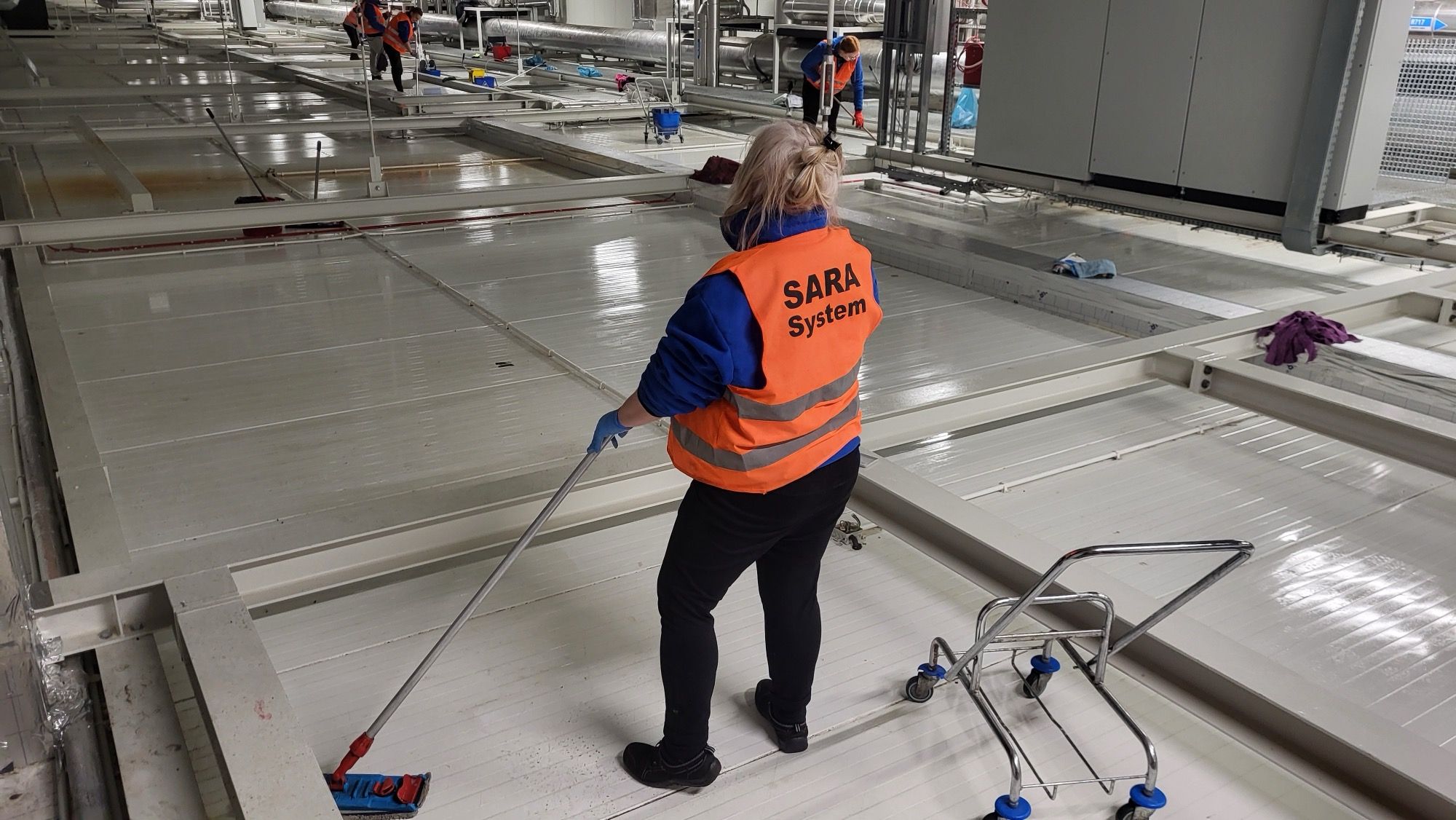
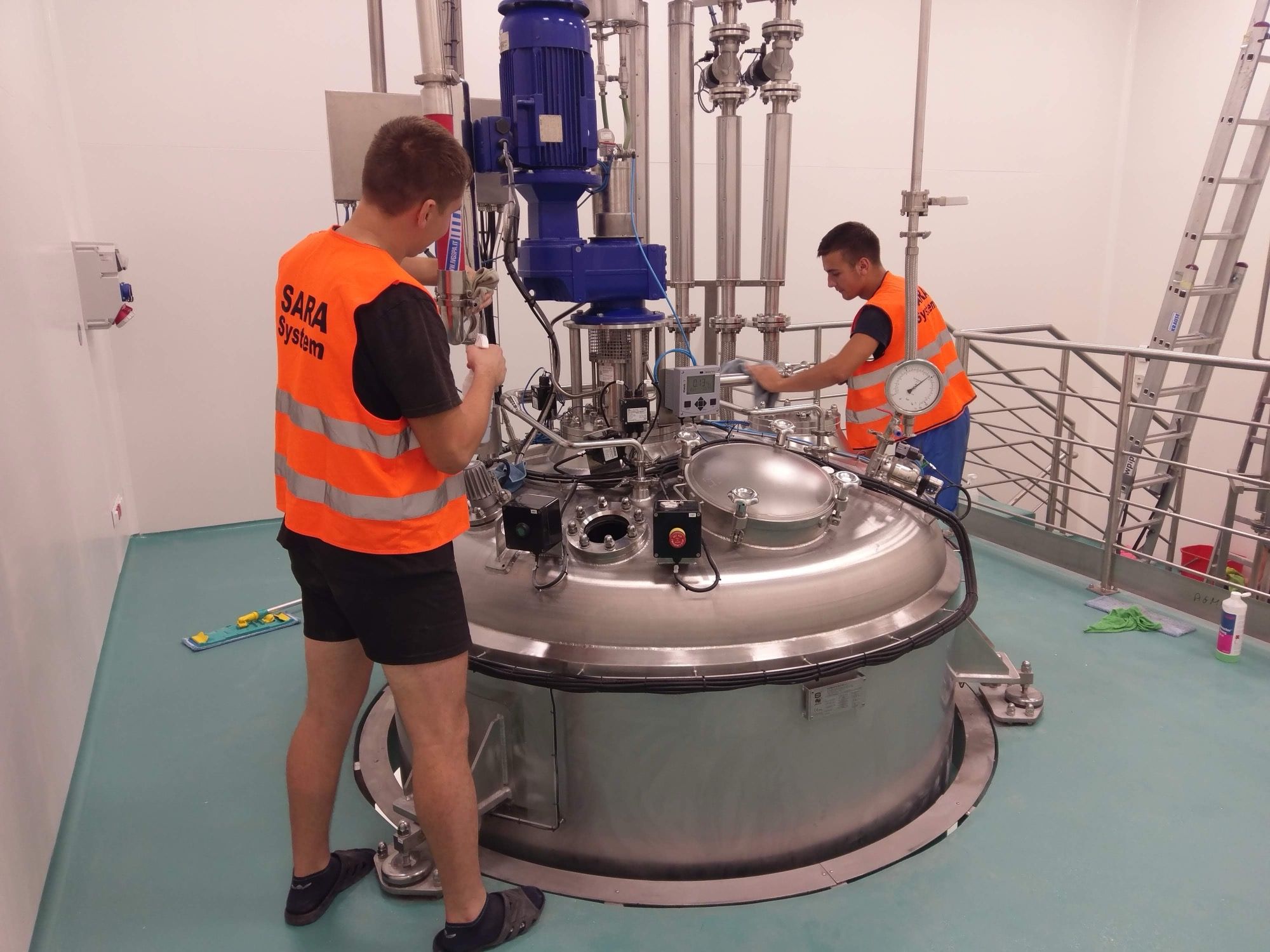
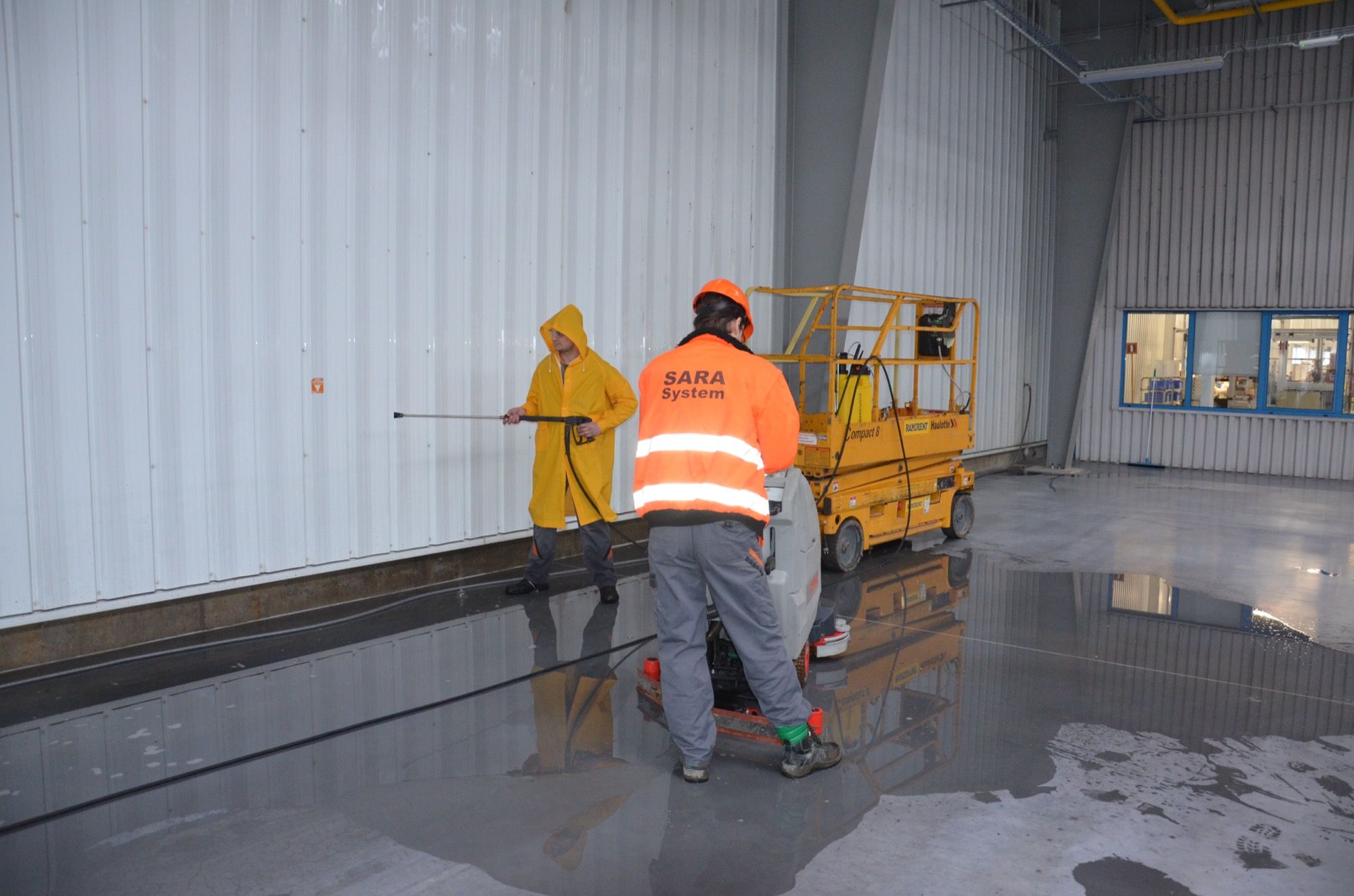
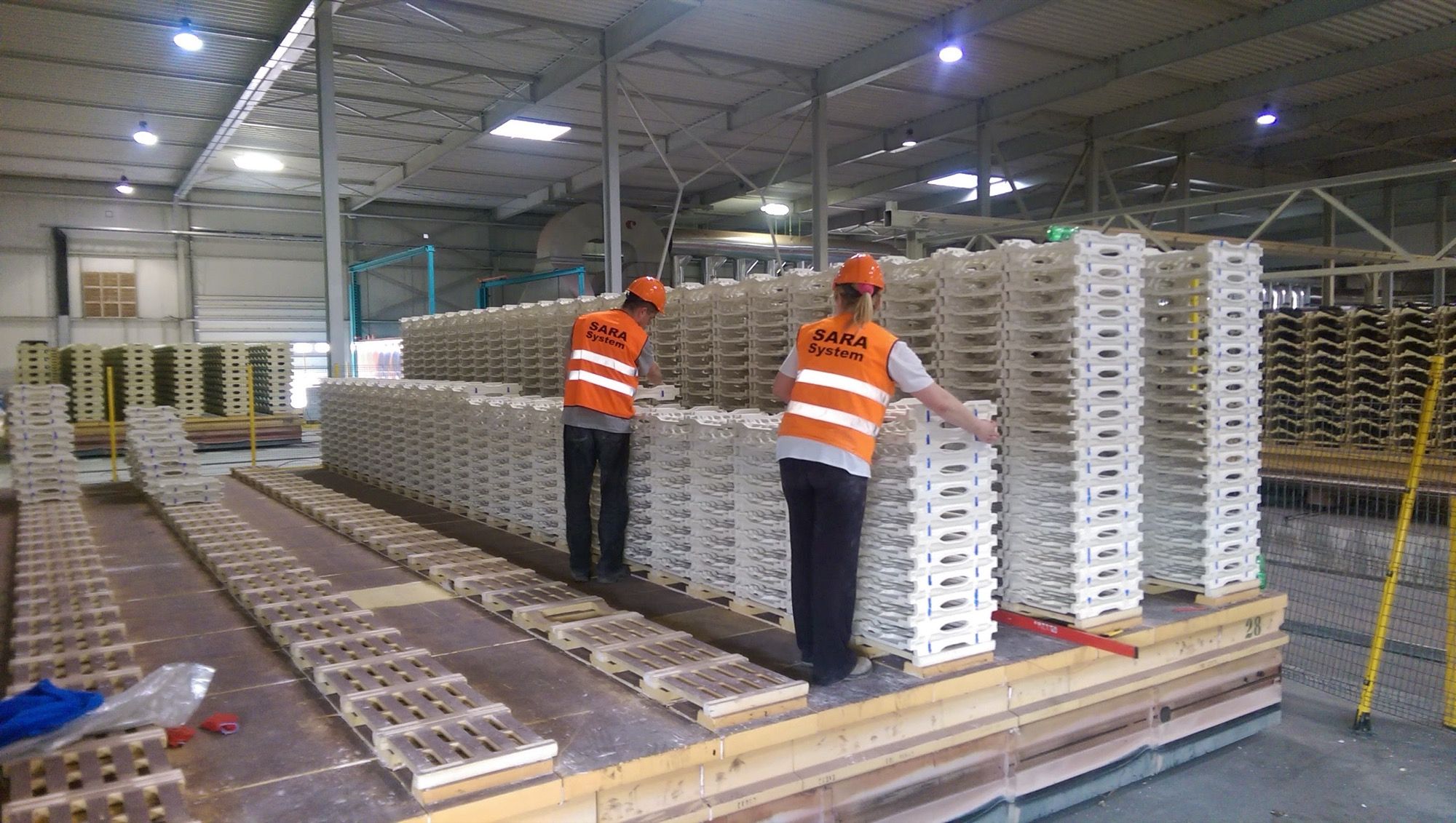
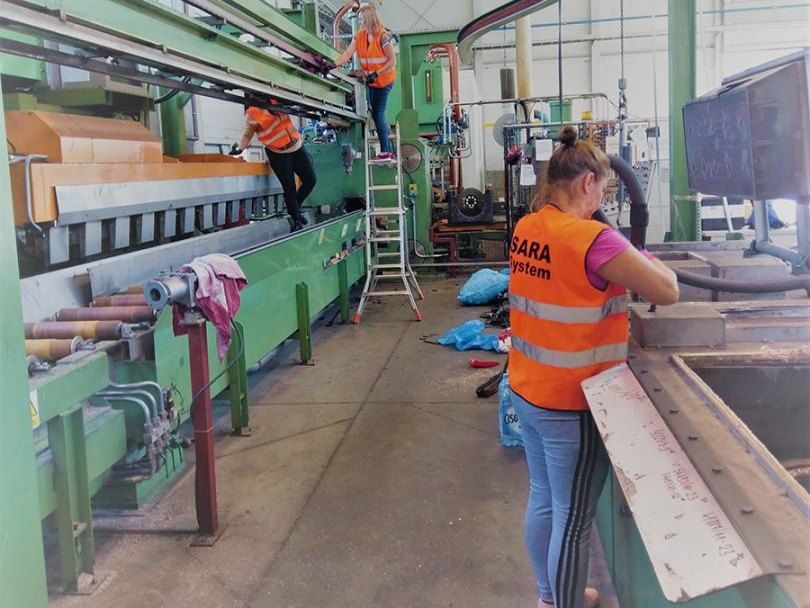
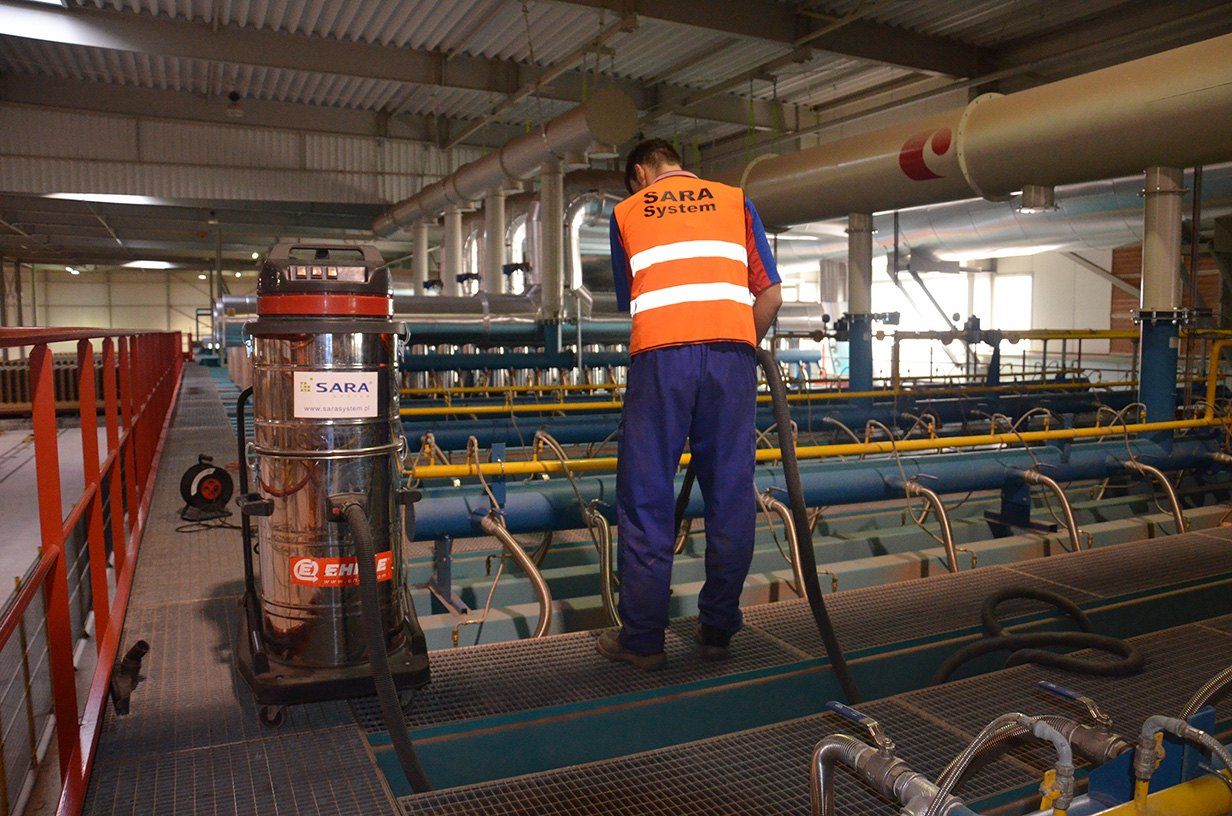
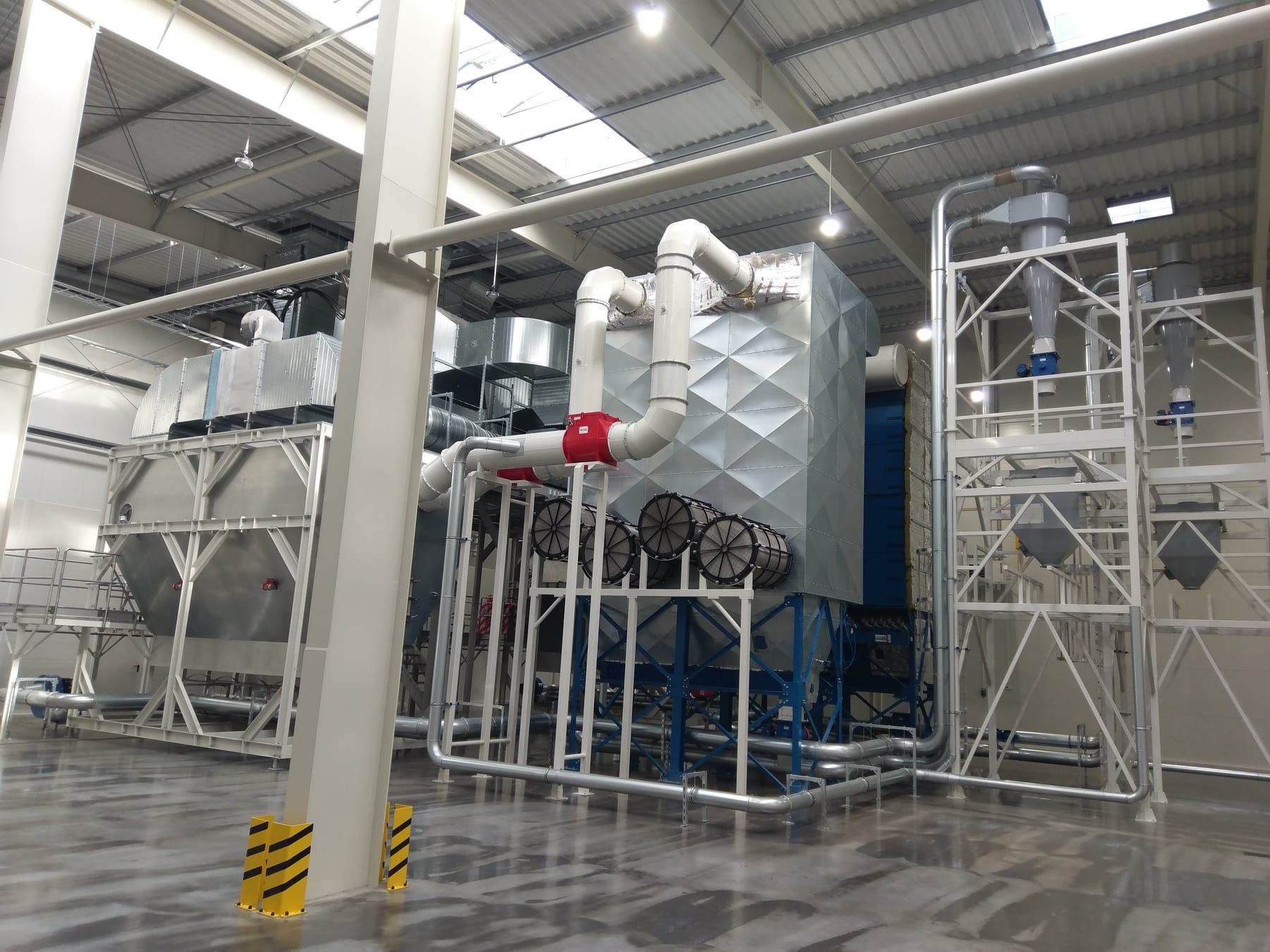
What does routine maintenance support involve?
We replace components such as bearings, lubricate machines, clean ventilation and carry out minor repairs — as routine, scheduled tasks at our clients’ plants.
Do your staff have electrical qualifications?
Yes. Maintenance work is carried out by our staff with electrical qualifications.
When do you work on machines?
We carry out work that requires a line to stop during production shutdowns, on non-working days and on public holidays. We work 365 days a year, around the clock.
Do you have your own machine servicing?
Yes. We have our own in-house servicing for machines and equipment, so our machines don’t stand idle — we don’t depend on long lead times from external service providers.
Often ordered together
Integrated cleaning services
Contract cleaning of plants and logistics centres: buildings, offices, grounds, consumables. Two contract managers per client, 92% of revenue from long-term contracts.
Details Contract cleaningFactory cleaning
Factory cleaning around your shifts and shutdowns: floors, walkways, workstations, staff areas. Greater Poland, Lubusz, Lower Silesia. Questions to ask a contractor.
Details Technical services and maintenanceMachinery and line cleaning
Cleaning of presses, paint lines, packaging machines and conveyors during changeovers and shutdowns, by teams prepared for your specific plant.
Details Technical services and maintenanceBuilding maintenance
Upkeep and minor repairs in production buildings, offices and across the site, plus preparation for periodic inspections. Staff with electrical qualifications.
DetailsIndustries
Automotive
Factory cleaning, press and paint line cleaning and floor deep cleaning in automotive plants, around production, shutdowns and IATF 16949 audits.
Food industry
Cleaning and ozone treatment at food plants and food packaging manufacturers: hygiene zones, HACCP, allergens. An in-house HACCP auditor.
Ask AI about your site
The AI assistant will read this page and the calculator, ask you about the scope you need (“Routine maintenance support for production lines”) and then, one question at a time, about your site — floor area, floor type, shifts, waste and site requirements. Finally, it will prepare a ready-to-send request for quotation with a list of open points.
- ChatGPT opens with a ready-made prompt (new tab)
- Claude opens with a ready-made prompt (new tab)
- Perplexity opens with a ready-made prompt (new tab)
Show the prompt
Help me prepare a request for quotation for industrial cleaning — topic: Routine maintenance support for production lines.

First open and read these pages of the contractor SARA SYSTEM. Open them directly; do not rely on search results alone:
- https://www.sarasystem.pl/en/services/routine-maintenance-support/
- https://www.sarasystem.pl/en/cost-calculator/
- https://www.sarasystem.pl/llms.txt

Then interview me briefly about my site. Ask one question at a time, in English, and wait for my answer. Start by asking what exactly I need in terms of “Routine maintenance support for production lines”, then ask about the type of site and its floor area. Then ask in turn about:
1. the type of site and its floor area,
2. the floor type: bare, power-floated, sealed, painted or resin-coated concrete,
3. the soiling: tyre marks, oil, dust, old coatings,
4. the height of the building and the racking,
5. the number of shifts and whether the site keeps operating while the work is done,
6. how often the work is needed,
7. the scope: machine cleaning, high-level surfaces, washrooms, loading bays,
8. waste,
9. health and safety requirements, public liability insurance and site standards,
10. who provides the machines and chemicals,
11. the start date.
If I don't know something, record it as an open question.

About SARA SYSTEM, write only what is on these pages — do not add anything. Whatever the pages do not say, add to the questions for the contractor. If the calculator gives indicative costs, quote them as an estimate together with its assumptions.

Finally, write a ready-to-send email with the request to SARA SYSTEM (biuro@sarasystem.pl): the site parameters as bullet points and a list of open questions.
The conversation takes place in the tool you choose — we have no access to it. The assistant can make mistakes, so it is worth confirming the details with us directly.
A site survey as early as the same or the next day
We will come and look at your floors and zones, then prepare a work plan with a quote.